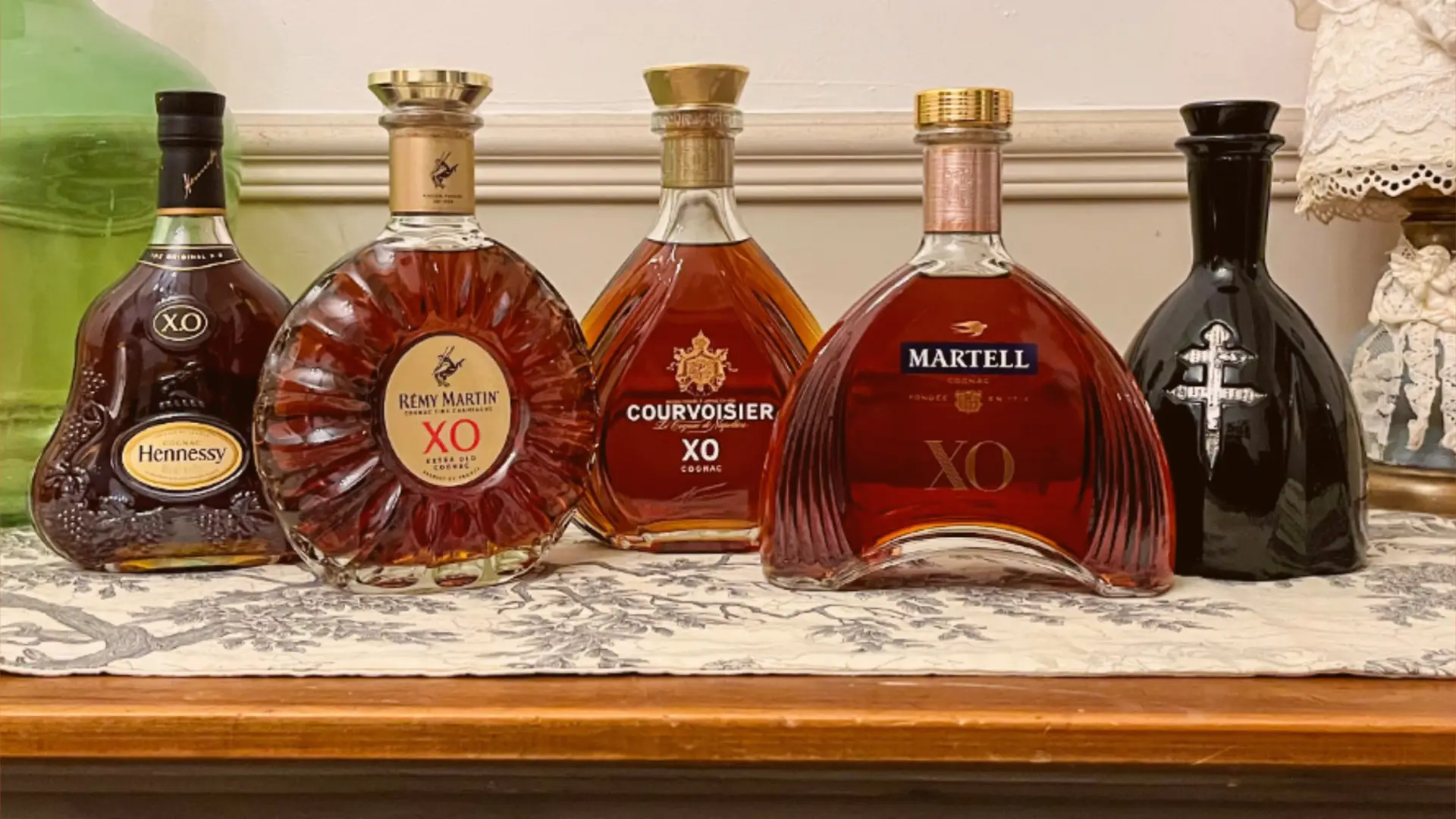
The language of French brandy is often treated as decorative. In reality, it is regulatory architecture. Terms such as VSOP, XO, and XXO are not marketing inventions but legal designations governed by production law in Cognac and Armagnac. They define minimum maturation thresholds, influence capital allocation, and determine sensory development. To speak about excellence in these categories requires understanding the entire ageing hierarchy rather than isolating a single comparison.
Both Cognac and Armagnac operate under the French Appellation d’Origine Contrôlée law. In Cognac, regulation is overseen by the Bureau National Interprofessionnel du Cognac. In Armagnac, regional authorities enforce similar age structures. Across both regions, classification is determined by the youngest eau de vie in the blend.
Time is the axis around which everything turns.
The Main Official Classifications for Cognac and Armagnac
The classification ladder begins with youth and progresses toward structural maturity.
VS, or Very Special, requires a minimum of two years in oak. It represents the earliest stage of integration, where primary fruit character remains dominant and oak influence is light. VS is widely used in cocktail applications due to its brightness and economic accessibility.
VSOP, Very Superior Old Pale, requires a minimum of four years in barrel. Oak integration becomes more visible. Vanilla, gentle spice, and early oxidative tones emerge. Fruit remains identifiable, but tannin presence increases. VSOP balances freshness and early development.
Napoléon historically occupied a middle ground. Under current Cognac regulation, Napoléon must meet the same ageing requirement as XO, meaning at least ten years. In market positioning, however, some houses continue to use Napoléon as an intermediate prestige marker.
XO, Extra Old, since April 2018, requires a minimum of ten years in barrel. Before this revision, the minimum was six years. The extension reinforced the premium tier and aligned the legal definition with existing maturation practice among major houses.
XXO, Extra Extra Old, introduced in 2018, requires a minimum of fourteen years. It formalises a category that had long existed informally within ultra-aged blends.
These are not incremental shifts. The difference between two and fourteen years represents a radical structural transformation.
Additional Prestige Terminology
Beyond official classifications, producers employ additional descriptors that signal extended ageing.
Hors d’Âge generally indicates spirit at least at the XO level or beyond, often significantly older. While not legally tied to a precise number in all contexts, it denotes advanced maturation.
Extra or Extra Old is typically used for blends exceeding XO requirements, though terminology may vary by house.
Réserve, Vieille Réserve, and Très Vieille Réserve often indicate extended ageing and careful blending, without precise legal age declaration beyond minimum thresholds.
Cuvée Prestige, Heritage, or Ancestrale function as luxury house signatures. These names are not regulatory categories but brand expressions of older stock, cellar selection, and blending expertise.
Such designations layer narrative atop a legal baseline.
Age Statement Bottlings in Armagnac
Armagnac differs structurally from Cognac in one crucial respect. Age statement bottlings are common and explicit. Rather than relying solely on VSOP or XO classification, Armagnac houses frequently release 10-year, 12-year, 15-year, 20-year, 25-year, and 30-year expressions.
Because Armagnac is often distilled once in the alambic armagnacais continuous still, it enters the barrel at a lower alcohol strength, typically between 52 and 60 percent. This fuller-bodied spirit interacts intensely with oak. Long ageing builds concentration, dried fruit complexity, leather, and pronounced rancio.
A 20-year Armagnac offers clear sensory distinction from a 10-year version. Age statements in Armagnac provide direct temporal transparency that Cognac typically expresses through classification tiers instead.
Collector and Connoisseur Categories
At the highest end of the market, additional distinctions emerge.
Vintage or Millésime bottlings represent spirit distilled in a single year and aged without blending across harvests. These are particularly common in Armagnac, where single vintage releases showcase climatic variation.
Single Cask or Single Barrel bottlings isolate one individual barrel. These expressions emphasise uniqueness rather than house consistency.
Brut de Fût, or cask strength, indicates bottling at natural barrel strength without dilution. Alcohol levels may exceed 50 per cent, preserving concentrated aromatic structure.
These categories prioritise individuality over uniformity and appeal to collectors seeking a singular experience rather than brand consistency.
Distillation Structure and Ageing Trajectory
Age does not operate in isolation from the distillation method.
Cognac, distilled twice in Charentais copper pot stills, produces relatively refined eau de vie entering the barrel around 70 per cent alcohol. It is engineered for extended ageing and blending.
Armagnac, usually distilled once, retains more congeners and heavier aromatic compounds at an earlier stage. It often expresses mature character sooner but continues to evolve intensely over decades.
Thus, four years in a barrel does not mean the same thing structurally across both categories. The interaction between initial distillate weight and oak defines the maturation trajectory.
The Economic Architecture of Time
Ageing immobilises capital. Barrels must be purchased. Warehouses maintained. Evaporation, often around two to three per cent annually in western France, reduces volume through the angel’s share.
Ten years of maturation implies a decade of storage cost and cumulative loss. Fourteen years intensify that burden. Twenty or thirty years represent long-term capital exposure and a cellar strategy.
The classification ladder, therefore, reflects not only sensory development but financial risk.
Sensory Evolution Across the Hierarchy
At two years, VS retains vibrant fruit and modest oak.
At four years, VSOP introduces balance between fruit and wood.
At ten years, XO demonstrates tertiary complexity. Dried fig, walnut, tobacco, dark chocolate, and oxidative rancio emerge. Texture becomes silkier. Finish lengthens dramatically.
At fourteen years and beyond, XXO and Hors d’Âge expressions deepen integration. Alcohol becomes seamless. Aromatic layers stack rather than shift.
At twenty-five or thirty years, the spirit approaches architectural density. Rancio intensifica. Tannins soften into polish. The line between fruit and oxidation blurs.
The threshold between VSOP and XO marks structural maturity. Everything above refines and concentrates that maturity.
Prestige, Accessibility, and Market Function
VS and VSOP dominate volume. They anchor commercial viability and cocktail versatility.
XO, XXO, and Hors d’Âge operate as prestige tiers. They represent smaller volumes but disproportionately high value. These categories drive brand halo and reinforce cellar mastery narratives.
In luxury hospitality environments, XO immediately signals ageing commitment and depth. Age statement Armagnac or vintage bottlings speak directly to connoisseurship.
The classification language shapes expectation before tasting begins.
French brandy terminology is not decorative vocabulary. It is a regulated structure. VS, VSOP, Napoléon, XO, and XXO define legally measurable ageing thresholds. Age statement: Armagnacs provide chronological clarity. Collector categories isolate cask individuality.
Time transforms raw distillate into a layered spirit. Regulation defines the minimum. Economics determines feasibility. Sensory development confirms the difference.
Excellence in Cognac and Armagnac is not abstract. It is codified, cellared, and ultimately tasted through the lens of classification. Understanding the full hierarchy allows conversation to move beyond marketing shorthand toward structural literacy.


Discovery and Education
Tradition Meets Innovation: J. Blake Layfield and Maker’s Mark’s New Generation
When J. Blake Layfield, Ph.D. became the ninth Master Distiller at Maker’s Mark in 2024, he inherited one of Kentucky bourbon’s most recognisable production philosophies. The responsibility was larger than maintaining a familiar recipe. Maker’s Mark had spent more than seven decades building an identity around a particular approach to bourbon, from its use of […]
August 12, 2026

Trends and Innovations
China’s Changing Drinks Market: Younger Adults, Convenience, and the Decline of Banquet Culture
For much of the past two decades, some of the most valuable parts of China’s drinks market were built around rooms larger than the drinking occasion itself. Business banquets, formal dining, corporate entertainment, and high-value gifting supported demand for premium baijiu, imported wine, and prestige spirits. Bottles performed several roles at once. They marked hierarchy, […]
August 1, 2026
Discovery and Education
From Beer to Bourbon: Why Kentucky Breweries Are Moving into Distilling
From beer to bourbon is becoming one of the more revealing movements in Kentucky drinks culture. The reported plan by Country Boy Brewing to open a Kentucky distillery is not only a company expansion story. It sits inside a larger shift in how craft beverage businesses think about production, hospitality, brand loyalty, and long-term survival […]
July 17, 2026