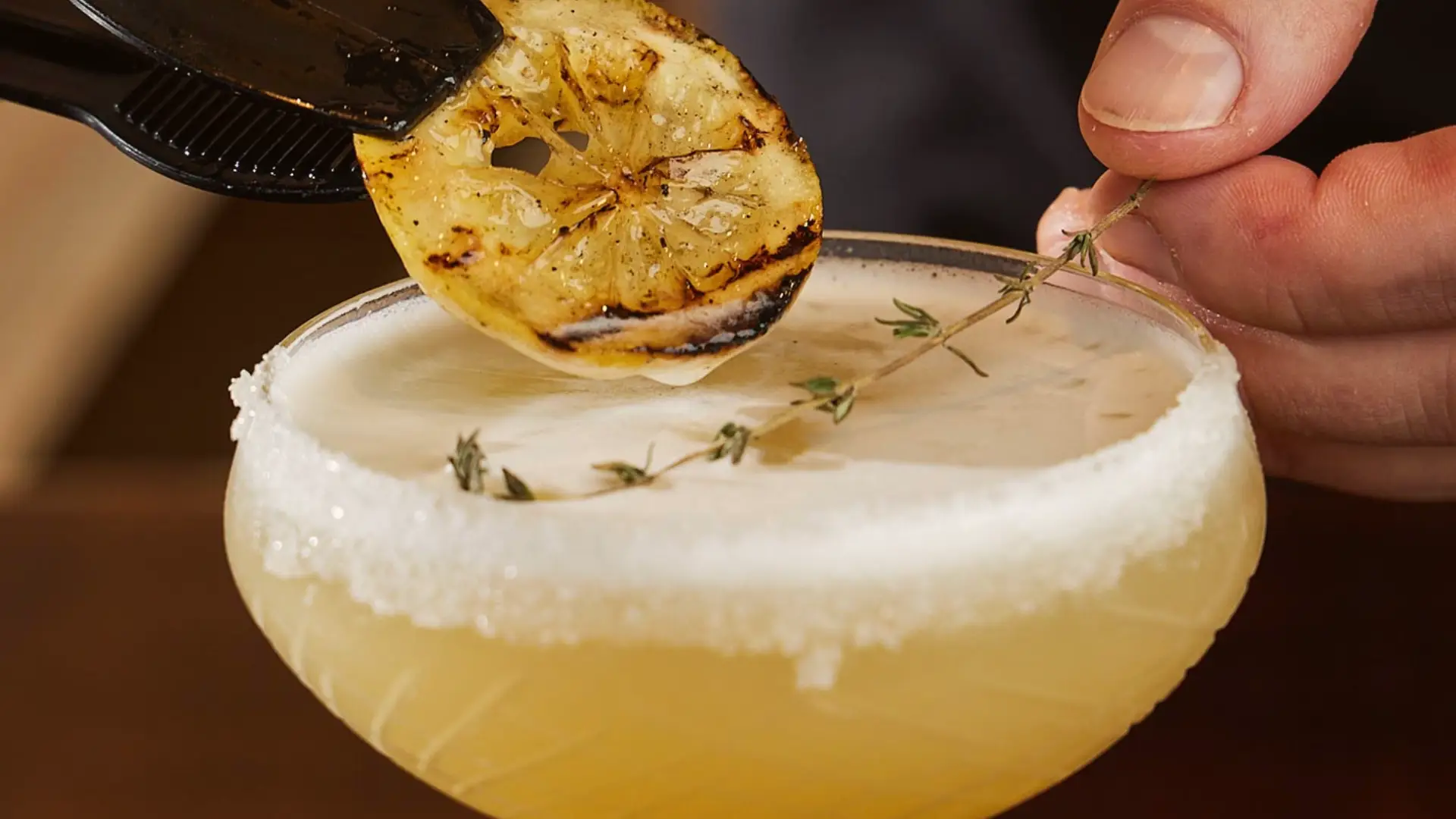
During the 1920s, under the restrictions of Prohibition, American drinkers and bartenders became used to cocktails that corrected, softened, or disguised rough spirits. Among them, the Bee’s Knees stands out for one reason: it did not disappear when better spirits returned. Instead, it moved beyond its Prohibition association, becoming one of the clearest demonstrations of how sweetness, acidity, and botanicals can be engineered into equilibrium.
One of the best-known early printed references appears in Harry Craddock’s 1930 The Savoy Cocktail Book, compiled at the Savoy Hotel in London. The drink is also strongly associated with Frank Meier of the Ritz Paris, who included it in The Artistry of Mixing Drinks in 1936. By the early 1930s, the Bee’s Knees was circulating between American Prohibition culture and European hotel bar practice, though its precise origin remains unclear.
Structural Identity Within the Gin Sour Family
The Bee’s Knees belongs structurally to the Gin Sour, yet its defining characteristic lies in its substitution of honey syrup for sugar. This is not a minor variation. Honey introduces viscosity, aromatic compounds, and a slower perception of sweetness, altering both texture and flavor delivery.
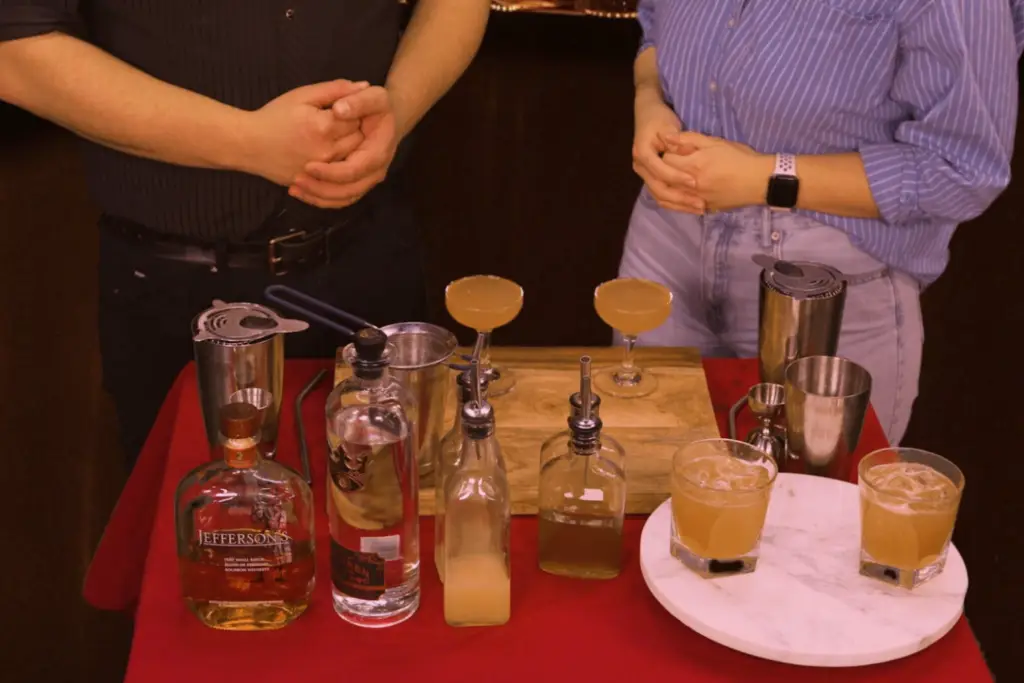
A common historical or simplified ratio is two parts gin, one part fresh lemon juice, and one part honey syrup, although many modern bar specifications reduce the lemon and honey syrup to around three-quarters of a part each for a drier balance. The drink works particularly well with assertive London Dry styles, where juniper and alcohol structure can stand up to honey’s texture. The dilution of honey into syrup, usually at a one-to-one ratio with water, is essential for technical consistency. Without this step, the cocktail becomes unstable, with uneven sweetness and incomplete integration during shaking.
An often overlooked detail is that honey contains trace acids and volatile compounds that interact with citrus differently than sucrose. This interaction produces a rounder, less angular acidity, which is why the Bee’s Knees feels softer than other sours even at identical ratios.
Gin Selection and Distillery Influence
The Bee’s Knees is highly sensitive to gin composition. Classic London Dry expressions such as Beefeater Gin, produced in London since the nineteenth century and historically bottled at higher strengths, create a firm and structured version of the drink. The pronounced juniper core ensures that the cocktail retains definition even when balanced by honey.
In contrast, Tanqueray London Dry Gin, originally established by Charles Tanqueray in 1830, offers a slightly different botanical balance with stronger citrus and angelica root influence, producing a more lifted aromatic profile.
Modern interpretations can move the drink further from its London Dry profile. Hendrick’s Gin, distilled in Girvan, Scotland, is known for cucumber and rose essences, which can soften the drink’s structure and draw out a more floral interaction with honey. This demonstrates a key technical point. In the Bee’s Knees, gin is not only the base spirit but the primary structural variable, capable of shifting the entire sensory profile.
Honey as a Functional and Geographic Ingredient
Unlike refined sugar, honey reflects its botanical and geographic origin. Acacia honey, often sourced from Central and Eastern Europe, produces a lighter and more neutral sweetness. In contrast, wildflower or chestnut honeys introduce deeper, sometimes tannic notes that can significantly alter the cocktail.
Historically, honey is often discussed in relation to its ability to soften or disguise rough spirits. However, in contemporary practice, it has become a tool for precision and differentiation. In historically grounded cocktail programmes, variations of honey-based sours may use different honey styles to reflect ingredient sourcing rather than necessity.
The Bee’s Knees shows how sweetness must be integrated rather than simply added. Honey changes the body of the drink, so clarity depends on dilution, temperature, and the balance between citrus and spirit.
Transatlantic Movement and Early Standardisation
One of the lesser-discussed aspects of the Bee’s Knees is the way it sits between American Prohibition culture and European hotel bar practice. Harry Craddock’s 1930 record at the Savoy Hotel places the drink within London’s luxury cocktail environment, while Frank Meier’s later inclusion of the Bee’s Knees in his 1936 Ritz Paris book reinforces its European hotel bar presence. Rather than proving a single route of travel, these references show that the drink had entered a more formal cocktail vocabulary by the early 1930s.
This transition is critical. It marks the moment when the Bee’s Knees shifted from a functional drink into a codified classic, aligning it with other enduring cocktails of the period.
Contemporary Relevance and Technical Application
In modern bars, the Bee’s Knees is often used as a training tool because it exposes imbalance immediately. Excess honey results in density and loss of definition, while insufficient sweetness sharpens acidity beyond structure. The drink demands precision in measurement, shaking technique, and ingredient preparation.
In contemporary cocktail practice, the Bee’s Knees remains useful because it behaves like a test of balance. Small changes in honey concentration, citrus level, or gin style are immediately noticeable. For that reason, the drink can function as a quiet technical reference point: simple in composition, but unforgiving when sweetness, acidity, and dilution are not properly aligned.
The Bee’s Knees, in this context, represents a framework rather than a fixed recipe, adaptable yet structurally consistent.
Lesser-Known Technical and Cultural Details
Several details surrounding the Bee’s Knees remain under-discussed in mainstream cocktail literature. The drink’s reliance on lemon may also reflect the broader architecture of the Gin Sour, where lemon provides a sharper and more familiar acid structure than lime in many early bar specifications.
The phrase “bee’s knees” itself predates the cocktail and belongs to a broader linguistic trend of the era, including expressions such as “cat’s pajamas” and “the real McCoy,” all of which conveyed excellence. Its adoption as a cocktail name demonstrates how language and drinking culture intersected during Prohibition.
Another technical nuance lies in dilution. Because honey syrup adds body, the cocktail requires a firm shake to ensure proper integration, aeration, and dilution. This detail, while subtle, significantly affects the final result.

Renowned international hospitality consultant, founder of Barpartners, and IBA Vice President of Classic Mixology, bringing over 25 years of luxury hotel bar operations.

In partnership with International Bartenders Association
The International Bartenders’ Association stands at the crossroads of exchange between new and established generations of professionals.

Bar
The Dead Rabbit is an iconic Irish cocktail bar nestled in New York City’s Financial District at 30…
Bar
In the heart of Mayfair, behind the storied façade of The Connaught Hotel, stands the Connaught Bar —…
Bar
Tucked away in Barcelona’s Eixample district, behind a sleek, understated facade, Sips is quietly rewriting the global language…
Cocktail
The Gin Sour is a classic and elegantly balanced cocktail that highlights the bright, botanical flavors of gin…
Cocktail
The Bee’s Knees is a Prohibition-era cocktail celebrated for its simplicity and elegant balance of gin, citrus, and…
Spirit
Tanqueray London Dry Gin is a quintessential spirit that has stood the test of time, recognized globally as…
Spirit
N°3 London Dry Gin is a pinnacle of traditional gin craftsmanship, created by the esteemed Berry Bros. &…
Partnership
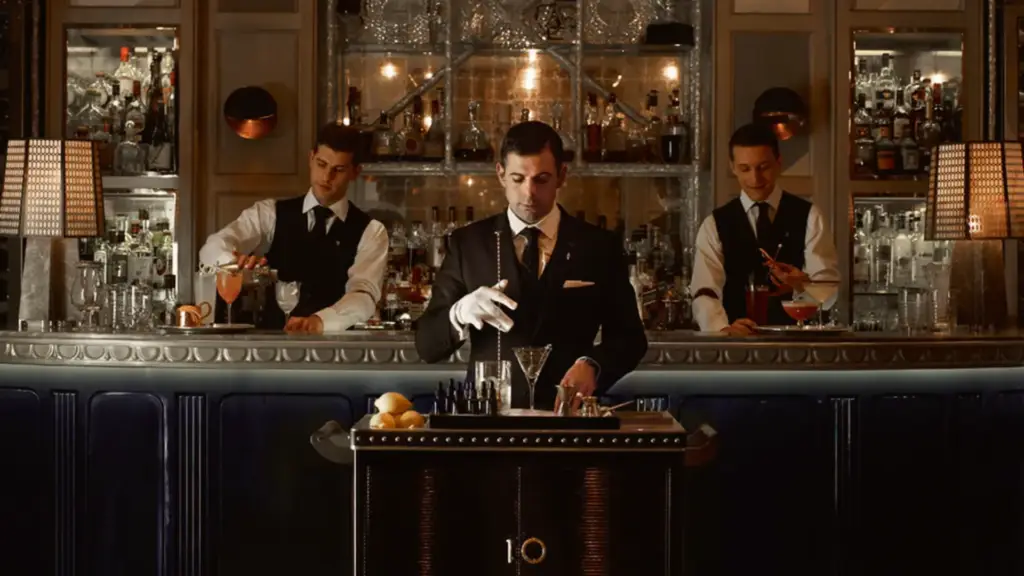
The Connaught Bar: Precision, Ritual, and the Martini That Set the Standard
Some bars are defined by their drinks. Others by their atmosphere. At Connaught Bar, it is service that holds everything together. Tucked within The Connaught in London, the bar has, over time, established itself as a reference point for what modern classic bartending can look like when precision and ritual are treated as inseparable. This […]
August 1, 2026
Partnership
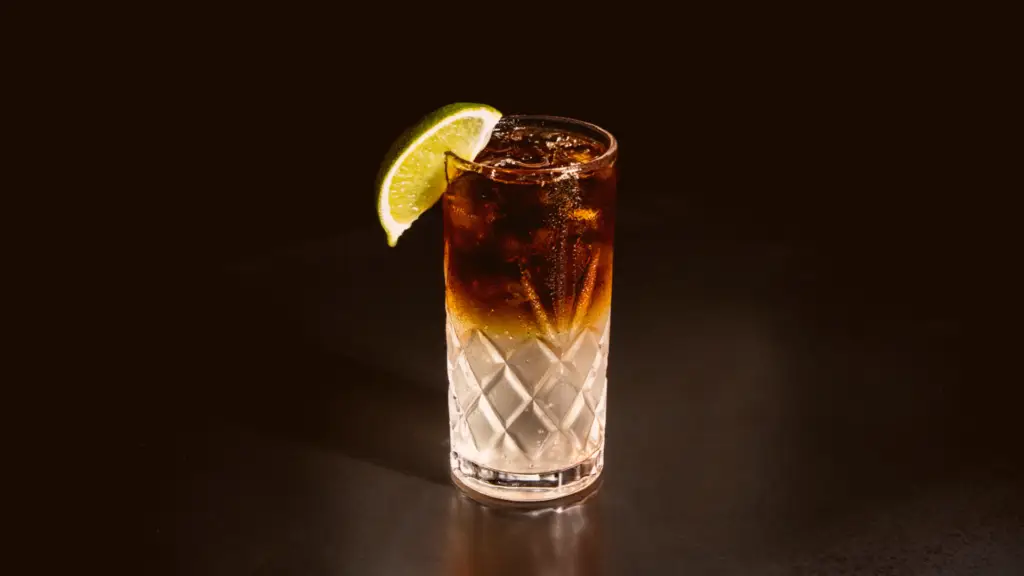
Dark ’N’ Stormy: Bermuda’s Highball, Trademark Law, and the Precision of Simplicity
A bar, a storm, and a glass of dark rum over ginger beer. The image has become inseparable from Bermuda, where the Dark ’N’ Stormy is less a cocktail than a national signature. Unlike many mixed drinks shaped by evolving bar culture, this one is anchored to a single producer, a specific island, and a […]
July 30, 2026
Partnership
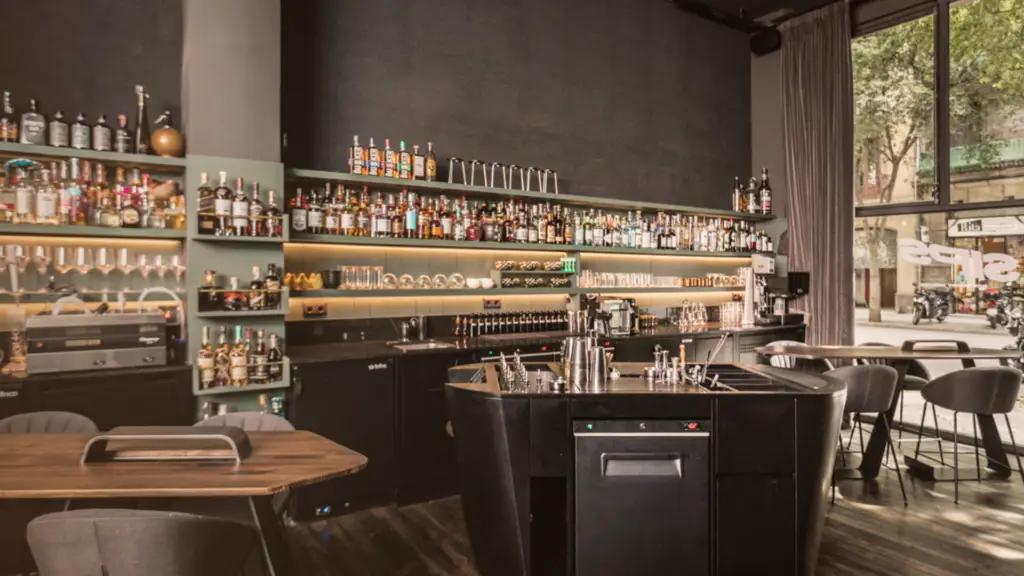
Sips in Barcelona: The Avant-Garde Cocktail Bar Leading Europe’s New Drinking Culture
Walk into Sips and the first thing that becomes apparent is the absence of the expected. There is no traditional bar counter acting as a barrier, no hierarchy between bartender and guest. Instead, the room opens up, almost like a stage, where drinks are assembled in full view and the act of making a cocktail […]
July 18, 2026