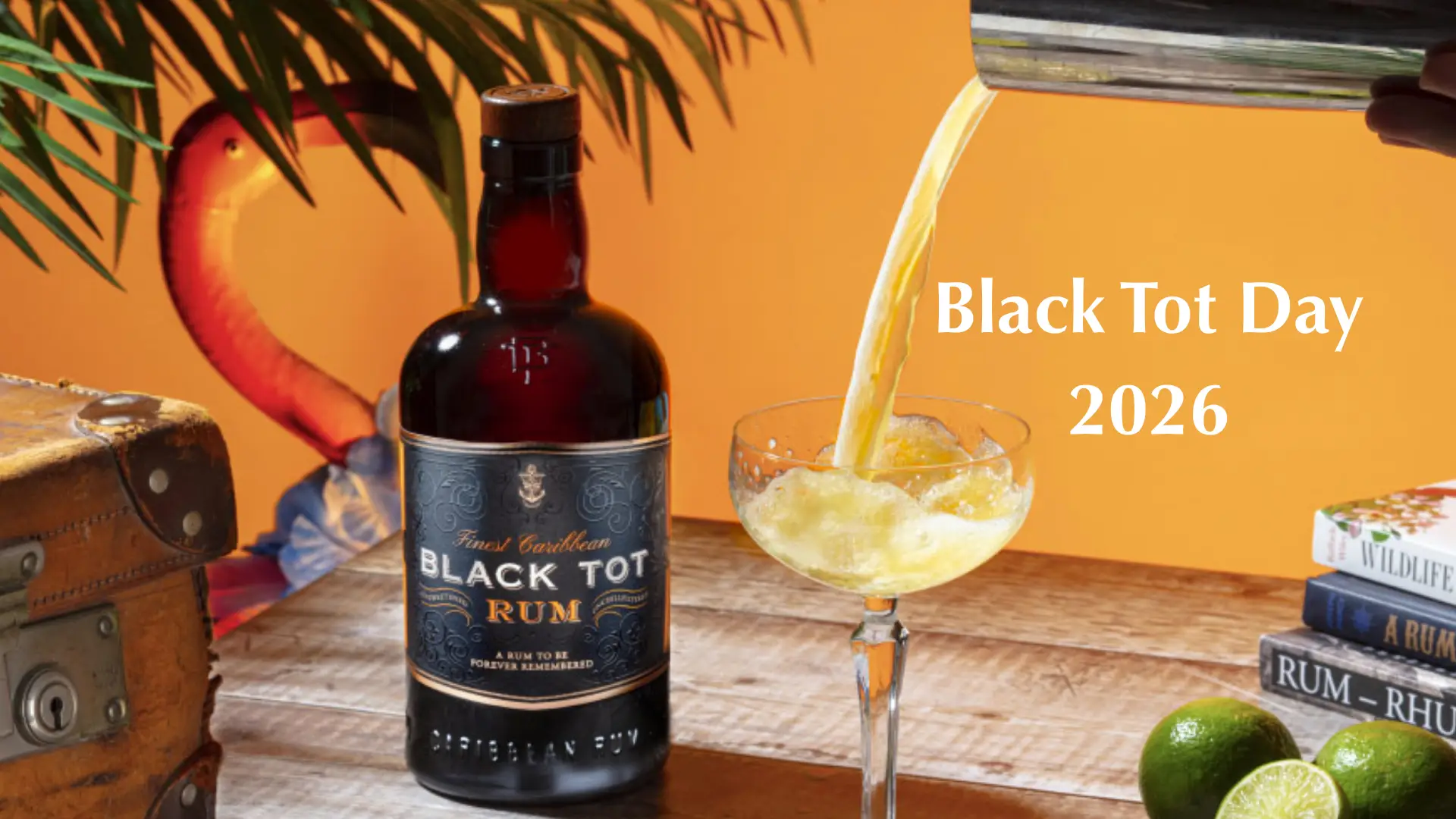
The Black Tot Day rum history begins with a contradiction at the heart of naval life.
For centuries, rum was not simply a drink on Royal Navy ships. It was ration, reward, routine, social currency, disciplinary problem, imperial supply chain, and symbol of the lower deck. By the time the final daily tot was issued on 31 July 1970, the practice had become one of the most recognisable rituals in British naval culture.
Its ending was not only the loss of an old custom. It marked a change in how the Royal Navy understood professionalism, machinery, safety, rank, morale, and discipline. The ship of the age of sail had become the ship of radar, missiles, nuclear submarines, electronics, and complex systems. A tradition that once belonged to endurance at sea now looked increasingly difficult to defend inside a modern fighting service.
That is why Black Tot Day still matters in 2026. It was not the day rum disappeared from history. It was the day an institution admitted that one of its oldest habits no longer fitted the navy it had become.
Before Rum Became Ritual
The Royal Navy’s relationship with alcohol began long before rum took its place in naval memory.
In earlier centuries, beer was part of the ordinary shipboard ration. Water did not always keep well on long voyages, and beer was familiar, relatively weak, and embedded in British provisioning habits. On short passages and in cooler conditions, it made practical sense within the diet of sailors.
Long-distance service changed the problem. Beer was bulky, limited in shelf life, and difficult to manage across imperial routes. Ships sailing to warmer climates needed provisions that could survive distance, heat, and uncertain resupply.
Spirits offered a different solution. Brandy, arrack, wine, and eventually rum entered naval provisioning according to region, availability, and imperial trade. The growth of British Caribbean interests helped rum move from colonial product to naval supply.
This was not simply a matter of taste. The rise of naval rum was tied to empire, sugar, shipping, logistics, and the hard economics of provisioning a global navy.
Jamaica, Empire, and the Turn to Rum
Rum’s naval importance grew after Britain seized Jamaica in the seventeenth century. The Caribbean sugar economy produced molasses, and molasses supported rum distillation. As British power expanded in the region, rum became more available to naval supply networks. What began as a practical substitution gradually hardened into custom.
This history cannot be separated from the violence of empire. Caribbean rum was produced within colonial systems shaped by plantation labour, maritime trade, and exploitation. A naval tradition later remembered through ceremony and humour also carried the shadow of the economic world that made it possible.
That complexity gives rum history its seriousness. The daily tot became part of British naval identity, but the liquid came from a wider Atlantic system involving sugar, ships, merchants, colonial authority, and human cost.
Black Tot Day therefore ended more than a shipboard habit. It closed one visible chapter in a longer relationship between the Royal Navy, Caribbean rum, and imperial supply.
Admiral Vernon and the Discipline of Grog
By the 18th century, the daily spirit issue was already a matter of concern. Strong rum could affect discipline, work, and order aboard ship. A warship depended on hierarchy, timing, seamanship, and obedience. Anything that weakened those qualities created a problem for command.
In 1740, Admiral Edward Vernon ordered that the rum ration be diluted before issue. Vernon was nicknamed Old Grog because of the grogram cloak he was associated with, and the diluted rum became known as grog.
The change was not sentimental. It was an attempt to manage alcohol within a disciplined system. Dilution reduced the immediate effect of the ration, helped prevent sailors from saving it in stronger form, and placed the practice more clearly under command control. That is the first major lesson of naval rum history. The tot was never only an indulgence. It was a controlled ration inside an institution constantly balancing morale against discipline.
The Tot as Order, Reward, and Inequality
Over time, the rum ration acquired a ritual structure.
The call of « Up Spirits » marked a daily moment recognised across the lower deck. The rum tub, the measuring of tots, the separation between those entitled to draw rum and those who were not, and the difference between senior and junior ratings all made the practice part of naval order.
It also reflected hierarchy. Officers had their own drinking spaces and privileges, while ratings received rum through a formalised ration system. The tot belonged to the lower deck, which helped explain why its removal caused resentment.
The ration could also function as social currency. It could be shared, saved, exchanged, or refused. Sailors who did not draw it could be marked differently in shipboard records, while underage sailors were excluded. These details show why the tot carried emotional force. It was not merely a daily measure of rum. It was a sign of status, adulthood, endurance, and belonging within a hard-working naval community.
Rum and the Machinery of Empire
For much of its life, the tot belonged to a navy of physical labour. Sailors worked in conditions shaped by weather, salt, heat, cold, danger, boredom, cramped space, and long separation from home. In that world, a controlled ration could be presented as morale, comfort, and compensation.
The Royal Navy also depended on routine. On a ship, routine was not decorative. It organised time, reduced uncertainty, reinforced hierarchy, and gave structure to days that could otherwise blur under labour and danger. The tot fitted into that rhythm. It arrived at a known hour, through a known procedure, under known authority. Its predictability made it more than a drink.
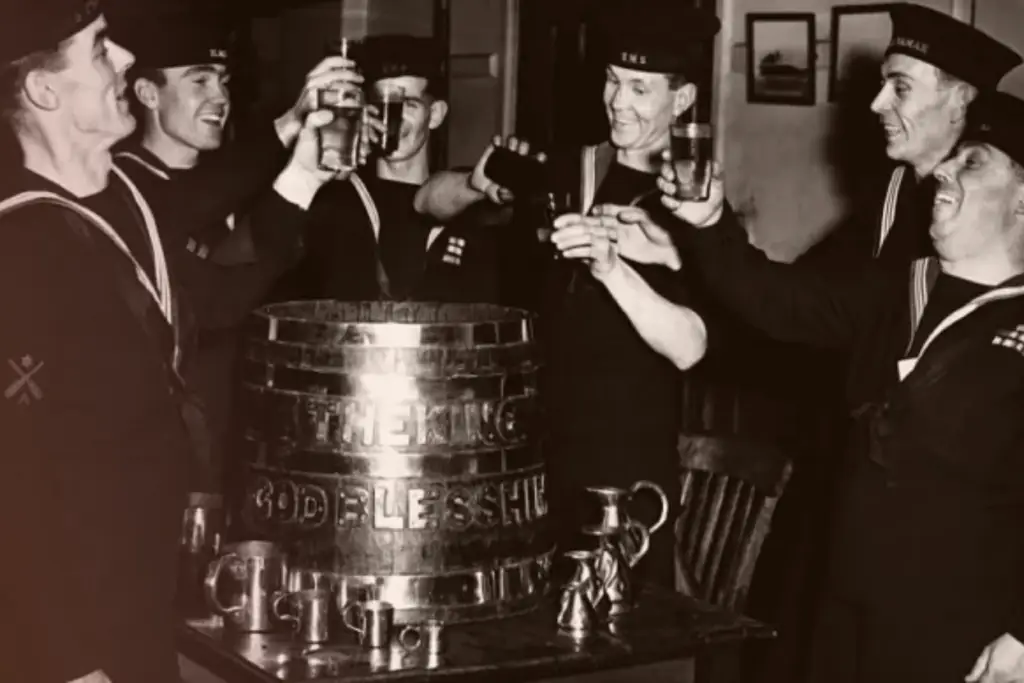
That is why later nostalgia for the tot is understandable, even when the practice itself became harder to justify. Rituals survive because they help people make sense of difficult lives.
The Long Decline of the Ration
The daily rum ration was reduced over time.
By the 19th century, naval reform, temperance pressure, changing medical opinion, and professional discipline all challenged older drinking customs. The Royal Navy did not end the tot immediately, but the direction of travel was clear.
The ration that survived into the twentieth century was smaller and more regulated than earlier allowances. It remained powerful symbolically, but its practical defence weakened as the navy’s work changed. Industrial ships, modern gunnery, communications, engineering systems, and later electronic warfare all required different forms of concentration. The more technical the navy became, the more awkward the daily issue of strong alcohol appeared.
This shift did not happen overnight. The tot survived world wars, social reform, and repeated criticism because it was deeply embedded in naval identity. Tradition gave it a resilience that pure efficiency arguments could not easily break.
The Modern Navy Meets an Old Custom
By the late 1960s, the argument against the rum ration had become difficult to ignore.
The Royal Navy was no longer primarily a world of rope, sail, and manual seamanship. Its ships carried complex machinery, advanced weapons, electronic systems, and equipment on which lives depended. Ratings were expected to operate and maintain systems requiring technical skill and clear judgement.
The official case for abolition rested on that change. The Admiralty Board argued that the rum issue was no longer compatible with the high standards of efficiency required on ships where individuals worked with complex and delicate machinery.
This argument did not deny the history of the tot. It placed that history against a new operational reality. The central question was no longer whether the ration had tradition behind it, but whether tradition should survive when the work of the sailor had changed.
That question made Black Tot Day inevitable. Modernisation had finally reached the rum tub.
The Great Rum Debate
The decision to end the ration did not pass quietly. On 28 January 1970, the House of Commons debated the issue in what became remembered as the Great Rum Debate. The discussion was lively, emotional, class conscious, and often sharply aware of naval hierarchy.
Supporters of the tot argued that the ration was controlled, traditional, and valued by the lower deck. They also pointed to a perceived unfairness: ratings would lose their rum issue while alcohol remained available in officers’ spaces. Opponents argued that the modern navy demanded different standards. They emphasised technical responsibility, machinery, safety, and the risks of issuing spirits during the working day.
The debate mattered because it exposed the real meaning of the ration. The tot was not only about rum. It was about trust between command and crew, the dignity of ratings, the symbolism of rank, and the tension between tradition and modern efficiency.
The final daily rum ration was issued on 31 July 1970. The date became known as Black Tot Day, a name that captured the mood of loss among many sailors. On some ships and shore establishments, the end was marked with mock mourning, black armbands, ceremonial gestures, and symbolic farewells to the rum tub.
These acts were partly humorous, but they were not meaningless. Military institutions often process change through ceremony. A mock funeral can be a joke and a serious acknowledgement at the same time.
For sailors who had lived with the ritual, Black Tot Day felt like the removal of something personal. For the Admiralty, it was the closing of a practice that no longer matched the navy’s operational needs. The day’s importance lies in that clash. It was both a farewell and a statement of institutional change.
Not a Romantic Ending
Black Tot Day is often remembered with nostalgia, but nostalgia can simplify the story.
The rum ration belonged to a hard world. Naval service could be dangerous, exhausting, and physically punishing. Rum may have offered comfort and routine, but it also created disciplinary problems, health concerns, inequality, and risks that became more serious as naval work grew technical. A responsible reading of Black Tot Day should not treat the end of the tot as a loss of national character. It should treat it as the moment when the Royal Navy placed modern operational discipline above an inherited ritual.
That does not make the old custom insignificant. It makes it historically useful. The tot shows how institutions use food and drink to organise people, reward labour, build identity, and control behaviour. Rum was part of naval culture because it served many functions at once. When those functions no longer justified the risk, the tradition ended.
Rum after the Tot
The end of the daily ration did not erase rum from naval memory. The language of the tot, grog, and « Up Spirits » remained part of maritime history. The ceremony of « splice the mainbrace » also continued as a rare symbolic order associated with special occasions and royal authority.
Rum brands and enthusiasts later used Black Tot Day as a point of memory, but the deeper history belongs to the navy rather than to marketing. The important fact is not that a tradition can be commemorated. It is that the tradition once formed part of a working system.
That distinction matters for rum culture. Naval rum should not be reduced to flavour romance or old sailor humour. It belongs to questions of labour, discipline, empire, class, technology, and institutional change. Black Tot Day remains powerful because it gives all those questions a single date.
Why Black Tot Day Matters
Black Tot Day in 2026 matters because it marks the end of a long naval compromise.
For centuries, the Royal Navy tried to make alcohol serve order. It diluted it, rationed it, measured it, timed it, restricted it, punished misuse, and wrapped it in ceremony. The tot survived because it was controlled, familiar, and emotionally important.
By 1970, that compromise no longer held. The daily issue of rum looked increasingly out of place in a navy defined by precision systems, technical ratings, and instant readiness.
The end of the ration therefore reveals a broader truth about spirits history. Drinks are never only liquids. They become meaningful because institutions, workers, laws, trade routes, rituals, and technologies give them roles. When those roles change, the drink changes with them.
The story of Black Tot Day is not simply a story about rum being taken away. It is the story of an old naval world giving way to a modern one. The tot had once helped structure life at sea, but the Royal Navy of the late 20th century needed different forms of discipline, safety, and professional identity.
The final issue on 31 July 1970 closed a tradition that had lasted for generations. It also made visible the distance between the age of imperial provisioning and the age of electronic warfare, complex machinery, and technical service.
Rum remained important to naval memory, but memory was no longer enough to keep the ration alive. That is why Black Tot Day endures as one of rum history’s most telling dates. It shows how a spirit can become part of an institution, and how even the strongest rituals can end when the world that sustained them has changed.


Spirit
Rum & Cane British West Indies XO Rum
British West Indies Regional Rums, crafted by West Indies Rum & Cane Merchants, represents a rich tapestry of…
Spirit
Old St. Croix Royal Danish Navy Naval Cadet Rum
Old St. Croix Royal Danish Navy Naval Cadet Rum is a distinct spirit that pays homage to the…

Spirit
Clairin Ansyen 49 Vaval Single Cask Rum
Clairin Ansyen 49 Vaval Single Cask Rum represents a remarkable representation of Haitian rum craftsmanship, highlighting the rich…
Spirit
Rum & Cake Wild Spiced Sipping Rum
Rum & Cake Wild Spiced Sipping Rum is a unique expression that marries the rich heritage of rum…
Partnership

The Port of Bordeaux and the Trade Routes That Built Cognac
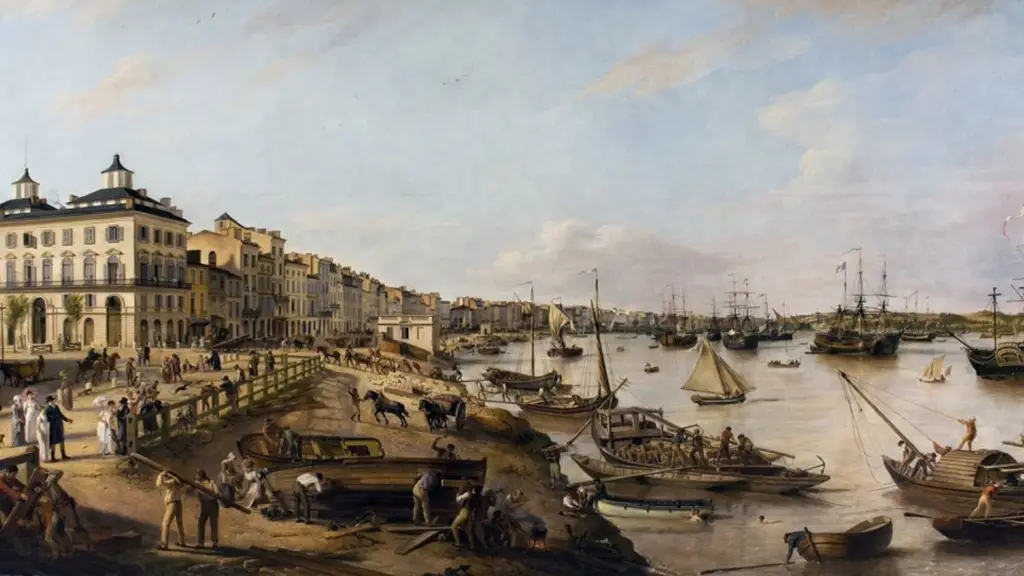
Cognac did not become a global spirit because of vineyards alone. Its rise depended on water, ships, and merchants long before it depended on distilleries. The identity of Cognac was shaped as much by the port of Bordeaux as by the chalk soils of Charente. Without Bordeaux’s access to Atlantic trade routes, cognac would likely […]
September 16, 2026
Partnership
Jamaica Rum and the Sugar Estate Landscape Behind a Protected GI
Jamaica’s Rum story begins with sugar estates, limestone water, heavy fermentations, coastal trade, and a landscape where cane became both wealth and memory. The island’s reputation was not made by one house or one parish. It grew across estates, distilleries, ports, and rural communities where sugar production and rum making became inseparable from the country’s […]
September 13, 2026

Partnership
From Porto da Cruz to Calheta: The Distilleries That Define Madeiran Rum
Madeiran rum exists within a narrow technical and geographic framework that resists abstraction. Unlike Caribbean or Latin American rum traditions shaped by scale and export, rum production on Madeira remains tied to fresh sugarcane juice, seasonal distillation, and localised milling. From the northern coast at Porto da Cruz to the southern town of Calheta, a […]
September 9, 2026