For much of the past two decades, some of the most valuable parts of China’s drinks market were built around rooms larger than the drinking occasion itself.
Business banquets, formal dining, corporate entertainment, and high-value gifting supported demand for premium baijiu, imported wine, and prestige spirits. Bottles performed several roles at once. They marked hierarchy, demonstrated generosity, strengthened professional relationships, and often mattered as much for what they represented as for what they contained.
That system has not vanished, but it has lost much of its former commercial force. Economic caution, changing workplace culture, moderation, and the preferences of younger legal drinking age adults are moving demand towards smaller occasions. A drink may now be chosen for a casual dinner, a gathering among friends, an evening at home, or delivery from a nearby shop rather than for a formal table governed by status and obligation.
The change is not simply generational, and it does not mean that younger consumers are replacing older consumers across every category. What is happening is more uneven. Different occasions, formats, channels, and price expectations are reorganising a market that once relied heavily on ceremony.
A Market Contracting and Rebalancing: Drinks Market in China
According to IWSR analysis reported in June 2026, total beverage alcohol volumes in China fell by 4 per cent during 2025. Excluding Baijiu, the decline was closer to 2 per cent, which shows how strongly the country’s largest traditional spirit category influenced the overall result.
The figures do not describe a market moving in one direction. Some categories continued to contract sharply, while others found limited growth from smaller bases. Imported white spirits, whisky, premium beer, and ready-to-drink products proved more resilient than the total market.
This distinction matters. A declining market can still contain expanding occasions, especially when consumers change where they drink, what they consider good value, and how quickly they expect products to reach them.
China is not merely consuming less in a uniform way. It is redistributing attention between categories and moving demand away from some of the rituals that previously supported premium sales. The market is therefore better understood as a rebalancing than a simple retreat. Volume is under pressure, but the remaining demand is becoming more fragmented, more selective, and less dependent on inherited rules.
When Drinking Was Part of the Job
Business dining once carried enormous influence over premium alcohol sales in China. Formal meals could involve clients, suppliers, officials, managers, and prospective partners, with alcohol serving as part of the performance of trust and respect.
Baijiu was particularly well suited to this environment. Its cultural familiarity, formal serving customs, and range of prestige levels allowed a bottle to communicate status with considerable precision. Premium red wine later gained its own place in corporate hospitality and gifting, helped by its international associations and visual suitability for formal presentation.
These occasions often encouraged group consumption and visible spending. The purchaser was not always selecting according to private preference. The bottle had to satisfy the expectations of the table, the seniority of the guests, and the social meaning attached to the event.
As business entertainment weakened, the categories most closely tied to it became vulnerable. This helps explain why the present difficulties facing premium baijiu and red wine cannot be solved through packaging changes alone.
The problem is not simply that tastes have altered. One of the occasions that justified the purchase has become less central.
From Obligation to Personal Choice: Insight of Chinese Drinks Market
Shirley Zhu, China research director at IWSR, described consumption as moving away from obligation and gifting towards enjoyment, casual social occasions, and value.
That shift changes the basic question behind a purchase. Under the banquet model, a buyer might ask whether a bottle was prestigious enough for a client or appropriate for a senior guest. In a smaller social setting, the questions become more personal. Does the product fit the occasion, feel affordable, suit the group, and arrive in the right format?
Younger legal drinking age consumers are particularly important within this change, though they should not be treated as one uniform audience. Income, city, profession, regional culture, and social setting all influence behaviour.
They are also not entering every premium category at the same rate. IWSR reported that younger adults remained less involved in high-end wine and many premium brown spirits, even as they participated more actively in casual drinking occasions.
This creates a difficult market for producers accustomed to assuming that younger consumers will naturally progress towards established prestige categories. That progression can no longer be taken for granted.A category must now earn relevance within the occasions younger adults actually have, not the occasions the industry expects them eventually to adopt.
Smaller Rooms, Different Bars
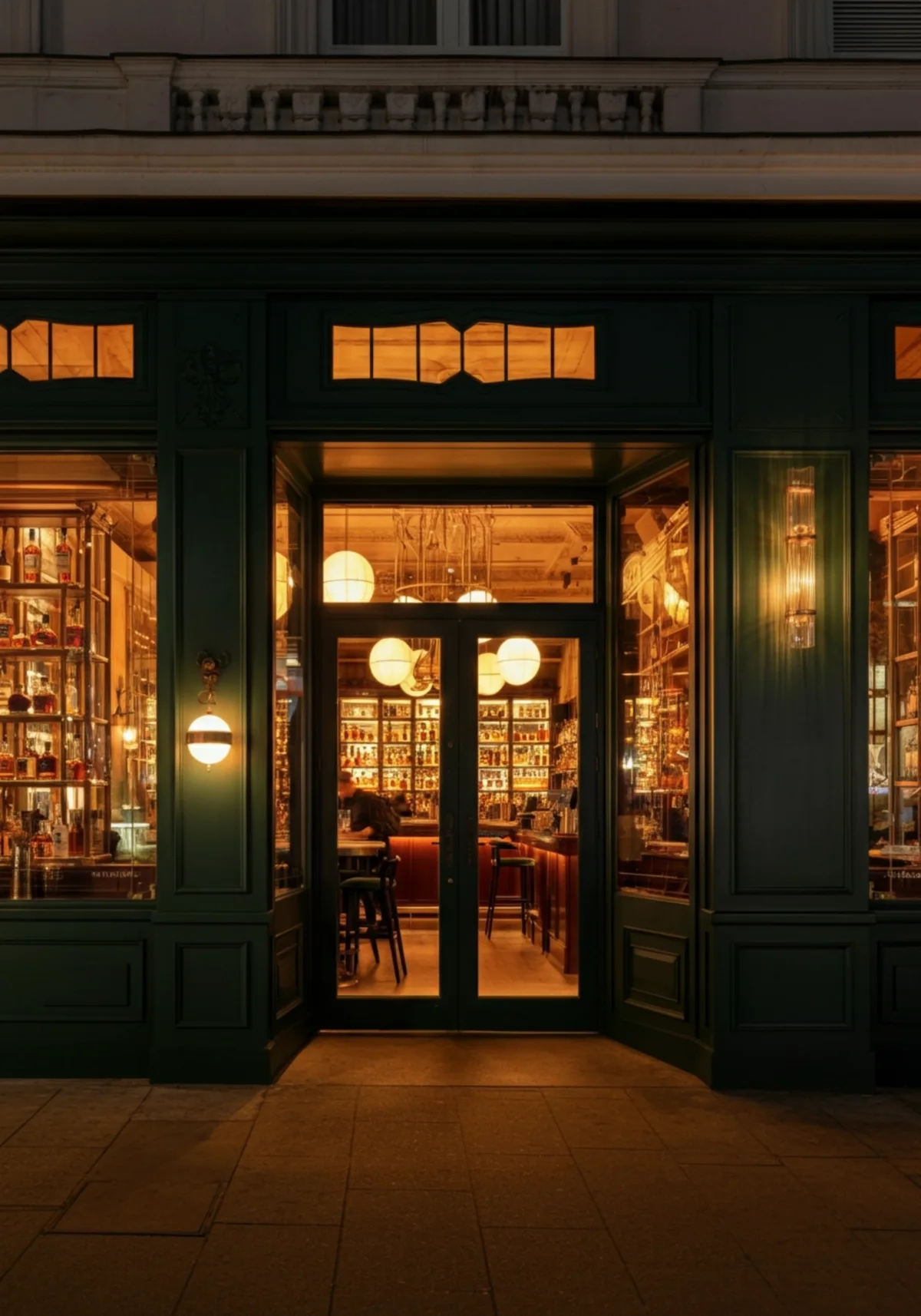
The change in drinking culture is visible in hospitality.
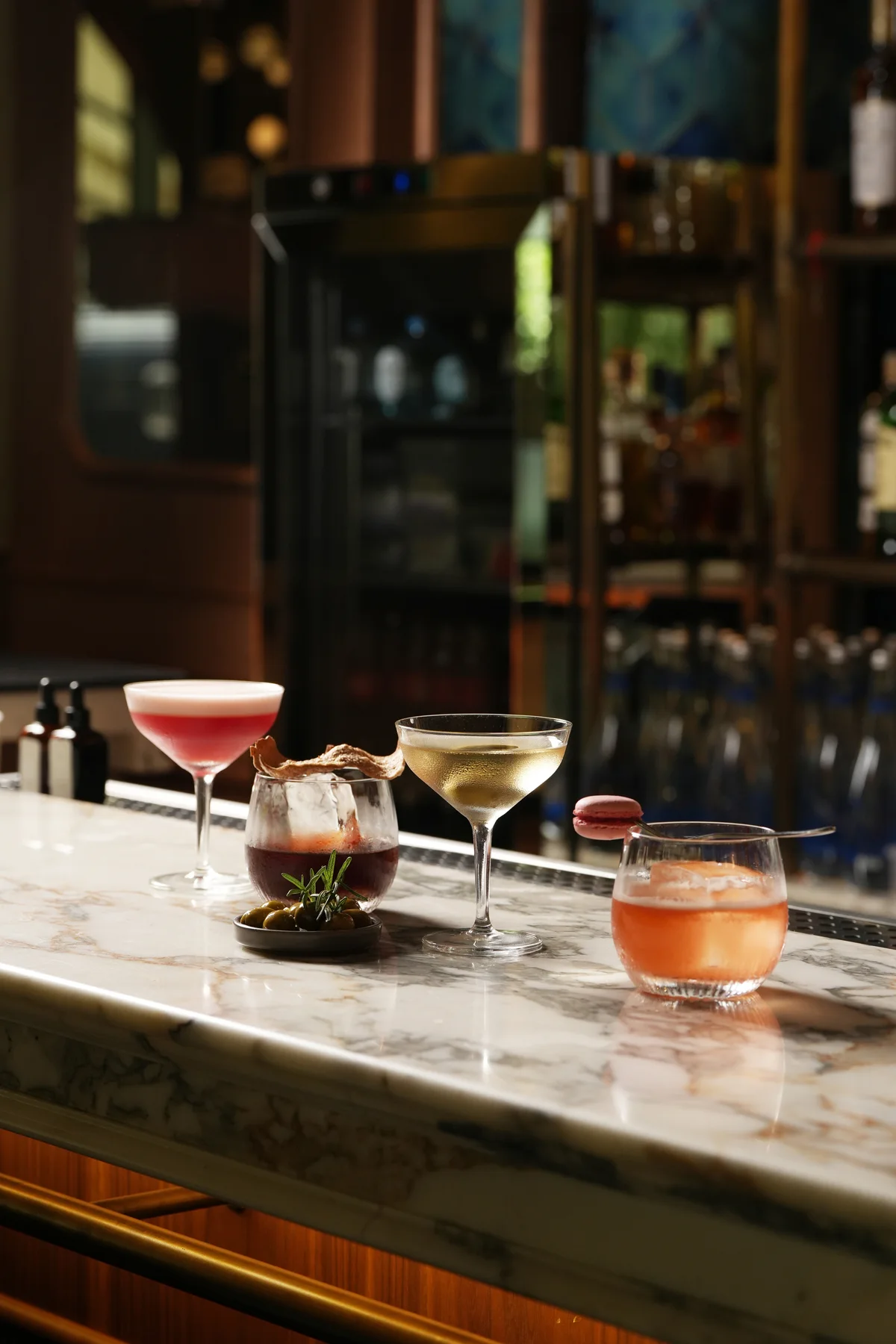
Large venues built around high energy group spending are giving way to a broader mixture of bistros, cocktail bars, fusion restaurants, live music venues, and smaller neighbourhood businesses. The new landscape is not necessarily less social. It is social on a different scale.
In cities such as Shanghai, Beijing, Shenzhen, and Chengdu, cocktail culture has helped imported spirits find uses outside formal luxury. Gin, vodka, rum, and whisky can enter drinks designed around flavour, presentation, and an individual order rather than appearing only as a full bottle placed at the centre of a table.
This matters for bars because the occasion has become more important than category loyalty. A guest may move between a cocktail, beer, wine, and a no alcohol option during different visits without seeing those choices as contradictory.
The bar is no longer required to reproduce the prestige logic of the banquet. It can build value through atmosphere, music, food, service, design, and a sense of belonging. That shift favours operators who understand the local audience rather than simply assembling a back bar of expensive international labels. Availability alone does not create relevance.
Convenience Becomes Part of the Product
Retail is changing at the same time that impacts chinese Drinks Market.
Hypermarkets and supermarkets have lost some ground as consumers turn towards convenience stores, e-commerce, compact packaging, and rapid delivery. In China, on-demand commerce is often described as O2O, or online to offline, because a digital order is fulfilled by a nearby retailer, warehouse, or delivery centre.
Speed alters the relationship between planning and consumption. A purchase no longer has to be made during a weekly shopping trip or arranged well before a gathering. It can respond to an immediate occasion at home or among a small group.
The product must also fit the delivery system. Smaller bottles, miniatures, chilled beer, ready-to-drink formats, and simple combinations of spirits, mixers, and ice are easier to place within an instant retail order than traditional gift packaging.
Convenience should not be mistaken for low quality. It is a form of value created by timing, size, and suitability. Consumers may accept a higher unit price when the total purchase is smaller and the product arrives at the moment it is needed.
For the drinks industry, distribution is no longer only the route by which a product reaches the consumer. Increasingly, the route shapes which product is selected.
Why Wine Faces a Structural Problem
Still wine recorded one of the sharpest category declines in 2025, with volumes falling by 19 per cent. Red wine accounted for much of that contraction.
The pressure reflects more than a difficult economic year. Red wine’s long association with gifting, formal dining, and business hospitality made it dependent on occasions that are no longer as reliable as they once were.
White wine also declined, but less severely, allowing it to gain share within the wine category. Lighter and more aromatic styles, including German Riesling and New Zealand Sauvignon Blanc, have attracted interest because they can fit casual meals and less formal settings more easily.
Sparkling wine outside Champagne showed slight growth, supported by occasions such as brunch and daytime socialising. The scale remains limited, but the direction is revealing. Wine’s future in China may depend less on restoring the habits of the old premium market and more on building new occasions around food, accessibility, and informal hospitality.
That requires patience. A category shaped for years by ceremony cannot immediately become part of ordinary personal choice simply because producers decide it should.
Imported Spirits Find Openings
Imported spirits performed unevenly, but several categories grew during 2025.
Gin volumes rose by 20 per cent, while vodka and rum recorded double-digit increases from smaller starting points. Imported spirits increased by about 3 per cent overall, and whisky achieved modest growth. The details within whisky were mixed. American whiskey rose by 5 per cent, while Japanese and Irish whiskies recorded double-digit gains from relatively modest bases. Scotch whisky declined by 1 per cent.
These figures should be read with care. Fast percentage growth can look dramatic when the starting volume is small, and it does not mean imported spirits are displacing baijiu at a national scale.
Their significance lies elsewhere. Gin, vodka, rum, and whisky can move through cocktail bars, home occasions, restaurants, ecommerce, and cities beyond the largest metropolitan markets. Their routes to consumers are more varied than the traditional prestige channel.
Cocktail culture is particularly important because it gives unfamiliar categories a social use. A spirit does not have to be purchased first as a full bottle or understood through detailed category knowledge. It can enter through a bar menu and become familiar within a broader hospitality experience.
Beer and Ready to Drink Products
Beer volumes declined by 2 per cent in 2025, but premium products continued to outperform lower-priced segments.
This does not necessarily signal a simple move towards luxury. Premium beer can offer manageable spending, individual packaging, and a visible quality distinction without requiring the financial commitment of a premium spirit or wine purchase.
Ready-to-drink products remained broadly flat in a contracting market, which amounted to relative resilience. Their appeal rests on affordability, convenience, flavour variety, and a format that requires little explanation. The category also suits smaller households and informal social occasions. A consumer can purchase a limited quantity without committing to a large bottle or assembling several ingredients.
Globally, ready to drink products are becoming more important as consumers seek flavour exploration, convenience, and a wider range of alcohol strengths. China’s market follows its own cultural and commercial logic, but it is not isolated from that wider shift.
The format works because it meets the occasion directly. It offers a defined serve, controlled quantity, and easy transport within a market increasingly shaped by immediate decisions.
Baijiu beyond the Banquet
Baijiu remains too culturally and economically important to be treated as a category in permanent retreat.
Its difficulty lies in the weakening of the occasions that supported some of its most valuable expressions. Formal toasting, corporate entertainment, and prestige gifting gave premium baijiu a role that went well beyond flavour.
Producers have responded with smaller bottles, lower strength products, contemporary packaging, collaborations, mixed drinks, and food related experiments. These efforts show a willingness to reach new audiences, but innovation alone cannot erase the category’s established meanings.
Baijiu must navigate a delicate problem. Moving too far from tradition can weaken the cultural authority that makes it distinctive, while relying too heavily on that authority may leave it tied to occasions younger adults do not wish to reproduce.
The most convincing future may not require baijiu to imitate imported spirits. It may instead involve creating new settings in which its regional styles, fermentation traditions, and cultural history can be understood without the pressure of compulsory toasting or formal hierarchy.
That is a slower task than launching a fashionable product, but it offers a more durable form of relevance.
The Limits of a Generational Explanation
It is convenient to say that young adults are reshaping China’s drinks market. It is only partly true.
Older consumers are also spending more cautiously, business hospitality has not returned to its earlier strength, and economic pressure affects purchasing across age groups. Retail technology, smaller households, urban lifestyles, and changing work culture are structural forces rather than generational preferences alone.
Nor are younger adults abandoning alcohol in one coordinated movement. Some are moderating, some are experimenting across categories, and others are choosing not to drink. The market contains all of these behaviours at once.
The strongest evidence of change is not that one generation prefers gin while another prefers Baijiu. It is that fewer consumers accept the idea that the occasion should dictate an expensive or compulsory purchase. Choice has become more individual, but also more conditional. A product must justify its price, format, setting, and social meaning each time.
That is a harder market to dominate, though it may also be a more creative one.
China’s drinks market was once explained through scale, prestige, and the power of formal occasions. Those forces still matter, but they no longer tell the whole story.
The newer market is being shaped in smaller spaces: a neighbourhood bar, a restaurant table among friends, a home gathering, or a delivery order placed shortly before an evening begins. Convenience, moderation, value, and personal preference now carry more weight alongside tradition and status.
This does not represent a clean break between old and new China. Baijiu remains central, business culture has not disappeared, and younger legal drinking age consumers have not embraced every international category. The shift is uneven because the country itself is socially, economically, and regionally varied.
For bars and drinks companies, the lesson is not simply to chase youth. It is to understand the changing occasion. The banquet once told consumers what belonged on the table. China’s emerging drinks culture increasingly asks the product to explain why it belongs there at all.
Spirit
Moutai Flying Fairy, also known in Chinese as '茅台飞天' (Moutai Feitian), is a prestigious Baijiu that epitomizes the…
Spirit
Baijiu Moutai Chun 1992 is a quintessential expression of China's most celebrated spirits, embodying a sophisticated balance of…

Spirit
Moutai Chun 2008 is a distinguished example of Baijiu, a traditional Chinese spirit renowned for its unique complexity…
Spirit
Baijiu Moutai Year of the Pig 2019
Baijiu Moutai Year of the Pig 2019 is a distinctive spirit produced by Kweichow Moutai Co, Ltd, renowned…
Spirit
Baijiu Moutai Year of the Dog 2018
Baijiu Moutai Year of the Dog 2018 is an exquisite limited-edition spirit released by the renowned Kweichow Moutai…

Trending
The Global Spirits Reset: Falling Volumes, India’s Rise, and the Search for Growth
For years, the global spirits industry spoke the language of expansion. New markets were opening, premium bottles were moving into wider circulation, cocktail culture was travelling, and international groups could often rely on growth in one region to compensate for weakness in another. That confidence has become harder to sustain. Global beverage alcohol volumes fell […]
June 29, 2026
Discovery and Education
Baijiu: the Spirit Consumed by Millions but Ignored by the West
By volume and economic weight, Baijiu is the most consumed distilled spirit in the world. In China, baijiu accounts for more than 99% of domestic spirits consumption and generates annual revenues exceeding US$100 billion. Individual baijiu producers sell more spirit each year than the combined output of many global whisky regions. Yet despite this scale, […]
February 20, 2026

Trends and Innovations
The Best New Bartenders of 2026: The People Shaping the Next Generation of Cocktails
The most interesting bartenders of 2026 are not necessarily the people making the most elaborate drinks. They are the bartenders changing what the profession expects from itself. Across Mexico City, Singapore, Hong Kong, New York, Atlanta, Los Angeles, Washington, D.C., Sydney and other major drinking cities, a new generation is combining technical skill with hospitality, […]
August 26, 2026