Rum is often presented as one broad family, although its identity changes considerably with raw material, geography and method. In Martinique, the most distinctive tradition begins with sugarcane crushed for its fresh juice rather than processed first into crystallised sugar and molasses.
That raw-material choice places Martinique within the wider world of pure cane juice rum. Its deeper identity, however, comes from the system built around the juice: defined growing areas, a restricted harvest calendar, regulated fermentation, continuous column distillation and controls over resting and ageing.
Distillerie Neisson, established at Le Carbet in 1932, brings that system into focus. Its white rhum reflects a tradition formed through colonial sugar history, agricultural crisis, technical innovation and the gradual protection of a regional name.
Sugar Before Agricole
Sugarcane took root in Martinique during the 17th century within a colonial plantation economy sustained by enslaved labour. The profitable commodity was sugar. Molasses, left behind after the extraction and crystallisation of sugar, supplied the raw material for most early rum production.
This arrangement followed the economics of the plantation. Fresh cane juice was too valuable to send directly to the still when it could first become exportable sugar. Rum occupied a secondary position, turning a manufacturing residue into another commercial product.
Direct distillation from cane juice was nevertheless known earlier than the conventional origin story sometimes suggests. The official history accompanying the Martinique appellation records agricultural rhum at Fonds-Préville in Macouba near the beginning of the 19th century. Martinican cane-juice rhums were sufficiently established to receive recognition at the Paris Universal Exhibition of 1855.
Rhum agricole was not suddenly invented during one late-century crisis. The method already existed. Economic upheaval gave it a larger role.
Beet Sugar and a Changing Economy
The Napoleonic Wars disrupted the movement of colonial sugar into continental Europe. British maritime pressure and France’s Continental System exposed the country’s dependence on imported cane sugar. Napoleon’s government encouraged beet cultivation and the development of a domestic sugar industry.
Colonial cane sugar returned after the wars, but beet production did not disappear. French manufacturers improved their methods, and political protection helped the domestic industry expand through the 19th century. European beet sugar eventually became a formidable competitor to Caribbean cane.
Martinique’s producers also faced larger mills, industrial concentration, global overproduction and periods of falling sugar prices. Some estates could no longer compete efficiently as sugar manufacturers, particularly where terrain restricted mechanisation or large-scale cultivation.
Direct distillation offered another use for the harvest. Cane that might have entered an unprofitable sugar market could instead be crushed, fermented and distilled on or near the estate.
The late-19th-century sugar crisis therefore accelerated an existing practice. It helped move cane-juice rhum from a limited production method towards a defining part of Martinique’s economy and identity.
Vesou and the Agricultural Rhythm
Freshly extracted cane juice is known in the French Caribbean as vesou. Once fermented, it becomes a low-strength cane wine ready for distillation.
Vesou is perishable. Cut cane begins losing quality, while extracted juice changes rapidly through oxidation and microbial activity. Harvesting, transport, crushing and fermentation cannot be separated by long periods or great distances without altering the material.
Molasses allows a different rhythm. It is concentrated, comparatively stable and suitable for storage or transport before fermentation. Fresh juice keeps the distillery tied much more closely to the harvest.
That pressure shaped the geography of Martinican agricole production. Distilleries developed within reach of cane-growing districts, and the annual distillation season followed the period when mature cane could be cut and processed.
Agriculture did not merely supply the distillery. It determined when the distillery could operate.
Pure Cane Juice Rum and Rhum Agricole
Pure cane juice rum is a broad production description. It refers to rum distilled from fermented fresh sugarcane juice rather than molasses or another sugar-manufacturing product.
Such spirits are produced in several countries and under very different conditions. Producers may use pot stills, modern columns or traditional continuous equipment. Fermentation may be short and controlled or long and largely spontaneous. Local rules, where they exist, vary considerably.
Rhum agricole belongs to a narrower historical and legal language associated particularly with French and French-influenced production traditions. Even then, the precise meaning depends on the territory and its regulations.
Fresh cane juice alone does not make a spirit AOC Rhum de la Martinique. The Martinique appellation governs an entire chain of production, from the origin and cultivation of the cane to fermentation, distillation, resting and ageing.
Pure cane juice describes the fermentable material. Martinique’s appellation defines a regional production system.
From Continuous Distillation to the Creole Column
Continuous stills reached the French Caribbean during the 19th century as distillers adopted equipment and ideas arriving from metropolitan France. Martinican producers adapted the technology to low-strength fermented cane juice, developing the still commonly known as the Creole column.
The column suited the agricultural season. It could process fermented vesou continuously and efficiently while the harvest was underway. Bagasse, the fibrous material left after crushing, could also fuel steam production.
Martinique’s column was not intended to produce highly rectified neutral alcohol. The present AOC requires the collected distillate to fall between 65 and 75 per cent alcohol by volume when measured across the day. That range allows the spirit to retain a substantial concentration of fermentation-derived volatile compounds.
The equipment itself is closely defined. The stripping section must contain at least 15 plates in stainless steel or copper. Above it sits a concentration section made entirely from copper and fitted with between five and nine plates.
Continuous multi-stage distillation with reflux is therefore not merely common practice in Martinique AOC production. It is mandatory.
The AOC Rhum de la Martinique
The appellation was initially recognised by the French decree of 5 November 1996. Its current formal name is AOC “Rhum de la Martinique”, and the word agricole must appear in the same visual field on the label.
The AOC protects more than the island’s name. Cane must come from declared parcels within the delimited production area. Approved varieties belong to Saccharum officinarum, Saccharum spontaneum or their hybrids, and genetically modified varieties are prohibited.
Harvest may begin no earlier than 1 January and must end by 31 August. Distillation runs from 2 January until no later than 5 September.
The extracted juice must measure at least 14 degrees Brix and have a pH of at least 4.7. Enriching it with molasses, sugar syrup or other sugar-manufacturing by-products is forbidden.
Fermentation must be discontinuous and take place in open vessels made from inert material, each with a maximum capacity of 500 hectolitres. Closed-vessel and continuous fermentation are excluded. Fermentation may last no more than 120 hours, and the fermented cane wine cannot exceed 7.5 per cent alcohol by volume before distillation.
These limits preserve a recognisable Martinican method while leaving room for differences among estates, cane parcels, yeast practices and column operation.
White, Élevé Sous Bois and Vieux
The appellation covers three main categories: white, élevé sous bois and old rhum.
White AOC rhum must remain colourless and undergo at least six weeks of maturation in an inert vat after distillation. This period allows the spirit to settle without being influenced by wood.
Rhum élevé sous bois must spend at least 12 uninterrupted months in oak.
Rhum labelled vieux must mature for at least three years in oak vessels with a capacity of less than 650 litres. When the distillation year is claimed as a vintage, the minimum rises to six years in oak vessels of the same maximum capacity.
Additional age terms are also regulated. VO requires at least three years, VSOP at least four, and XO or hors d’âge at least six.
The AOC, therefore, follows the rhum beyond the still. Resting, ageing, labelling and, for old rhum, bottling within Martinique remain part of the protected system.
The Long Road to Protection
Formal protection in 1996 followed more than a century of collective attempts to defend Martinican origin.
As agricultural rhum expanded during the 19th century, fraud and misrepresentation followed. In 1895, agricultural rhumeries formed a syndicate intended to protect the reputation of Martinique’s cane-juice rhum. Origin certificates confirmed that the sugary material came from cane grown on the named estate rather than imported molasses.
A more specialised syndicate appeared in 1935, combining guarantees of origin with quality assessment by a tasting commission. That collective tasting practice later became part of the appellation’s control culture.
The AOC did not create Martinique’s agricultural rhum tradition. It gathered long-standing agricultural, technical and commercial practices into a legally enforceable framework.
Neisson at Le Carbet
The Neisson family story began on Domaine Thieubert at Le Carbet, on Martinique’s north-western coast. The project took shape in 1931, and Jean and Adrien Neisson established the distillery in 1932.
Neisson remains a comparatively small, independent family producer. Its importance comes less from volume than from the close relationship it maintains between cane cultivation, crushing, fermentation and distillation.
The estate’s history belongs to a later generation of Martinican agricole production than some of the island’s oldest sugar properties. That has not prevented it from becoming one of the clearest reference points for white rhum.
At Neisson, the cane supply and the working of the column remain central to the distillery’s identity. The producer illustrates how individual character can develop inside strict AOC rules rather than in opposition to them.
The appellation supplies the grammar. Each distillery still speaks with its own voice.
Le Rhum Blanc Neisson
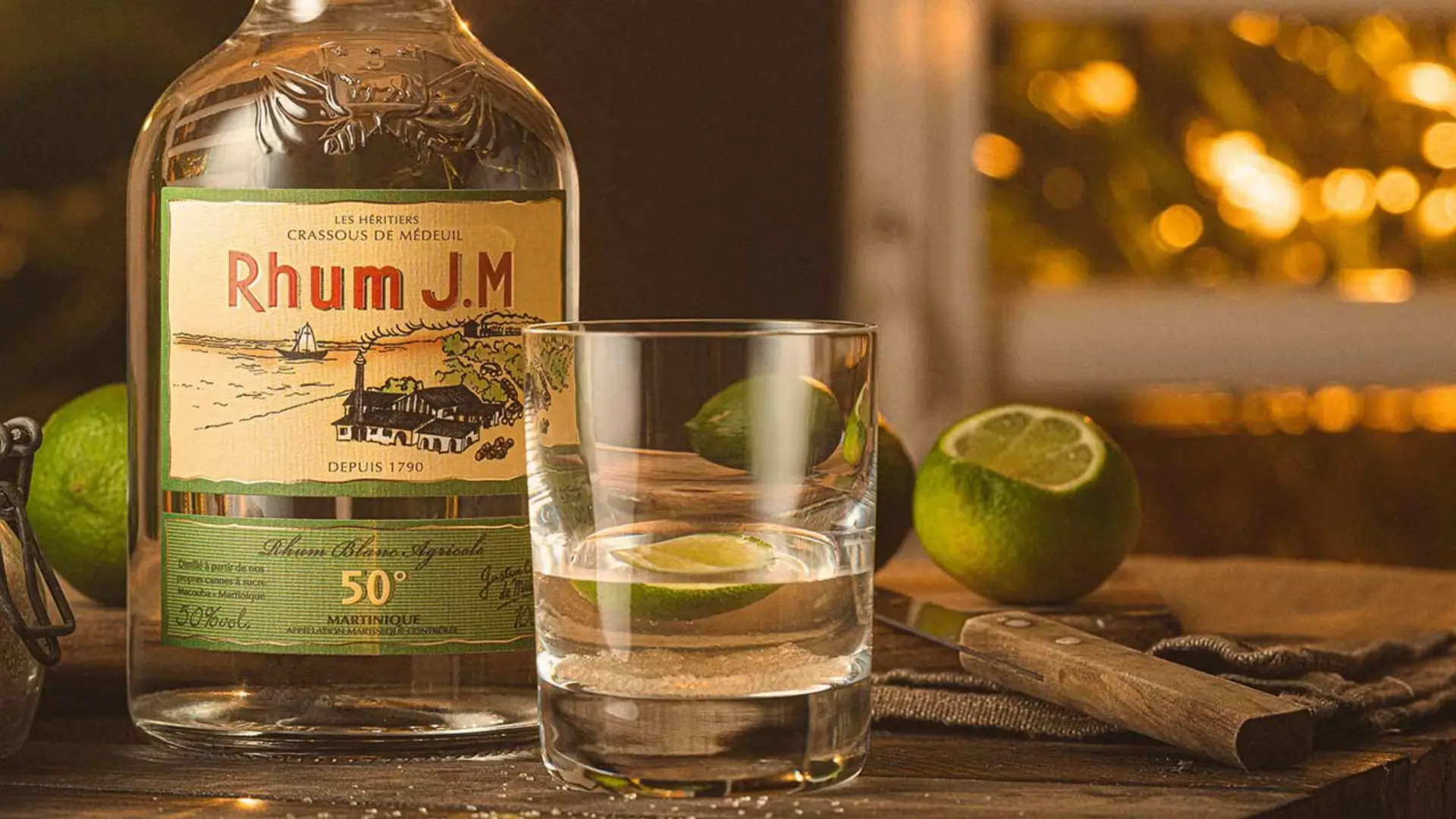
Le Rhum Blanc Neisson provides a direct view of the unaged category.
Oak can alter a spirit through extraction, oxidation and long maturation. White rhum leaves less room for wood to soften or redirect the underlying distillate. Cane quality, fermentation and column operation carry much of the responsibility for the finished identity.
Its place here is illustrative rather than promotional. The product connects the wider legal and historical discussion to one working distillery and one expression of white Martinique agricole.
Behind the bottle lies a complete production chain: cane grown within the appellation’s framework, fresh vesou, restricted fermentation, a Creole column and the required period of rest in an inert vat.
White rhum may appear to be the simplest category. In practice, it reveals the agricultural and distilling decisions most clearly.
Martinique’s Molasses Tradition
Martinique’s international reputation now rests heavily on rhum agricole, but fresh cane juice is not the island’s only rum lineage.
The separate geographical indication Rhum de sucrerie de la Baie du Galion, also called Rhum de la Baie du Galion, applies to rum made exclusively from molasses and syrups created during cane-sugar production. Its categories include white, brown and Grand Arôme rum.
Grand Arôme represents the most distinctive part of that tradition. It must combine molasses, vinasse and water before undergoing a fermentation lasting more than 168 hours in wooden vats with indigenous microorganisms.
The resulting rum is notable for its unusually high concentration of fermentation compounds. The specification requires at least 800 grams of volatile substances and at least 500 grams of esters per hectolitre of pure alcohol.
It is produced principally as an intensely aromatic component for blending rather than as a parallel form of agricole. Its continued presence prevents Martinique’s rum history from being reduced to a single raw material.
The island contains both the cane-juice tradition protected by the AOC and the molasses-and-syrup tradition represented by the Galion Bay GI.
Why Martinique Became the Reference
Fresh cane juice spirits are made in many parts of the world. Martinique became the clearest international reference because it connected agricultural practice to an unusually detailed system of origin protection.
The rules reach back into the field and forward into the ageing cellar. They govern the parcels from which cane may come, the harvest period, minimum juice quality, fermentation vessels and duration, column construction, distillation strength and maturation.
Those controls do not make every Martinican rhum identical. Cane varieties, weather, parcel location, fermentation choices, equipment management, resting, ageing and blending continue to create differences among producers.
The appellation defines the boundaries of the tradition without erasing the people and estates working within them.
Conclusion
Martinique rhum agricole emerged from a longer history than the familiar late-19th-century origin story suggests. Cane-juice rhum was already present by the early 1800s, but the expansion of European beet sugar, declining cane economics and the concentration of industrial sugar production made direct juice distillation increasingly important.
Vesou gave struggling estates another path for their harvest. Continuous columns allowed fermented juice to be processed efficiently during the cane season. Producer organisations defended origin and quality long before the AOC gave those ideas legal force in 1996.
Today, AOC Rhum de la Martinique is defined by far more than fresh juice. Its identity rests on Martinican cane, regulated agriculture, open fermentation, the mandatory Creole column, controlled distillation strength and recognised periods of rest or ageing.
Neisson and its white rhum bring that structure into view at Le Carbet. The Galion Bay tradition adds an important counterpoint, preserving Martinique’s molasses-based and high-ester history alongside agricole.
Martinique became a global reference not simply by distilling cane juice, but by turning agriculture, history, technique and origin into one of rum’s most clearly articulated regional systems.

Spirits consultant, creator of curated independent bottling collections, and international spirits judge, blending a foundational heritage in viticulture with modern trade and communication strategy.

Distillery
Nestled in the picturesque landscape of Macouba in Martinique, Rhum J.M Distillery stands as a beacon of excellence…
Distillery
Distillerie Neisson, nestled in the stunning landscape of Le Carbet, Martinique, is a beacon of agricultural rum production,…
Spirit
Braud & Quennesson Signature Du Chai Martinique Agricole Rhum
Braud & Quennesson Signature du Chai is a distinguished agricole rum that originates from the lush landscapes of…
Spirit
S B S French Antilles Grand Arôme 2021 Single Origin Rum
S.B.S. French Antilles Grand Arôme 2021 Single Origin Rum is a remarkable expression of the high-ester rum style…
Spirit
Camikara 3 YO Indian Pure Cane Juice Rum
Camikara 3 Year Old Indian Pure Cane Juice Rum is a pioneering spirit that stands out for its…
Spirit
LA PERLE Pure Cane Juice Rustic Rum
La Perle is a distinguished pure cane juice white rum, characterized by its rustic charm and craftsmanship, produced…
Spirit
Neisson 18 YO Martinique Agricole Rhum
Neisson 13 Ans Rhum exemplifies the meticulous craftsmanship of Rhum Agricole, a style known for its rich, authentic…
Spirit
J.M V.S.O.P is a distinguished Rhum Agricole produced on the island of Martinique, renowned for its unique expression…
Spirit
Baie des Trésors 2019 Agricole Martinique Karakoli Rum
Karakoli Rum, part of the Baie des Trésors collection, is a distinguished Agricole rum originating from the arid…
Partnership
Lady Bee: Structure, Scale, and the Quiet Discipline of Contemporary Peruvian Bartending
There are bars that announce themselves through concept, and others that build recognition through repetition. Lady Bee belongs firmly to the latter. Located in Lima, the bar has developed its reputation not through spectacle, but through consistency, technical control, and a steady refinement of classic structures within a contemporary Peruvian context. Since opening in 2017, […]
September 26, 2026
Partnership
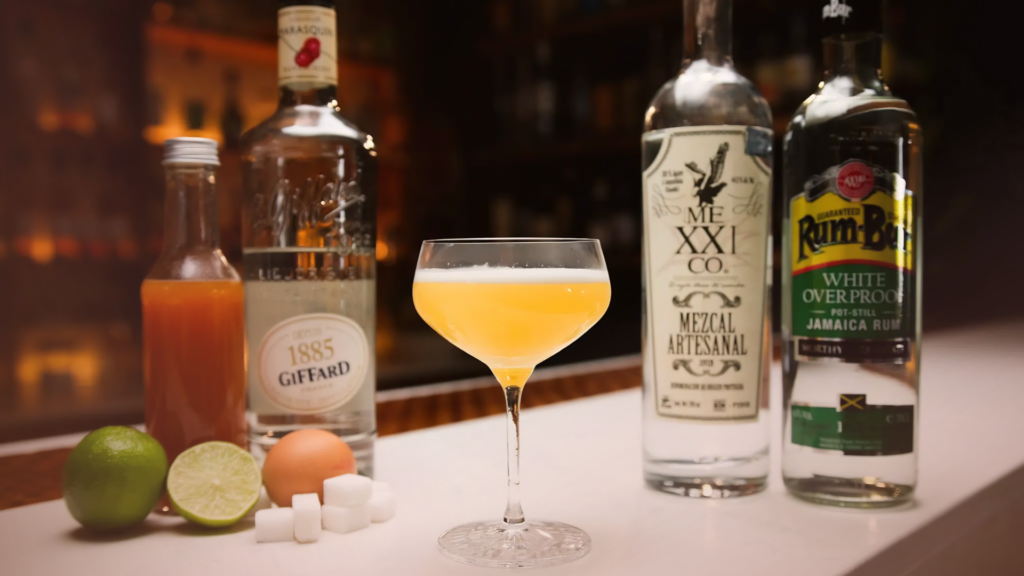
Illegal Cocktail: The Mezcal Cocktail That Reframes the Daiquiri Structure
The Illegal cocktail follows a familiar outline, but the result is distinctly different. Built around mezcal, lime, falernum, maraschino, simple syrup, and a measure of Jamaican overproof rum, it takes the logic of a sour and shifts it into a drier, more aromatic profile. The drink is credited to Italian bartender Samuele Ambrosi, with its […]
September 24, 2026
Partnership

The Shipwreck That Turned Rum Into a Time Capsule
Rum was not designed to be preserved. It was designed to move. For most of its early history, rum existed as cargo rather than a collectable, shipped in bulk or sealed bottles across the Atlantic as part of a vast commercial system linking sugar plantations, ports, navies, and merchants. When sealed bottles of 19th century […]
September 23, 2026