Floor Maltings History: Where Whisky Began
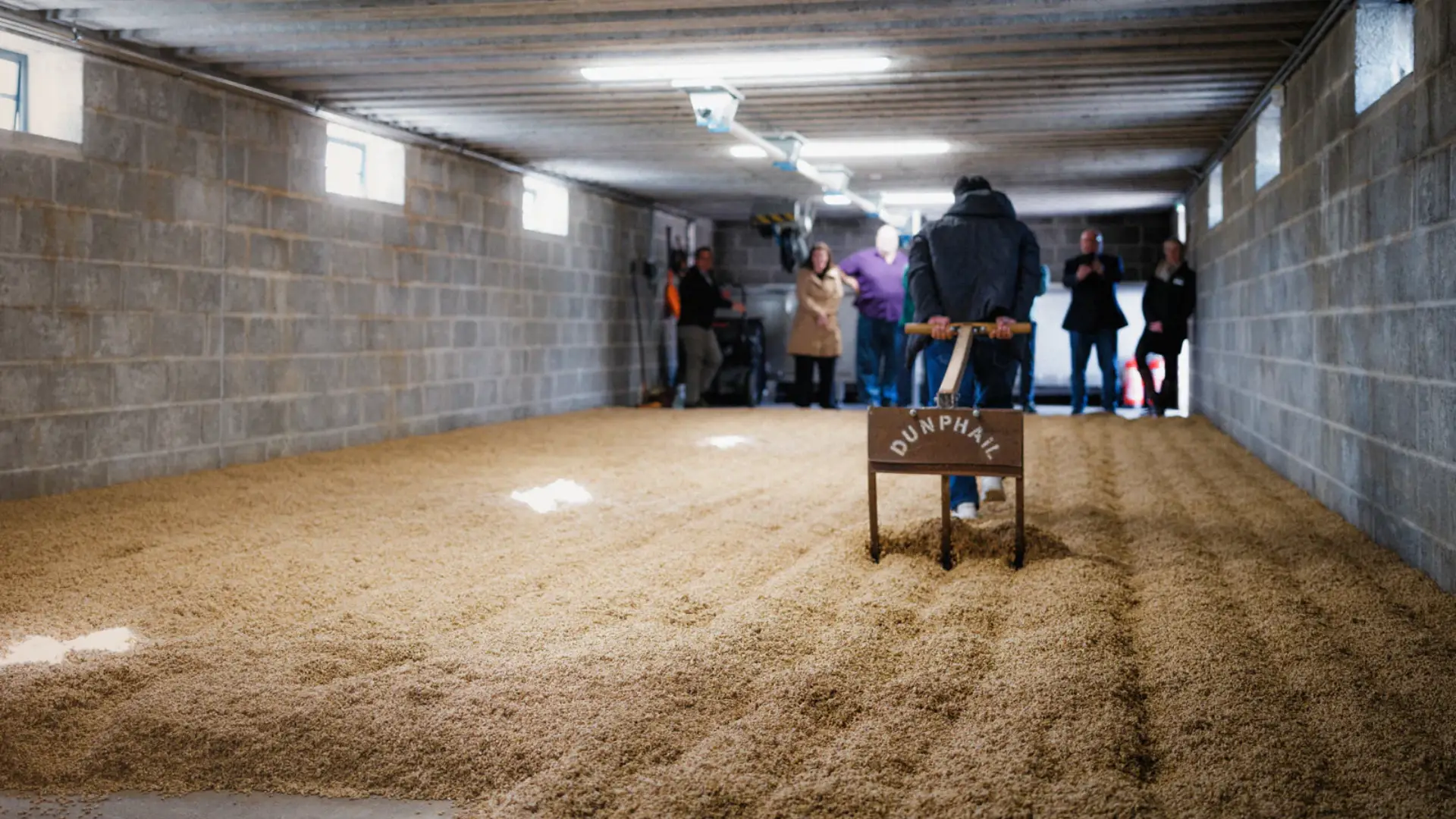
Before stainless steel vessels, automated temperature control, and industrial malt plants, a Scotch whisky distillery often began its work on a stone or concrete floor. Barley was steeped in water, spread in a shallow layer, and turned repeatedly by hand as it germinated. The process demanded time, judgement, space, and physical labour. It also tied the first stage of whisky production directly to the distillery itself.
For much of Scotch whisky history, malting was not a separate industry supplying distilleries from a distance. It happened beside the kiln, the mash house, and the still room. The people who made the whisky also watched the grain warm, sprout, and change beneath their feet.
That world did not disappear overnight. It faded through decades of mechanisation, rising demand, labour pressure, and the need for greater consistency. By the second half of the twentieth century, most distillery malt floors had fallen silent. Some were converted into warehouses, visitor spaces, or production rooms. Others remained as architectural traces of a process no longer practised.
A small number survived. Their continued use now carries a meaning very different from the one it held when floor malting was simply how whisky began.
Before the Still, There Was the Malt Floor
Malted barley is essential to single malt Scotch whisky because germination activates enzymes that later help convert the grain’s starch into fermentable sugars. In traditional floor malting, barley is first steeped in water, then transferred to a broad floor where it is spread into a relatively shallow bed.
As the grain begins to germinate, it produces heat and rootlets. Malt workers turn it using wooden shovels, rakes, or traditional tools to prevent the barley from matting together and to keep the temperature and growth as even as possible. Once the desired level of modification has been reached, the green malt is moved to a kiln, where drying stops germination.
At peated distilleries, peat smoke enters during kilning and leaves aromatic compounds in the malt. Yet floor malting is not simply a method of adding smoke. Its greater historical importance lies in the distillery’s control over barley handling, germination, and kiln conditions before mashing begins.
The work required attention around the clock. Weather, season, floor temperature, barley variety, moisture, and the judgment of the malt workers could all influence the result. Consistency depended on experience rather than complete mechanical control.
The Industrial Argument Against Tradition
Traditional floor maltings were expensive to operate. They required large buildings, substantial labour, limited batch sizes, and constant manual attention. A distillery could only malt as much barley as its floors, steeping vessels, and kilns could manage.
Pneumatic malting offered a different model. Introduced during the late nineteenth century and developed further during the twentieth, systems such as Saladin boxes and later large drum or mechanical plants used forced air and mechanical turning to regulate germination. Grain beds could be deeper, batches larger, and production less dependent on manual labour.
The economic advantage became increasingly difficult to ignore. As Scotch whisky production expanded after the Second World War, distilleries needed larger and more predictable supplies of malt. Specialist maltsters could produce barley to agreed specifications at a scale individual distilleries could not easily match.
Floor maltings began to be phased out more widely from the 1940s onward, although the pace differed from one site to another. By the 1960s and 1970s, closing a distillery’s malt floor had become part of the broader modernisation of Scotch production.
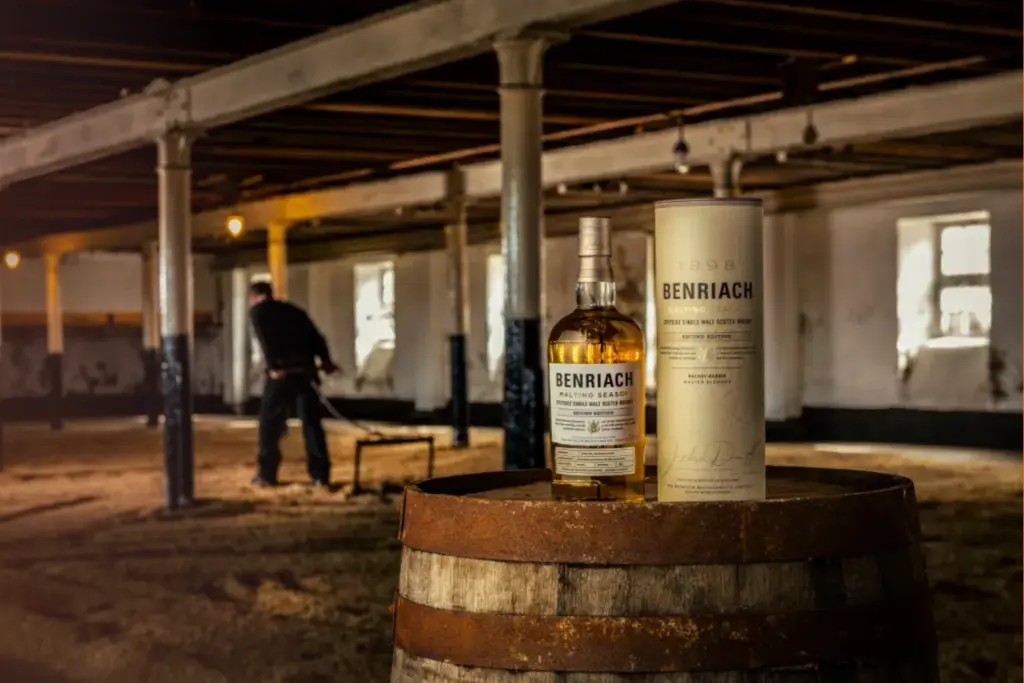
At Glen Ord, traditional floor maltings were replaced by Saladin boxes in 1961, before a large mechanical malting complex was developed later in the decade. At Glenury Royal, the maltings closed in 1968, years before the distillery itself fell silent. Across Scotland, similar decisions separated malt production from distillation.
Islay and the Rise of Centralised Malting
The change was particularly visible on Islay, where peat, smoke, and malting had long been woven into the island’s whisky identity. Distillery kilns once gave different parts of the island their own rhythms and smells. By the late twentieth century, much of that work had been concentrated at Port Ellen Maltings.
The large maltings at Port Ellen began operating in 1973 and became a major supplier of peated malt to Islay distilleries. Its scale allowed peat specifications to be managed more consistently while reducing the need for each distillery to maintain its own labour-intensive floors and kilns.
When Ardbeg Distillery closed in 1981, its traditional floor maltings did not return with the limited resumption of production in 1989. The distillery instead relied on commercially malted barley, principally associated with Port Ellen’s central supply structure.
This was not a rejection of Islay’s character. It was a practical response to a changed industry. Centralised malting helped distilleries survive, increase capacity, and maintain peat specifications without carrying the cost of complete in-house production. The trade-off was cultural as much as technical. A stage of whisky making that had once belonged to each distillery became shared infrastructure.
The Distilleries That Kept Their Floors
A small group of Scotch distilleries preserved floor malting even as the industry moved elsewhere.
Springbank Distillery in Campbeltown remains the clearest example of complete continuity. It floors malt the barley used for its production and carries the process through distillation, maturation, and bottling within its own operation. The same site produces the Springbank, Longrow, and Hazelburn single malts, with differences in peat treatment and distillation helping create three distinct identities.
At The Balvenie in Speyside, the working malt floors form part of a wider commitment to traditional crafts, although they do not supply all of the distillery’s barley requirements. Bowmore, Laphroaig, and Highland Park also retain active floor maltings while supplementing them with commercially malted barley.
On Islay, Kilchoman Distillery, established in 2005, brought floor malting into a new distillery rather than merely preserving it at an old one. Barley grown around Rockside Farm is malted on site for its 100% Islay releases, while other production uses malt from external suppliers. These distinctions matter. A distillery may operate genuine floor maltings without producing all of its own malt. The survival of the practice does not always mean complete self-sufficiency.
Why Partial Floor Malting Still Matters
It would be easy to dismiss partial floor malting as symbolic because the quantities are smaller than a distillery’s total requirement. That would misunderstand its role. A working floor maintains skills that would otherwise disappear. It preserves knowledge of steeping, germination, hand turning, kiln management, and the behaviour of barley under changing conditions. It also gives distillers a direct relationship with the raw material before it reaches the mill.
For Laphroaig, only a portion of the barley is malted on site, but the process remains linked to locally cut Islay peat and to a production history extending back to 1815. At Bowmore, the malt floor sits within a distillery founded in 1779, connecting modern production to methods practised long before central maltings became normal.
The resulting spirit cannot be explained by floor malt alone. Still shape, fermentation, cut points, condensation, casks, and maturation all matter. It would be inaccurate to claim that hand-turned malt automatically produces superior whisky. Its value lies elsewhere. Floor malting preserves a layer of authorship at the distillery.
A Tradition Returns Through New Distilleries
The story did not end with survival at a few historic sites. In recent years, new distilleries have begun revisiting floor malting as part of a wider interest in provenance, barley variety, local production, and older techniques.
Dunphail Distillery in Moray began production in October 2023 with floor maltings designed into the site from the beginning. Its approach includes hand turned barley, long fermentation, wooden washbacks, and direct-fired stills. Rather than treating floor malting as a preserved museum practice, Dunphail placed it inside a new production philosophy.
Kilchoman had already demonstrated a similar possibility on Islay. Its farm-based model connected barley cultivation, malting, distillation, maturation, and bottling more closely than most modern Scotch operations.
These distilleries are not recreating the nineteenth century. They use laboratory analysis, modern hygiene, and contemporary production knowledge. What they recover is the idea that malting can remain part of the distillery’s identity rather than an invisible outsourced stage.
What Was Lost When the Floors Fell Silent
The decline of floor maltings brought real advantages. Industrial maltsters improved consistency, efficiency, scale, and technical control. Without them, the growth of Scotch whisky would have been far more difficult. Yet something changed when the malt floors closed.
Distillery work became more specialised. Maltsters moved into central plants, while distillery teams concentrated on mashing, fermentation, distillation, and maturation. The buildings remained, but the daily movement of grain through them ended. Pagoda roofs and kiln chimneys increasingly became visual symbols rather than working parts of the process.
The loss was not necessarily measurable in a bottle. It was visible in employment, routine, architecture, and local knowledge. A distillery that stopped malting had not ceased to make authentic Scotch whisky, but one part of its relationship with barley had moved elsewhere.
That is why surviving malt floors attract so much attention today. They make a hidden stage of whisky production visible again. The last working floor maltings should not be romanticised as proof that older methods are automatically better. Their importance is more specific.
They preserve the memory of a time when a distillery’s responsibility began with wet barley on a cold floor. They show how Scotch whisky changed from a network of largely self-contained production sites into an industry supported by specialist suppliers and centralised infrastructure.
At Springbank, The Balvenie, Bowmore, Laphroaig, Highland Park, Kilchoman, and newer sites such as Dunphail, floor malting survives for different reasons and at different scales. In every case, it connects modern production to work that once defined the beginning of nearly every malt whisky. The floors did not disappear because they failed. They disappeared because the industry grew beyond them. Their survival now matters precisely because they are no longer ordinary.

Distillery
Nestled on the southern coast of the Isle of Islay, Ardbeg Distillery is celebrated for its unique productions…
Distillery
The Singleton of Glen Ord Distillery
The Singleton of Glen Ord Distillery, located in the picturesque village of Muir of Ord on the Black…
Distillery
Located in the heart of Islay, Bowmore Distillery is a hallmark of Scottish single malt whisky craftsmanship. Established…
Distillery
The Balvenie Distillery, nestled in the heart of Dufftown in Speyside, Scotland, is a beacon of traditional whisky…
Distillery
Dunphail Distillery is a resolutely traditional Speyside distillery dedicated to crafting the finest whisky using heritage methods. Established…
Distillery
Laphroaig Distillery, nestled on the rugged south coast of Islay, Scotland, is synonymous with rich and complex single…
Distillery
Springbank Distillery, renowned for its unrivaled commitment to quality and tradition, is nestled in the picturesque town of…
Distillery
Kilchoman Distillery, situated on the serene Isle of Islay, represents a pioneering spirit in the world of whisky…
History
Lagavulin Distillery and the Discipline of Slow Distillation on Islay
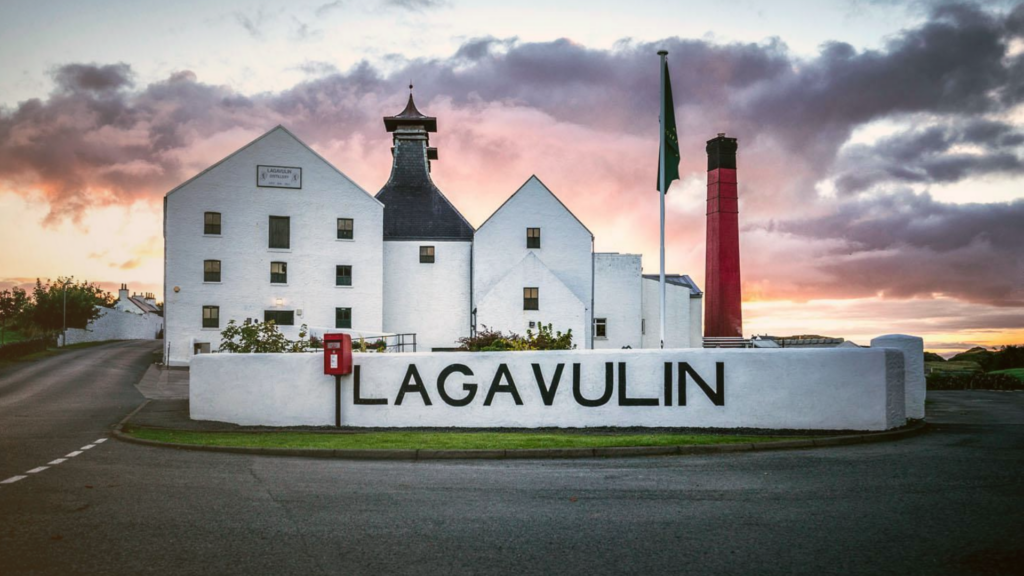
On the southern coast of Islay, Lagavulin Distillery stands beside a sheltered bay between Laphroaig and Ardbeg. Its white buildings, dark kiln roofs, and long waterfront warehouses belong to one of Scotland’s most recognisable whisky landscapes. Still, the character associated with the distillery was not created by scenery alone. Peat is the most obvious part […]
June 28, 2026
Barlist
From Floor Maltings to Bottling: How Springbank Distillery Kept Whisky Production on Site
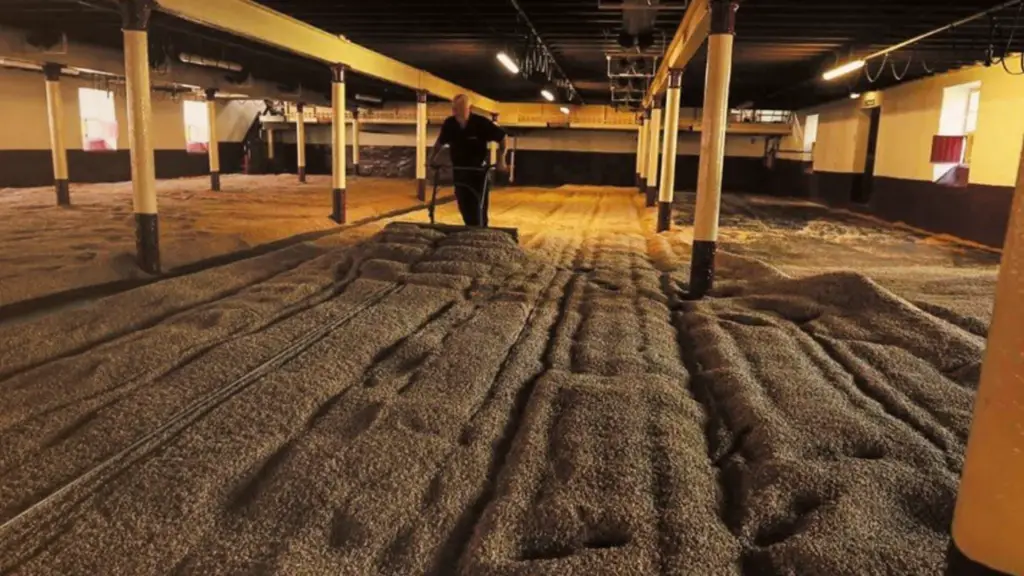
At Springbank Distillery, barley still arrives at one end of the production process and bottled whisky leaves at the other. Between those points, the grain is steeped, spread across malting floors, dried in the kiln, milled, mashed, fermented, and distilled. The resulting spirit is filled into casks, matured in Campbeltown, bottled, and labelled by the […]
June 24, 2026
Barlist
Auchentoshan: How Triple Distillation Became Its Defining Lowland Practice
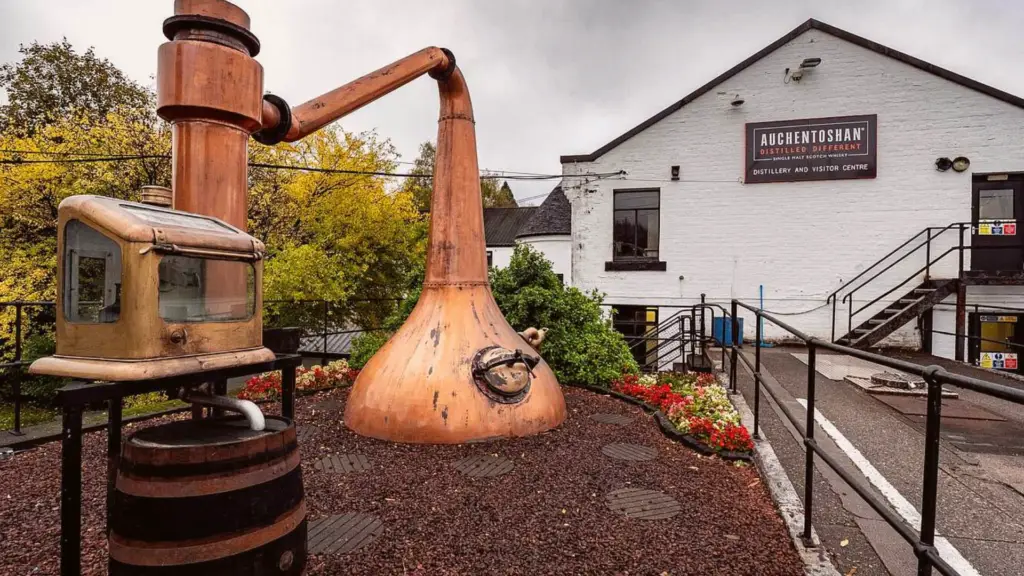
On the northwestern edge of Glasgow, close to the Kilpatrick Hills and the industrial history of the River Clyde, Auchentoshan Distillery has built its identity around a third passage through copper. Most Scotch malt whisky is distilled twice. At Auchentoshan, every part of the spirit passes through a wash still, an intermediate still, and a […]
June 16, 2026