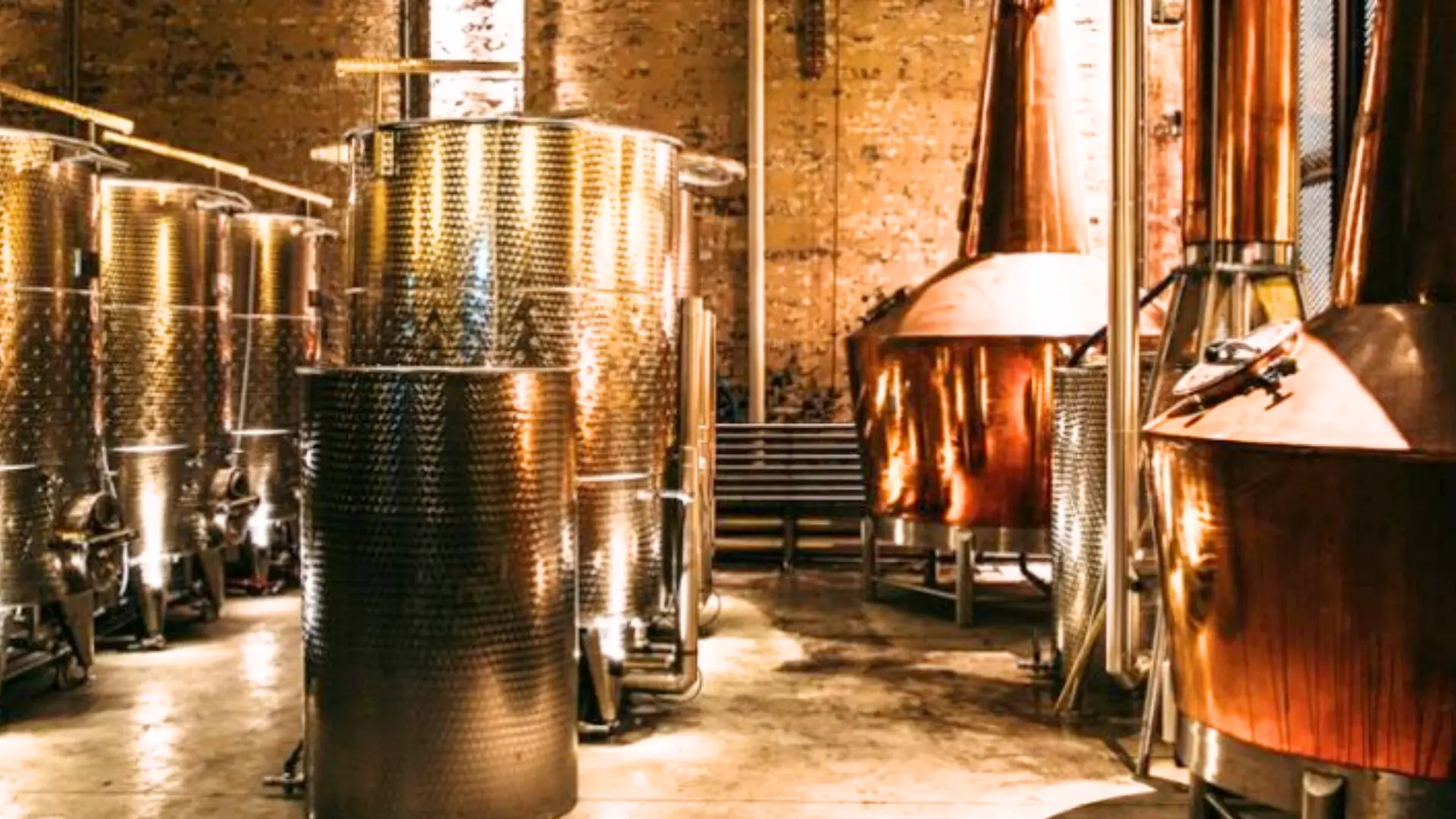
Behind the fermenters at Hampden Estate, the ground holds part of the distillery’s production logic. Open dunder pits sit exposed to heat and time, filled with the residue of previous distillations. This material is not discarded. It is allowed to decompose, acidify, and evolve before being reintroduced into new fermentations.
In most modern distilleries, each batch begins clean. At Hampden Estate, fermentation carries memory. The process is cumulative, and that continuity defines the chemical structure of the spirit long before distillation begins.
From 18th-century sugar production to 19th-century fermentation systems
Rum production in Jamaica developed within plantation economies during the 18th and 19th centuries, where molasses, a byproduct of sugar refining, became the primary fermentation base. Early distillation methods prioritized efficiency, but fermentation remained open to environmental influence.
Dunder, the liquid residue left after distillation (specifically from the stillage of pot distillation), was initially reused as a practical measure. Over time, distillers observed that returning this material to fermenting wash increased aromatic intensity. By the early 19th century, the use of dunder had evolved into a structured method, with pits functioning as reservoirs of microbial activity.
While many Caribbean distilleries abandoned this system during the 20th century in favor of faster, cleaner fermentations, Hampden Estate retained it. The result is a fermentation profile that diverges sharply from industrial rum production.
Bacteria, acids, and the formation of esters
The function of the dung pit is chemical. As organic material decomposes, it supports bacterial populations that generate organic acids, including acetic acid, butyric acid, and caproic acid. These acids are not byproducts to be removed. They are precursors.
During fermentation, wild yeast and bacteria interact within a molasses-based wash. Extended fermentation, often lasting several days (and in some cases over a week), allows acid concentration to increase. When this wash is distilled, these acids react with ethanol to form esters through esterification reactions.
Esters are responsible for the distinctive aromatic profile of Jamaican rum. Notes described as overripe banana, pineapple, solvent, or tropical fruit are not flavor additions. They are the result of controlled biochemical reactions. At Hampden Estate, this process is not incidental. It is regulated through the proportion of dunder, fermentation duration, pH level, and temperature.
Marque classification and measurable intensity
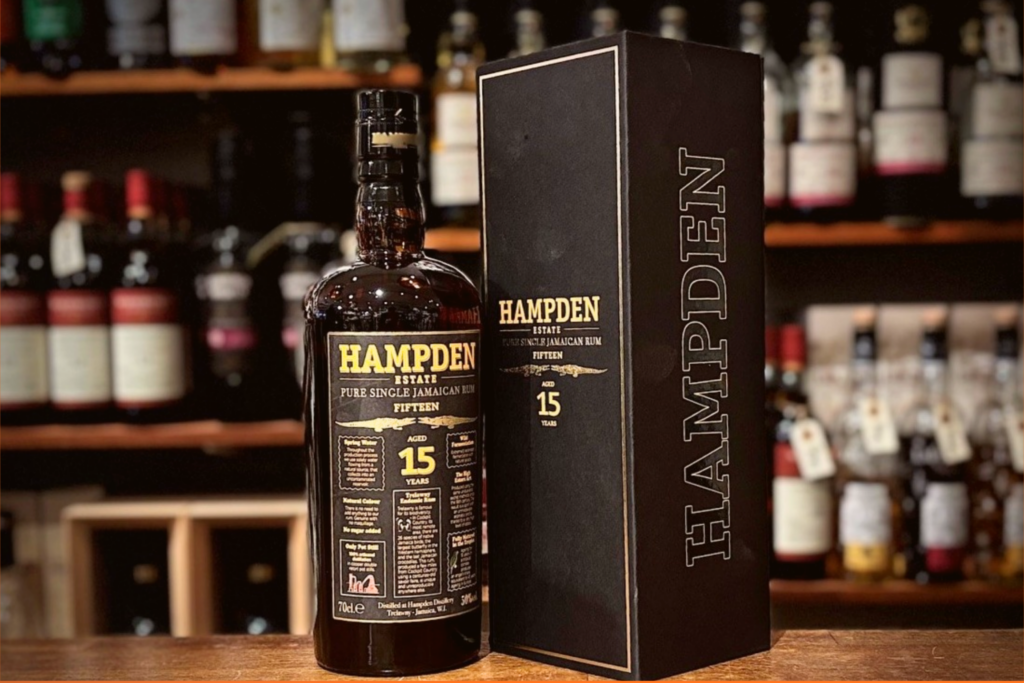
Hampden Estate does not produce a single rum style. It produces a range of marques, each defined by ester concentration measured in grams per hectolitre of pure alcohol (g/hlpa). Lower ester marques are used for balance and structure, while higher ester marques reach levels rarely seen outside Jamaica. These classifications are technical and historically linked to export requirements.
During the 19th century, high ester Jamaican rums were shipped to Europe, where they were used in small quantities to modify the aroma of other spirits. Blenders in markets such as Germany and France relied on these marques to introduce intensity into otherwise neutral or lighter spirits.
Modern releases such as Hampden Estate Overproof and Hampden Estate Great House continue this tradition, though now bottled as complete expressions rather than blending components. The marque system remains one of the most precise classification structures in global rum production.
Distillation as preservation rather than creation
Following fermentation, distillation takes place in copper pot stills. Unlike column distillation, which removes a significant portion of congeners, pot still distillation retains much of the volatile compounds formed during fermentation.
At Hampden Estate, cut points are adjusted to preserve ester concentration while controlling excessive harshness. The objective is not purification. It is retention. This distinction is critical. The still does not create the defining character of the rum. It carries forward what fermentation has already established.
Tropical maturation and structural evolution
When aged in Jamaica, Hampden Estate rums mature under tropical conditions where heat accelerates interaction between spirit and wood. Annual evaporation, often referred to as the angel’s share, can exceed 6 to 8 percent, significantly higher than in continental aging environments.
Over time, ester intensity integrates with oak-derived compounds. Sharp, solvent-like notes soften, while fruit and spice become more cohesive. In aged expressions, the initial fermentation profile remains identifiable but is no longer dominant. Maturation does not replace fermentation character. It reorganizes it.
Persistence of a non-industrial system
The continuation of the Dunder Pit Fermentation stands in contrast to broader trends in rum production. Many distilleries, particularly those producing for large-scale markets, have adopted shorter fermentations using cultured yeast and controlled inputs.
These systems prioritize efficiency and predictability. Hampden Estate operates differently. It maintains a process where variability is introduced and then managed rather than eliminated. This approach requires longer fermentation times, careful monitoring, and acceptance of complexity. It also produces a spirit that cannot be replicated through simplified systems.
Dunder Pit Fermentation at Hampden Estate is not a historical artifact preserved for authenticity. It is an active production system built on continuity, microbial interaction, and chemical transformation. High ester marques are the measurable outcome of this system. They reflect decisions made before distillation, where time, bacteria, and residual material are integrated into fermentation rather than removed from it.
In this structure, rum is defined upstream. The still refines, but it does not originate character. What emerges in the glass is the result of a process that begins in the pit, where fermentation is allowed to extend beyond control without losing structure.


Distillery
Hampden Distillery, founded in 1753 in the heart of Jamaica's Trelawny Parish, stands as a testament to centuries…

Spirit
Hampden Estate 1753 Pure Single Jamaican Rum
Hampden Estate 1753 Pure Single Jamaican Rum is a remarkable expression of Jamaica’s spirit-making heritage, encapsulating nearly three…
Spirit
Hampden Estate Great House Edition 2025 Rum
The Hampden Estate Great House Edition 2025 is an exquisite expression of Jamaican rum that embodies the true…
Spirit
Hampden Estate HLCF Classic Pure Single Jamaican Rum
Hampden Estate HLCF Classic Pure Single Jamaican Rum is a celebrated expression that highlights the exceptional craftsmanship synonymous…
Distillery
Hampden Distillery, founded in 1753 in the heart of Jamaica's Trelawny Parish, stands as a testament to centuries…
Spirit
Hampden Estate 1753 Pure Single Jamaican Rum
Hampden Estate 1753 Pure Single Jamaican Rum is a remarkable expression of Jamaica’s spirit-making heritage, encapsulating nearly three…
Spirit
Hampden Estate Great House Edition 2025 Rum
The Hampden Estate Great House Edition 2025 is an exquisite expression of Jamaican rum that embodies the true…
Spirit
Hampden Estate HLCF Classic Pure Single Jamaican Rum
Hampden Estate HLCF Classic Pure Single Jamaican Rum is a celebrated expression that highlights the exceptional craftsmanship synonymous…
Partnership
Jamaica Rum and the Sugar Estate Landscape Behind a Protected GI
Jamaica’s Rum story begins with sugar estates, limestone water, heavy fermentations, coastal trade, and a landscape where cane became both wealth and memory. The island’s reputation was not made by one house or one parish. It grew across estates, distilleries, ports, and rural communities where sugar production and rum making became inseparable from the country’s […]
September 13, 2026
Distilleries
Singani: Bolivia’s High-Altitude Spirit and a Forgotten Andean Heritage
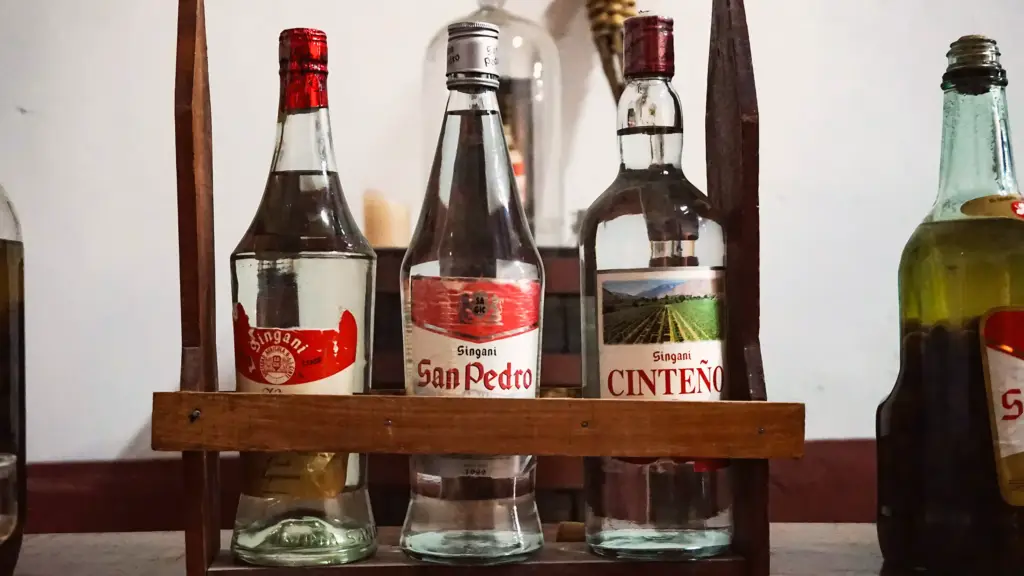
The vineyards of Tarija do not resemble traditional brandy landscapes. They rise sharply into the Andes, where sunlight is direct, air pressure is reduced, and diurnal temperature shifts slow the ripening cycle. At elevations between 1,600 and 2,200 meters, grapes develop differently. Sugar accumulates without losing acidity, and aromatics intensify rather than flatten. From this […]
April 19, 2026
Interviews & Insights
Temperature Fluctuation in Tropical Aging: A Caribbean Rum Expert Explains
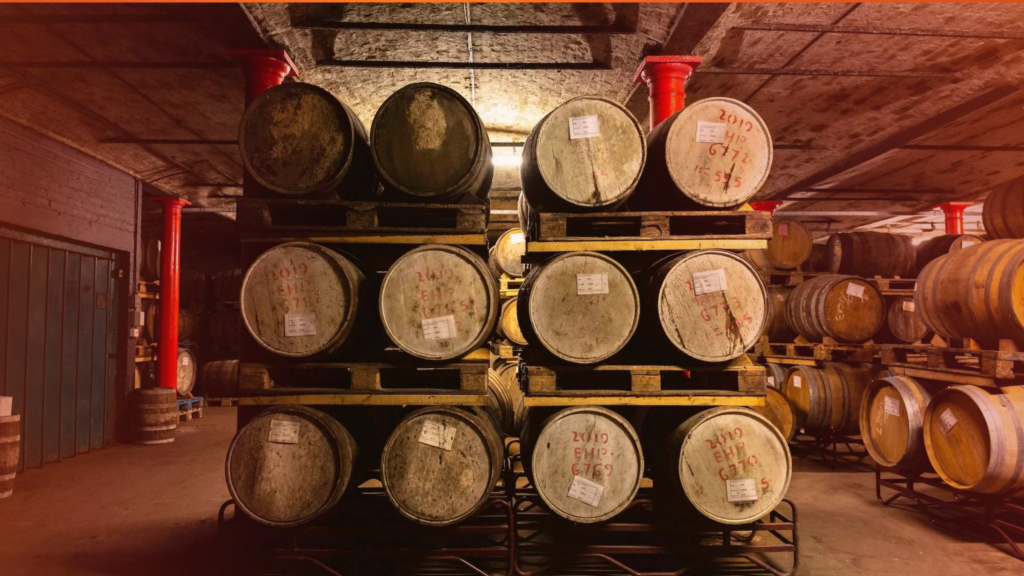
In the Caribbean, maturation is not a quiet affair. Barrels expand beneath midday heat, contract in the relative cool of night, and breathe salt-tinged air drawn in from surrounding coastlines. For a master blender in Barbados or Jamaica, temperature fluctuation in tropical aging is not an incidental condition but a structural force. It shapes extraction, […]
February 25, 2026