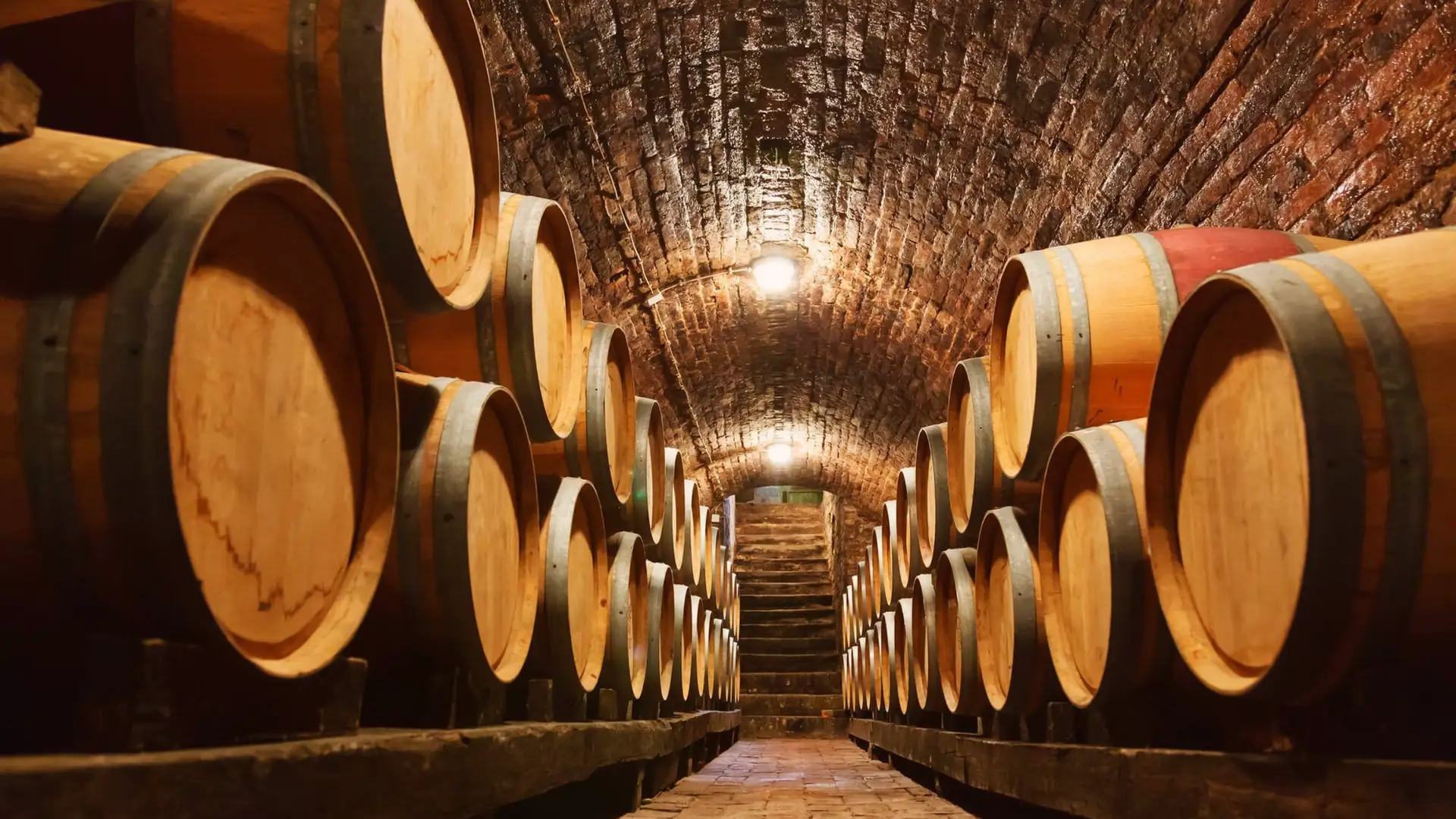
Freshly distilled Cognac is structurally incomplete. Clear, high in alcohol, and aromatically narrow, it carries the potential of the grape but not its final form. That transformation begins only once the eau-de-vie enters oak, where wood, oxygen, and time begin to reorganize its composition. The system built around Rémy Martin relies on French oak to regulate this progression rather than intensify it.
For Cognac sourced from Grande Champagne and Petite Champagne, this stage is prolonged. These eaux-de-vie are naturally high in acidity and require extended maturation to develop balance. The choice of oak determines whether that development remains controlled or becomes accelerated.
French oak and the architecture of slow extraction
French oak used in Cognac production is drawn primarily from Limousin and Tronçais forests, each contributing distinct structural properties. Limousin oak, with a more open grain, allows greater interaction between spirit and wood, releasing tannins that define structure and aging capacity. Tronçais oak, tighter in grain, slows extraction and refines the process, contributing to gradual aromatic development.
These woods derive from Quercus robur and Quercus petraea, species known for their tannin concentration and controlled oxygen permeability. The effect is cumulative rather than immediate. Tannins bind with compounds in the eau-de-vie, stabilizing it over time and creating the framework required for long-term maturation.
In younger blends such as Rémy Martin VSOP, this results in restrained spice and dryness that supports fruit rather than masking it. In extended aging, as seen in Rémy Martin XO, tannins soften and integrate, producing a profile that moves toward dried fruit, toasted wood, and layered complexity. The defining characteristic is not intensity, but duration.
American oak and the acceleration of aromatic impact
American oak, primarily Quercus alba, behaves differently. Its wider grain and higher concentration of oak lactones introduce pronounced aromatic compounds, including vanilla, coconut, and sweet spice. Extraction occurs more rapidly, altering the balance of the spirit at an earlier stage.
In whisky production, this property is advantageous. In Cognac, it presents a structural conflict. Rapid aromatic extraction can dominate the subtler fruit profile established during fermentation and distillation. For this reason, American oak does not form the foundation of Cognac maturation within this system. Where it appears, it functions as a secondary influence, used sparingly to adjust aromatic balance rather than define structure. The contrast is functional. One slows development. The other accelerates it.
Oxygen, time, and the pace of integration
Oak is not only a source of extractable compounds. It regulates oxygen exposure. Through micro-oxygenation, small amounts of air interact with the spirit over time, transforming volatile elements and reducing sharpness.
French oak supports a slower rate of oxygen exchange, aligning with the long maturation required for Champagne crus eaux-de-vie. This gradual oxidation allows esters and alcohol to integrate without destabilizing the spirit. The result is not immediate softness, but controlled evolution. Over decades, the spirit moves from volatility toward cohesion, without losing structural clarity.
Cooperage and the preparation of the cask
Before the barrel receives spirit, the wood undergoes extended seasoning in open air, often for several years. This reduces aggressive compounds and stabilizes the internal structure of the oak. Cooperage then shapes the barrel and applies controlled toasting.
Toasting breaks down lignin and hemicellulose, generating aromatic precursors that will later interact with the spirit. The level of toast determines how these compounds are released. Medium toasting is typically favored to balance tannin structure with aromatic development. Each barrel is therefore pre-conditioned to influence maturation in a specific way. The process begins before filling, not after.
Interaction with Grande and Petite Champagne eaux-de-vie
Eaux-de-vie from Grande Champagne and Petite Champagne are not immediately expressive. Their structure is defined by acidity and potential rather than early aroma. French oak provides the environment in which this potential can develop without distortion.
The interaction between chalk-grown grapes and tannin-rich oak produces a system where both evolve together. The wood does not impose character. It regulates how character emerges. In mature blends such as Rémy Martin XO, this relationship becomes fully integrated. Fruit, spice, and wood are no longer distinct layers but part of a single structure formed over time.
Structural outcomes in the final Cognac
The choice of oak determines the trajectory of maturation. French oak produces a spirit that develops gradually, maintaining balance between structural firmness and aromatic complexity. American oak introduces earlier aromatic expression but lacks the same capacity for long-term integration.
The distinction is not stylistic. It defines whether the spirit evolves over decades or reaches its peak earlier. Within this system, maturation is not accelerated. It is extended and controlled.
Oak in Cognac production functions as a regulator rather than an additive. French oak provides the framework within which time can operate without destabilizing the spirit. American oak, while influential in other categories, remains secondary where long-term structure is required.
The result is a maturation system built on restraint. Flavor is not imposed but allowed to develop within defined limits. What emerges in the glass is not simply the effect of wood, but the result of how wood controls time.

Distillery
Rémy Martin is a prestigious French distillery renowned for its exceptional production of cognac, with a rich heritage…
Spirit
Rémy Martin Tercet Cognac represents a remarkable blend of artistry and tradition, showcasing the rich heritage of the…
Spirit
Rémy Martin Carte Blanche Cognac
Rémy Martin Carte Blanche Cognac is a distinguished expression from the renowned house of Rémy Martin, showcasing the…
Spirit
Grande Champagne Claude Thorin XO Royal Cognac
Grande Champagne Claude Thorin XO Royal Cognac represents the pinnacle of Cognac craftsmanship, beautifully embodying the essence of…
Spirit
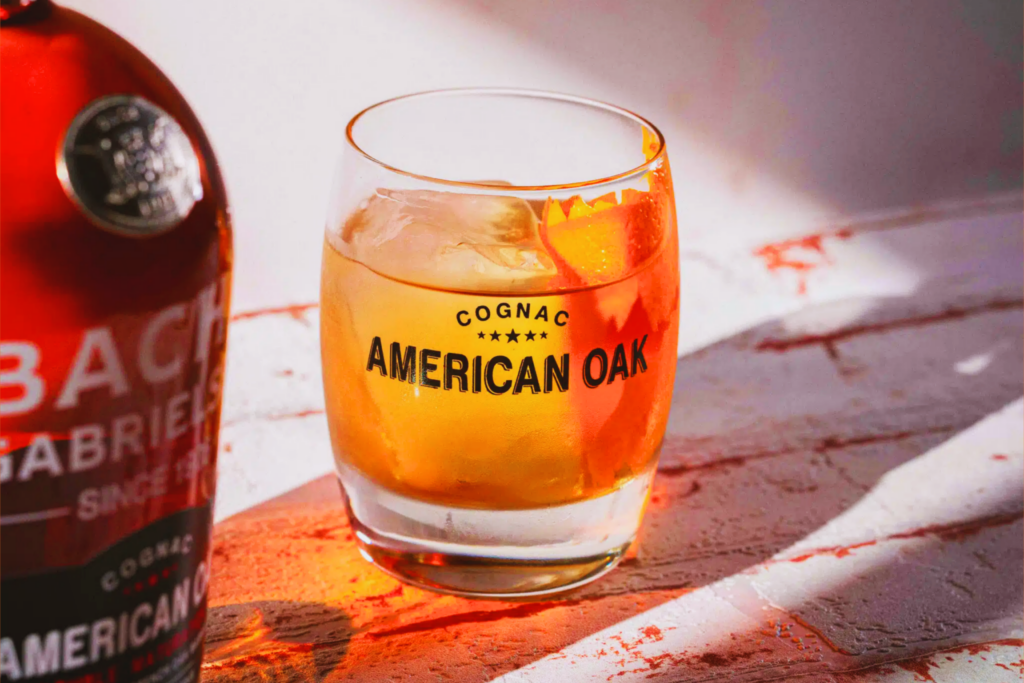
Bache Gabrielsen American Oak Cognac
Bache Gabrielsen American Oak Cognac is a groundbreaking offering that represents the innovative spirit of the Bache-Gabrielsen distillery,…
Spirit
Rémy Martin XO Cognac represents the epitome of fine craftsmanship and expert blending from the renowned house of…
Spirit
Rémy Martin VSOP Cognac stands as a classic in the realm of fine spirits, embodying sophistication and a…
Distillery
Rémy Martin is a prestigious French distillery renowned for its exceptional production of cognac, with a rich heritage…
Spirit
Rémy Martin Tercet Cognac represents a remarkable blend of artistry and tradition, showcasing the rich heritage of the…
Spirit
Rémy Martin Carte Blanche Cognac
Rémy Martin Carte Blanche Cognac is a distinguished expression from the renowned house of Rémy Martin, showcasing the…
Spirit
Grande Champagne Claude Thorin XO Royal Cognac
Grande Champagne Claude Thorin XO Royal Cognac represents the pinnacle of Cognac craftsmanship, beautifully embodying the essence of…
Spirit
Bache Gabrielsen American Oak Cognac
Bache Gabrielsen American Oak Cognac is a groundbreaking offering that represents the innovative spirit of the Bache-Gabrielsen distillery,…
Spirit
Rémy Martin XO Cognac represents the epitome of fine craftsmanship and expert blending from the renowned house of…
Spirit
Rémy Martin VSOP Cognac stands as a classic in the realm of fine spirits, embodying sophistication and a…
Partnership
Cognac: The Legal and Geographic Identity of France’s Most Structured Spirit
The story of Cognac begins with a practical problem. The white wines of the Charente region travelled through river ports and Atlantic trade routes, but they were not naturally suited to long commercial journeys. They were often light, acidic, and fragile. Distillation changed their future. By concentrating wine into eau-de-vie, merchants and producers found a […]
August 2, 2026
Distilleries
Singani: Bolivia’s High-Altitude Spirit and a Forgotten Andean Heritage
The vineyards of Tarija do not resemble traditional brandy landscapes. They rise sharply into the Andes, where sunlight is direct, air pressure is reduced, and diurnal temperature shifts slow the ripening cycle. At elevations between 1,600 and 2,200 meters, grapes develop differently. Sugar accumulates without losing acidity, and aromatics intensify rather than flatten. From this […]
April 19, 2026
Spirits
Pricing and Taxation in 19th-century European Spirits Consumption
In the early decades of the nineteenth century, the cost of a glass of spirits in London, Paris, or Warsaw was rarely determined by the distiller. It was determined by the state. A measure of whisky, Cognac, or vodka carried within it a structure of duties, controls, and transport costs that defined not only its […]
April 7, 2026