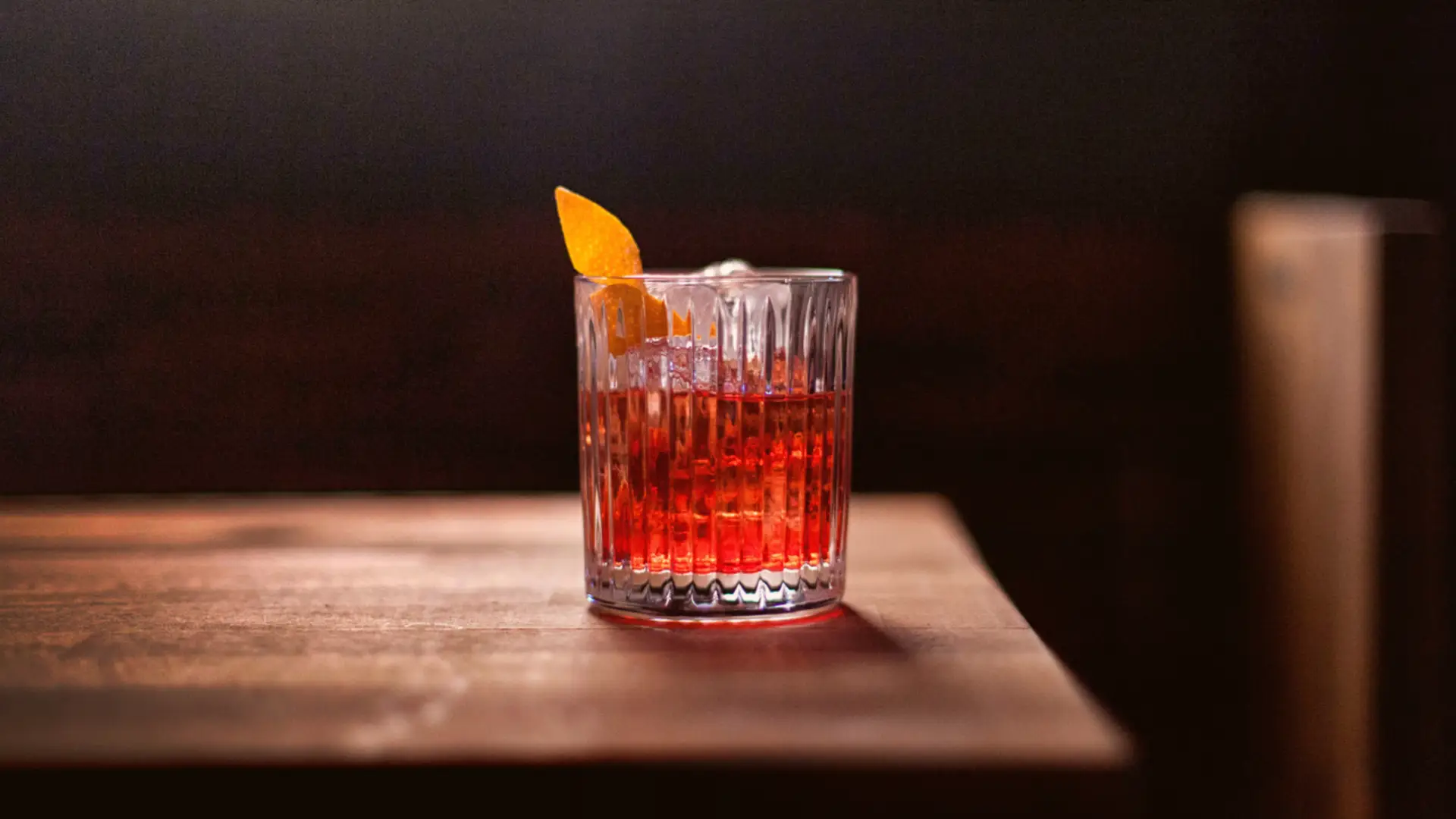
Evening settles differently in Milan. As the light fades behind the marble façade of the Duomo, tables fill beneath the arches of the Galleria Vittorio Emanuele II. Aperitivo is not a passing fashion here. It is cadence. Glasses gather condensation, olives arrive in small bowls, and somewhere between commerce and conversation, the Negroni takes its place on polished marble counters.
The Negroni was first mixed in Florence in 1919, yet it was in Milan that it became a ritual. The city did not invent the drink, but it institutionalized its discipline. To understand the Negroni in Milan is to examine how a three-ingredient formula became an emblem of industrial modernity, bitter identity, and northern Italian restraint.
From Florence to Milan’s Bitter Capital
The Negroni’s origin story is well documented. In 1919, Count Camillo Negroni requested his Americano strengthened with gin at Caffè Casoni in Florence. The substitution of gin for soda created a more assertive drink, retaining equal parts Campari and sweet vermouth. The structure was austere, symmetrical, and immediately distinctive.
But Florence did not export the Negroni. Milan did.
Campari Group traces its roots to Gaspare Campari, who founded the company in 1860. By 1867, Campari had established Caffè Campari inside the Galleria Vittorio Emanuele II, embedding his crimson bitter into Milan’s civic life. In 1915, his son Davide Campari opened Camparino in the Galleria overlooking Piazza del Duomo. The bar was designed not merely as a café but as a showroom for aperitivo culture.
When the Negroni formula gained traction, Milan already possessed the infrastructure to standardize it. Campari’s proprietary infusion of herbs, roots, and botanicals- still confidential- ensured a consistent bitter backbone. Through distribution networks and urban visibility, Milan transformed the Negroni from Florentine curiosity into a northern Italian signature.
Vermouth and the Northern Axis of Balance
The Negroni’s equilibrium depends equally on sweet vermouth. Italian vermouth production predates the cocktail by more than a century. Carpano introduced aromatized fortified wine to Turin’s royal court in 1786, laying the groundwork for structured bitterness balanced by sugar and spice. Martini & Rossi expanded that tradition globally from 1863 onward.
Though Turin is vermouth’s birthplace, Milan’s bars adopted these Piedmontese vermouths as structural partners to Campari. In the Negroni, vermouth is not a modifier but a counterweight. It tempers bitterness while contributing herbal complexity and subtle sweetness.
Gin, typically London dry styles such as Tanqueray, provides a dry backbone. Its juniper clarity frames the interplay between bitter and sweet. In Milan, this triangular geometry became codified: one part gin, one part Campari, one part sweet vermouth.
Symmetry defined the drink. Discipline preserved it.
Ritual and Service at Camparino
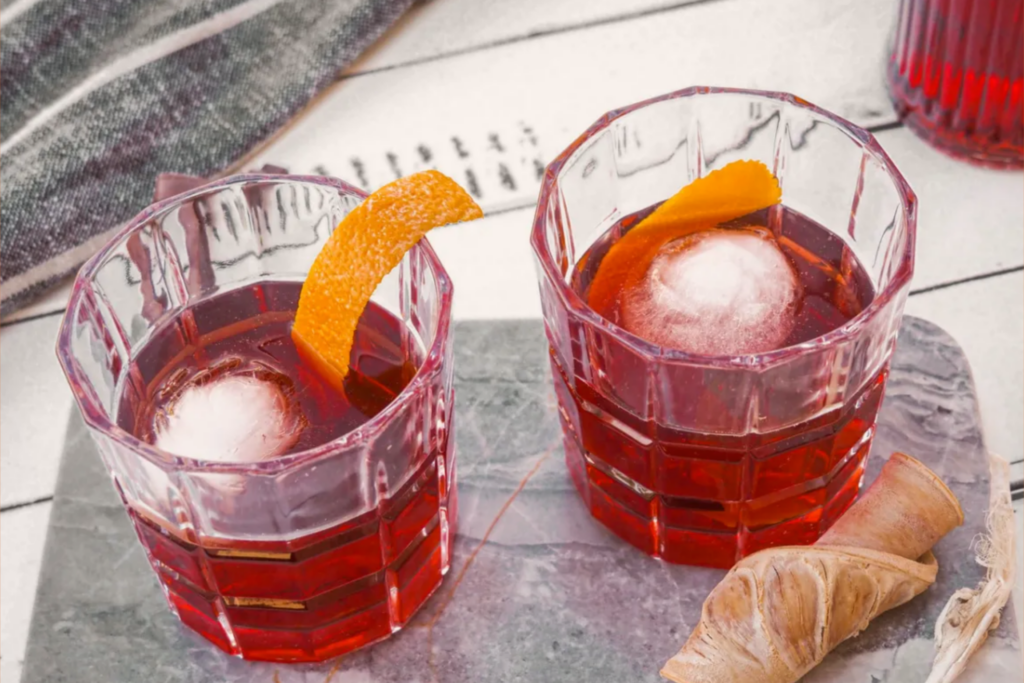
At Camparino, the Negroni was never theatrical. The ice was solid and clear. Stirring was measured, not rushed. The orange peel garnish was expressed sparingly to release aromatic oils without overwhelming bitterness. Presentation reflected Milan’s broader design ethos—refined, intentional, modern.
By the mid-twentieth century, the Negroni had embedded itself in Milan’s cultural ascent. As fashion houses, publishing firms, and industrial magnates reshaped the city, the drink moved between editorial offices and textile ateliers. It became shorthand for cosmopolitan poise. Italian cinema of the 1950s and 1960s further amplified its presence, visually exporting Milanese aperitivo culture to international audiences.
The Negroni in Milan was not merely consumed. It was performed.
Industrial Expansion and Global Export
The twentieth century saw Campari expand beyond Italy, eventually consolidating into what is now Campari Group, headquartered in Milan. Strategic acquisitions and global marketing campaigns reinforced Negroni’s identity abroad.
In 2013, Negroni Week was launched through a collaboration between Campari and Imbibe Magazine, formalizing the cocktail’s annual global celebration. Meanwhile, Camparino underwent renovation and reopened in 2019, reaffirming its historical role within Milan’s aperitivo landscape.
Beyond Italy, bars such as Connaught Bar in London and Dante in New York elevated the Negroni to centerpiece status during the early twenty-first century cocktail revival. Equal-part formulations were restored after decades of imbalance.
Yet even in reinterpretation, the Milanese foundation remained intact.
The Negroni as Structural Benchmark
The endurance of the Negroni lies in geometry. Three components, equal measure, stirred and served over ice. The formula resists distortion because it is already balanced.
Bitterness from Campari. Sweet herbal depth from vermouth. Dry juniper spine from gin. Remove equality and the structure collapses. Maintain proportion and the drink remains legible across contexts.
Milan’s contribution was not invention but standardization. Through Campari’s industrial scale, Camparino’s ritualized service, and vermouth’s northern Italian heritage, the city sharpened the Negroni into an exportable identity.
The Negroni in Milan illustrates how local ritual becomes a global benchmark. From Gaspare Campari’s 19th-century innovation to the institutional presence of Camparino and the modern reach of Campari Group, the cocktail mirrors Milan’s ascent as industrial and cultural capital.
Barlist traces these intersections of producer, place, and practice. In documenting Campari, Carpano, Martini & Rossi, and the bars that codified service precision, Barlist reveals how the Negroni evolved from Florentine improvisation into Milanese standard.
Within its ruby clarity lies a narrative of balance- between bitter and sweet, tradition and industry, local ritual and international influence. The Negroni endures not because it adapts endlessly, but because its architecture was perfected early.

Cocktails
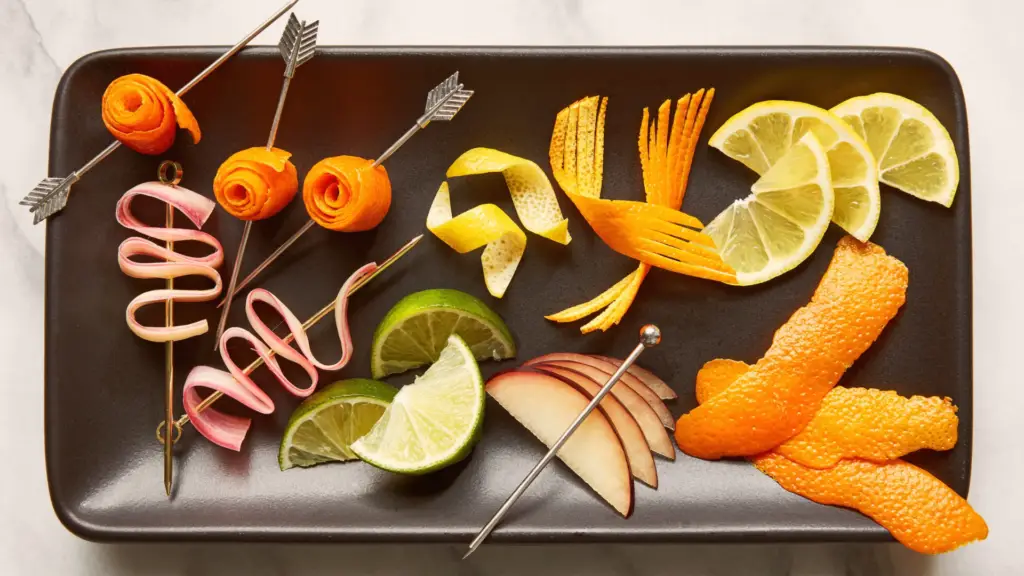
Garnish and the Final Expression of the Cocktail
The Garnish arrives at the end of preparation, yet it often leads the guest’s first impression. Before the drink reaches the palate, the eye registers colour and form while the nose encounters aroma rising from the glass. Garnish therefore belongs to the sensory language of the cocktail. It can clarify identity, prepare expectations, and complete […]
September 15, 2026
Trending
World Class 2026 and Dubai’s Rise as a Global Cocktail Culture Hub
From bartender competition to global industry platform The modern cocktail world has developed far beyond the traditional image of the bartender as a skilled server behind a bar. Over the past two decades, bartending has increasingly been recognised as a professional discipline built on technical knowledge, hospitality, creativity and a deeper understanding of spirits. Few […]
September 8, 2026
Cocktails
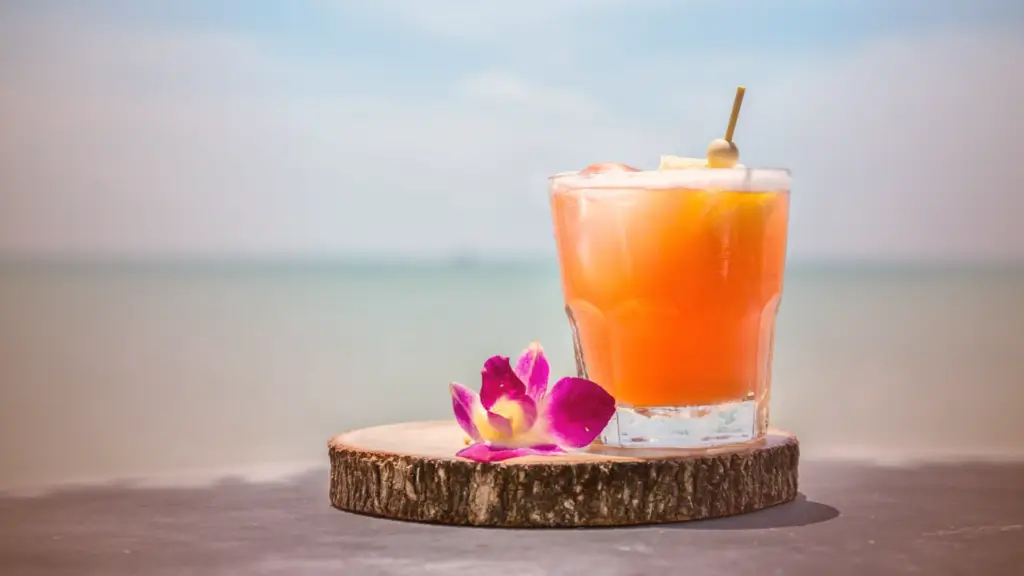
Mai Tai Day 2026: The Oakland Cocktail That Changed Tiki Drinking
On 30 August, bars and cocktail enthusiasts celebrate Mai Tai Day, a date closely associated with the city of Oakland, California, where Victor )Trader Vic) Bergeron claimed to have created the Mai Tai in 1944. The occasion is relatively modern, but the cocktail it celebrates has a much longer story, one that connects post-war American […]
August 30, 2026