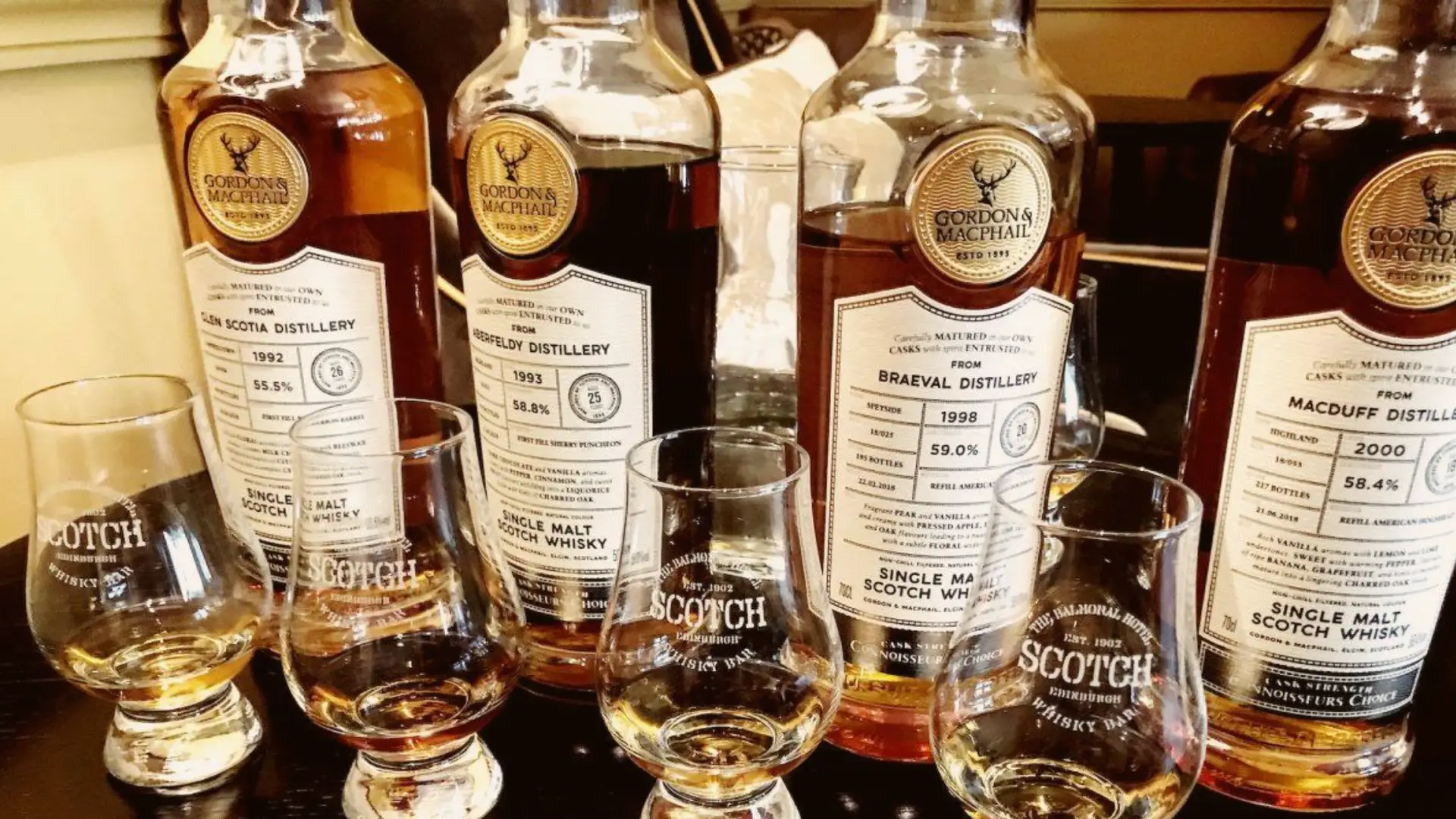
Long before brand portfolios dominated back bars, whisky changed hands quietly in casks. Merchants purchased spirit from distilleries, matured it independently, and bottled it under their own labels. In today’s market, where multinational ownership shapes global distribution, that earlier model has returned with renewed force. The Rise of Independent Bottlers in Scotch Whisky reflects a shift in power from corporate blending houses to curators of singular casks, driven by transparency, scarcity, and the modern drinker’s appetite for provenance.
Independent bottlers do not distill. They select, mature, and release whisky sourced from established distilleries, often disclosing distillation dates, cask types, and outturn numbers. In doing so, they challenge the dominance of standardized house style and reintroduce the language of individuality.
Historical Foundations of Independent Bottling
Independent bottling is not new. Companies such as Gordon and MacPhail, founded in 1895 in Elgin, began as grocers and wine merchants before maturing and bottling single malts from distilleries across Speyside and the Highlands. Cadenhead’s, established in 1842 in Aberdeen and now operating from Campbeltown, claims to be Scotland’s oldest independent bottler. These firms purchased casks when distilleries prioritized blends over single-malt branding.
Throughout much of the twentieth century, distilleries like Glenlivet and Macallan, founded in 1824, supplied bulk spirit to blended Scotch brands owned by larger conglomerates. Independent bottlers quietly retained parcels of casks, aging them beyond the needs of blending contracts. What appears as modern disruption is in fact a revival. The Rise of Independent Bottlers in Scotch Whisky reactivates a nineteenth-century commercial tradition.
Single Cask Transparency and the Modern Consumer
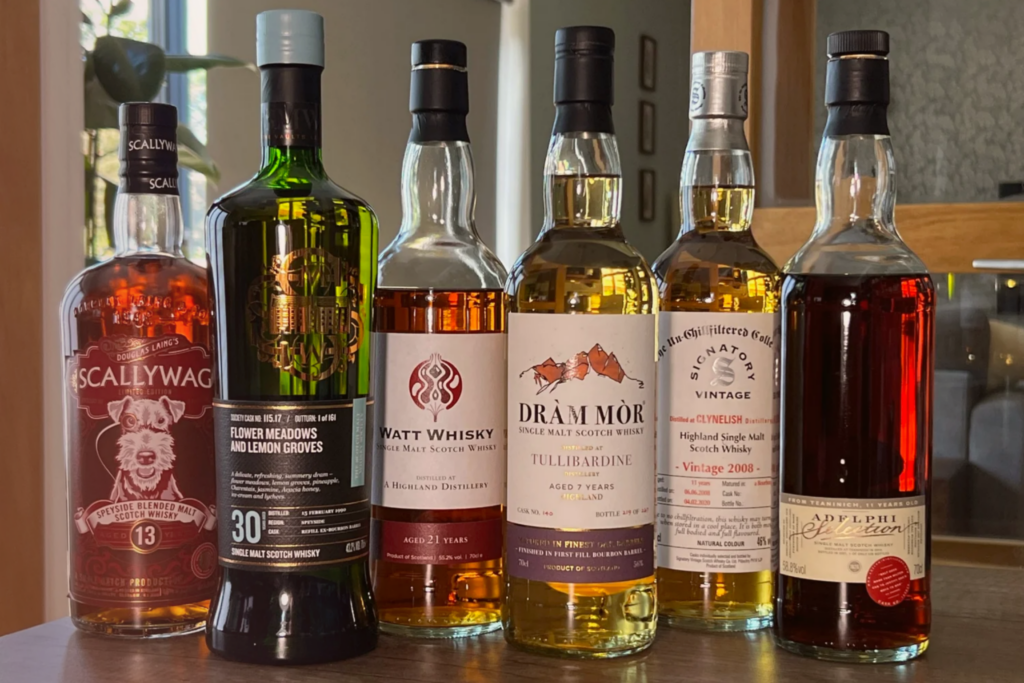
Contemporary drinkers demand detail. Age statements, cask types, distillation years, and bottling strength matter. Independent bottlers such as Signatory Vintage founded in 1988 and Douglas Laing established in 1948 have built reputations on releasing single cask expressions at natural cask strength. Labels frequently include cask numbers and bottle counts, sometimes fewer than three hundred bottles per release.
This level of disclosure contrasts with some official distillery releases that prioritize brand continuity over granular data. In an era where collectors track batch variation, The Rise of Independent Bottlers in Scotch Whisky aligns with transparency culture. It allows consumers to taste a 1993 Caol Ila matured in a refill sherry butt or a 2005 Glenallachie finished in a Madeira cask, each expression framed as unique rather than representative.
Distillery Identity Beyond House Style
Official bottlings are typically engineered to reflect consistent house character. Independent bottlers, by contrast, often celebrate deviation. A distillery known for orchard fruit elegance may reveal unexpected maritime salinity in a specific cask. For example, bottlings from Islay, distillery Laphroaig, founded in 1815, may appear under independent labels with reduced peat intensity or extended tropical fruit notes depending on maturation conditions.
Berry Bros and Rudd, founded in 1698 in London, though not exclusively a Scotch bottler, has long sourced casks to highlight alternative interpretations of distillery style. By selecting casks outside corporate blending programs, independents expand the narrative of what a distillery can express. The Rise of Independent Bottlers in Scotch Whisky, therefore, reframes authorship. The bottler becomes curator.
Economics and Access to Casks
Cask access defines viability. In the late twentieth century, as single malt branding surged under conglomerates such as Diageo, formed in 1997, distilleries tightened supply to external merchants. Some reduced or eliminated cask sales. Yet surplus stock and private cask ownership continued to feed independent pipelines.
Companies such as Adelphi, founded in 1826 and relaunched as an independent bottler in 1993, developed reputations for rigorous cask selection rather than volume output. The economics differ from official releases. Independent bottlers operate on smaller margins but higher variability, purchasing casks outright and assuming maturation risk.
In recent years, rising cask prices have complicated the model. Nonetheless, The Rise of Independent Bottlers in Scotch Whisky persists because scarcity itself enhances appeal. Limited outturn releases generate urgency in collector markets.
Globalization and the Digital Collector
Digital retail platforms and whisky forums have amplified independent visibility. Enthusiasts compare tasting notes across continents, sharing impressions of specific cask numbers. A single Signatory Vintage release of Glenlivet 1995 can achieve cult status within online communities. This networked dialogue supports the economics of small outturn bottlings.
Meanwhile, distilleries once silent on independent releases have begun acknowledging their value. Some collaborate directly with bottlers or release official single cask programs mirroring independent transparency. The boundary between official and independent narratives grows more porous.
Quality Versus Romanticism
Critics argue that not every cask merits bottling. Without the blending team’s balancing role, variability can produce uneven results. Yet advocates counter that variability is the point. Independent bottling celebrates cask specificity over brand homogeneity. The drinker becomes an active participant, evaluating each release on its own merits.
Gordon and MacPhail’s Private Collection series, featuring extremely long-aged whiskies such as a 1948 Glenlivet released decades later, illustrates how independent stewardship can rival official prestige bottlings. In such cases, independence does not imply inferiority but alternative authority.
The resurgence of independent bottling signals a broader cultural shift toward provenance and micro-narrative. The Rise of Independent Bottlers in Scotch Whisky demonstrates that authorship in spirits can reside outside distillery walls. Cask ownership, maturation choice, and bottling philosophy shape liquid identity as decisively as mashbill and still design.
Barlist traces these evolving power structures across the spirits landscape. By documenting producers, founding dates, and bottling philosophies, the platform highlights how independence reshapes tradition. In the glass of a single cask release, one encounters not only barley and oak but the quiet assertion that authority in Scotch whisky remains negotiable, dynamic, and richly contested.

Barlist
Grzegorz Nowicki: Where Control Turns Into Confidence
Not every bar scene announces itself when it starts changing. Sometimes it happens quietly. A few new venues open, standards begin to tighten, and suddenly the way drinks are made starts to feel different. Warsaw in the early 2010s moved like that. Nothing abrupt, but enough to shift expectations. Grzegorz Nowicki’s career developed right inside […]
September 28, 2026

Barlist
Pauline Le Berre: When Precision Becomes the Quietest Form of Control
Some bartenders build drinks that unfold. Others build drinks that settle. Pauline Le Berre’s work belongs to the second kind. Nothing in her approach pushes forward unnecessarily. The balance is already there, established before the drink reaches the glass, and held in place without adjustment. That way of working doesn’t come from experimentation alone. It […]
September 21, 2026
Barlist
Michael Moreni: Holding Italian Balance Under Pressure
There’s a point where simplicity stops being effortless and starts being precise. In Italy, that line is easy to miss. Aperitivo culture has always favoured clarity over complexity, drinks that don’t need explanation, only consistency. But translating that quiet balance into a competitive environment is something else entirely. That’s where Michael Moreni’s work sits. His […]
September 14, 2026