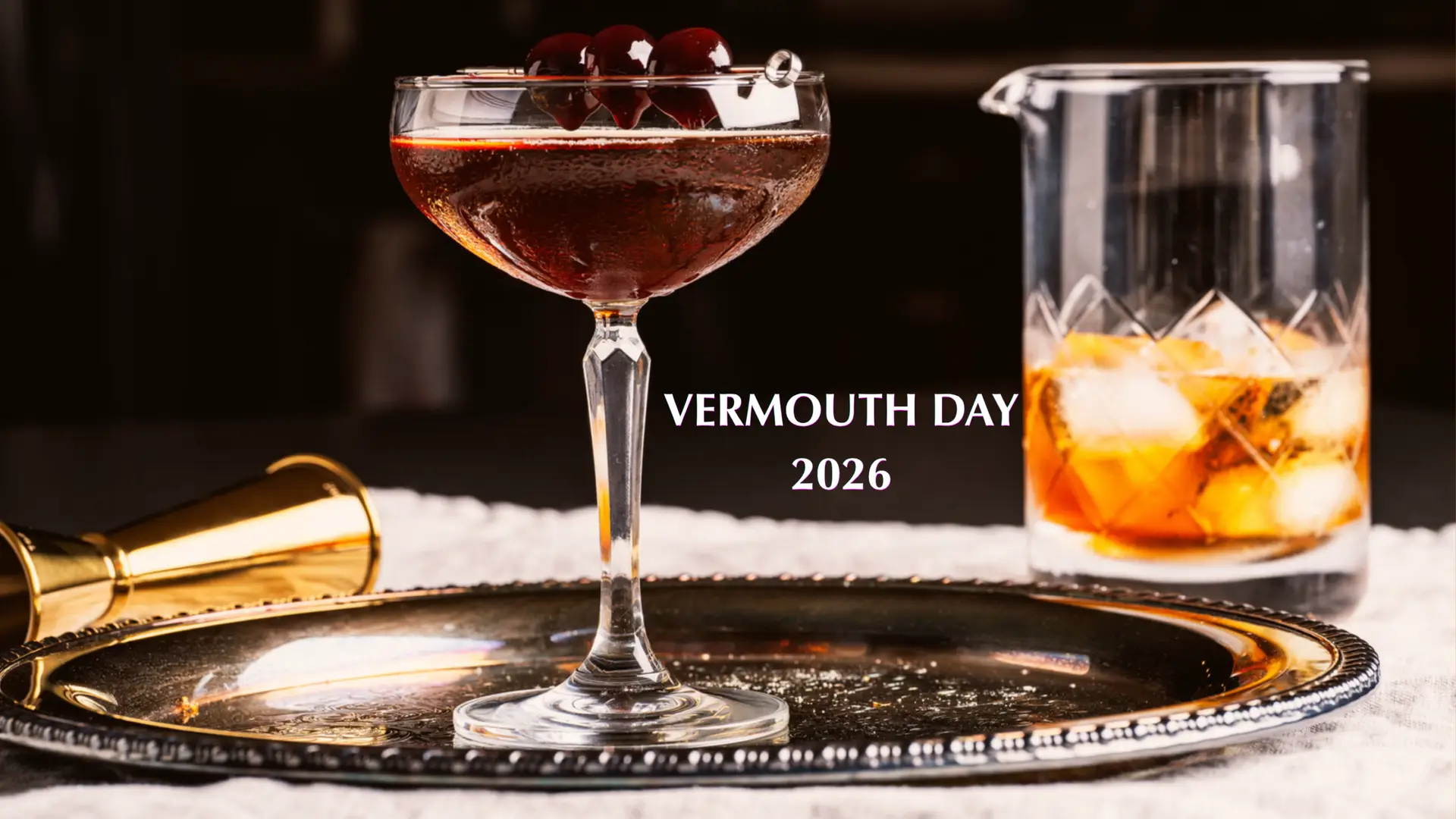
Vermouth was never meant to disappear. For much of its history, it occupied a quiet but essential role, bridging wine and spirits through a careful balance of botanicals, fortification, and controlled bitterness. On World Vermouth Day 2026, that role is once again visible. What was once pushed to the margins of cocktail recipes has returned to the center of the glass.
This resurgence is not driven by novelty. It reflects a renewed understanding of vermouth as a structural component in drinking culture. To understand its place today is to return to its origins in Turin, where aromatized wine became a repeatable and commercial form.
Turin and the moment vermouth became a category
Modern vermouth begins in 18th-century Italy. In 1786, Carpano Torino formalized aromatized wine production by combining base wine with alcohol, sugar, and a controlled infusion of botanicals.
Wormwood was not simply a flavoring element. It was essential. Under European definitions, Vermouth must contain wormwood to qualify as the category. Its bitterness defines the structure.
Carpano’s formulation shifted vermouth from a medicinal tonic to a social drink. Served in Turin cafés, it became part of a daily ritual rather than a prescription.
By the 19th century, Martini & Rossi expanded production globally. Their ability to standardize profiles and scale distribution allowed vermouth to move beyond regional consumption.
Turin did not just produce vermouth. It defined it.
French vermouth and the precision of dryness
While Italy shaped Vermouth’s identity, France refined its structure. In Marseillan, Noilly Prat developed a dry style built on oxidative aging and reduced sugar.
This created a different balance: less sweetness, greater herbal clarity, and sharper integration with spirits.
Dry Vermouth became essential to drinks such as the Martini, where its role is structural rather than dominant. It supports the base spirit while maintaining tension and clarity.
The contrast between Italian and French Vermouth established the category’s dual identity. One emphasizes richness- the other precision.
How vermouth is actually made
Vermouth exists between wine and spirit, but its production is defined by control rather than category.
A neutral base wine is selected to allow botanical expression. Alcohol is added for stability. Sugar is adjusted depending on style.
The defining stage is botanical extraction. Ingredients such as wormwood, gentian, citrus peel, and spices are macerated under controlled conditions. Temperature, alcohol strength, and extraction time must be precise. Excess extraction produces bitterness. Insufficient extraction weakens the structure.
Producers such as Cocchi demonstrate this balance clearly. Expressions like Cocchi Vermouth di Torino show how botanical intensity can coexist with wine integrity.
Vermouth is not complex because it contains many ingredients. It is complex because those ingredients are controlled.
Vermouth inside the structure of classic cocktails
Vermouth rarely dominates a cocktail, but it defines its architecture.
In the Negroni, sweet Vermouth balances Campari and gin. In Manhattan, it softens whiskey and introduces aromatic depth. In the Martini, even small quantities of dry vermouth determine the drink’s equilibrium.
These drinks do not function without vermouth. It connects sweetness, bitterness, and alcohol into a stable system.
The decline of Vermouth in the late twentieth century disrupted this balance. Its revival in modern bars restored it. Fresh vermouth, correct storage, and measured ratios reestablished its importance.
On World Vermouth Day 2026, this role is once again understood.
Vermouth as an aperitivo and a standalone drink
Beyond cocktails, vermouth has returned to its original identity as an aperitif. In Spain and Italy, it is once again consumed over ice, often with citrus or soda.
This return reflects a broader shift toward balance and lower alcohol drinking. Vermouth aligns naturally with this movement.
Different styles reinforce this versatility. Rosso Vermouth offers depth and spice. Dry Vermouth emphasizes clarity. Bianco styles introduce lighter sweetness and floral notes.
The category is expanding, but its foundation remains unchanged.
Why World Vermouth Day 2026 matters
World Vermouth Day 2026 is not simply a celebration of a product. It is recognition of a category that connects multiple traditions.
From Turin cafés to modern cocktail bars, vermouth has maintained continuity through adaptation. It has shifted roles without losing function.
It remains both ingredient and drink. Both historical and contemporary.
Vermouth is often overlooked because it does not dominate the glass. Its role is structural rather than expressive.
Barlist examines Vermouth as a system that links wine, botanicals, and spirits. Producers such as Carpano, Martini & Rossi, Cocchi, and Noilly Prat represent different interpretations of that system.
On World Vermouth Day 2026, vermouth’s relevance lies in its restraint. It allows other elements to exist in balance while quietly holding them together.
That restraint is its strength.

Cocktail
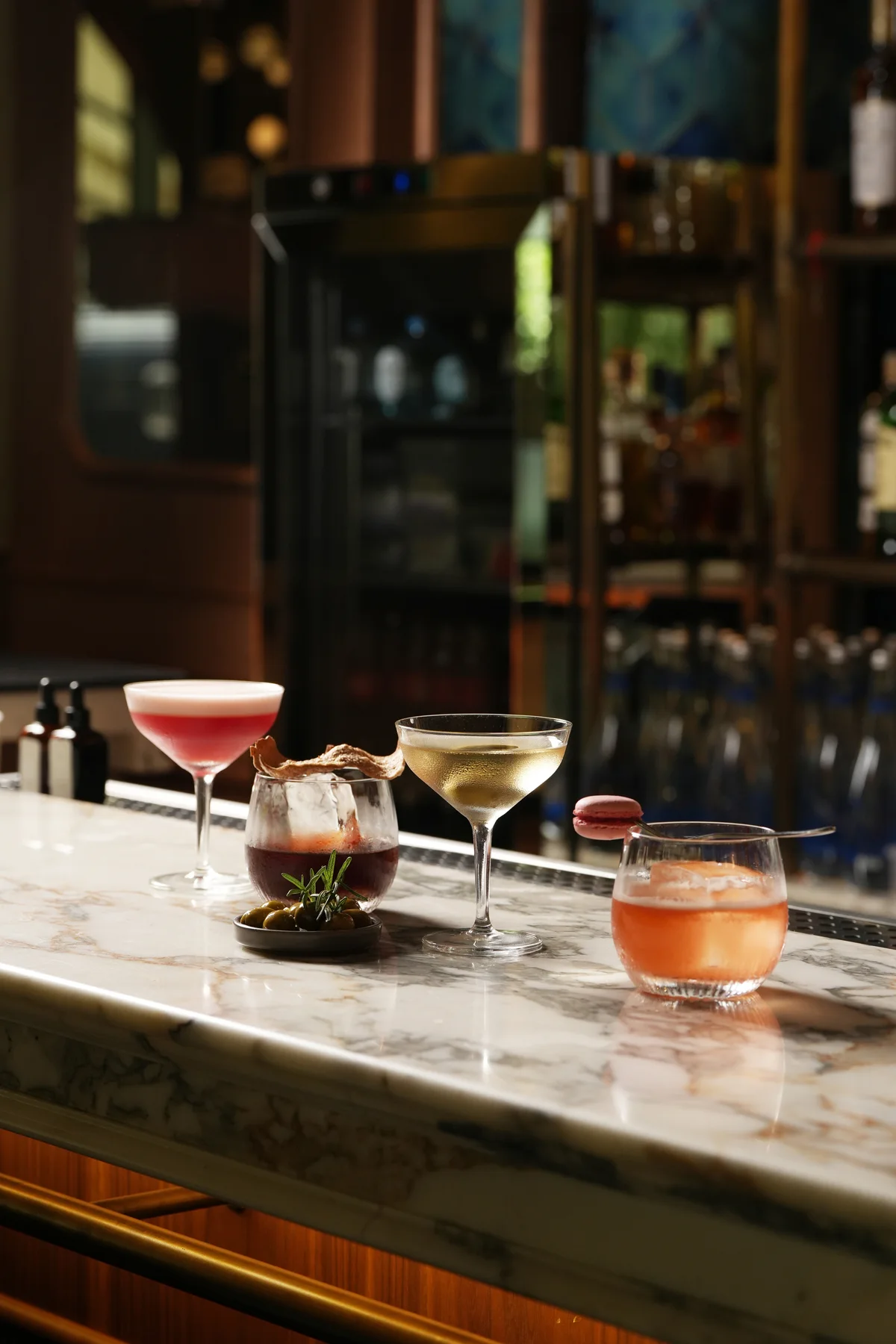
The Martini is perhaps the most iconic cocktail in the world, a symbol of elegance, sophistication, and modernity.…
Distillery
Carpano Torino, a historic name in the world of vermouth, is known for its pioneering spirit and commitment…

Distillery
Cocchi is a renowned Italian distillery based in the picturesque Asti province of northern Italy, celebrated for its…
Distillery
Martini & Rossi is a renowned Italian distillery, celebrated primarily for its production of vermouth, but also for…
Distillery
Maison Noilly Prat, a celebrated distillery nestled in the picturesque port of Marseillan in the South of France,…
Spirit
Noilly Prat 1813 Original Dry Vermouth Brandy
Noilly Prat 1813 Original Dry Vermouth is a revered product that stands as a testament to the art…
Spirit
Cocchi Vermouth di Torino Extra Dry
Cocchi Vermouth di Torino Extra Dry is a classic-style vermouth crafted in Piemonte, where the drink first originated.…
Trending
World Class 2026 and Dubai’s Rise as a Global Cocktail Culture Hub
From bartender competition to global industry platform The modern cocktail world has developed far beyond the traditional image of the bartender as a skilled server behind a bar. Over the past two decades, bartending has increasingly been recognised as a professional discipline built on technical knowledge, hospitality, creativity and a deeper understanding of spirits. Few […]
September 8, 2026
Partnership
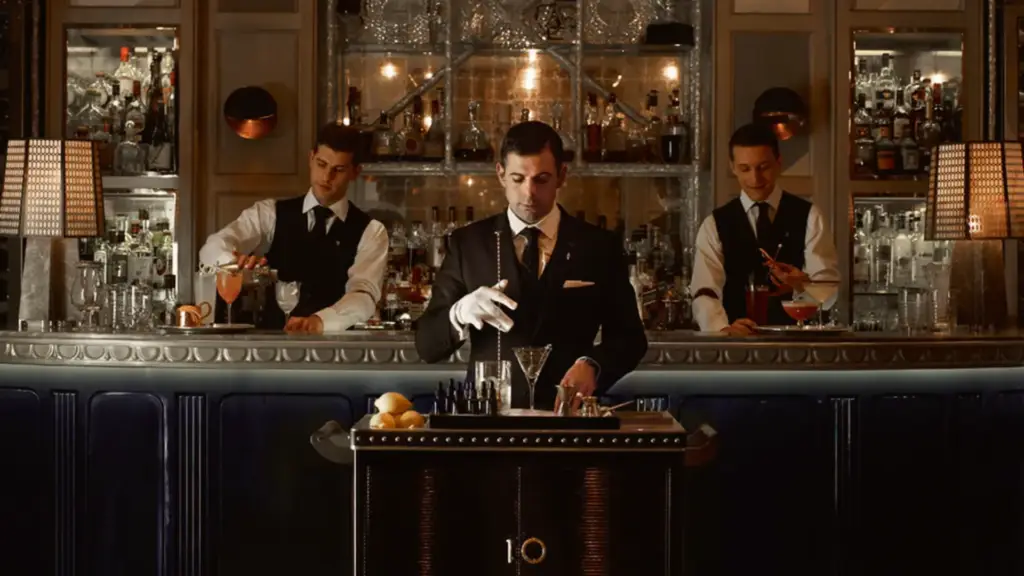
The Connaught Bar: Precision, Ritual, and the Martini That Set the Standard
Some bars are defined by their drinks. Others by their atmosphere. At Connaught Bar, it is service that holds everything together. Tucked within The Connaught in London, the bar has, over time, established itself as a reference point for what modern classic bartending can look like when precision and ritual are treated as inseparable. This […]
August 1, 2026
Partnership
Craft and the Discipline Behind Modern Bartending
Craft in bartending is sometimes presented as a recent movement, but the habits it describes are much older than the modern language surrounding them. Careful preparation, command of tools, responsible handling of ingredients and consistency during service have long distinguished serious bar work. Craft is therefore best understood not as a fashion or visual style, […]
July 21, 2026