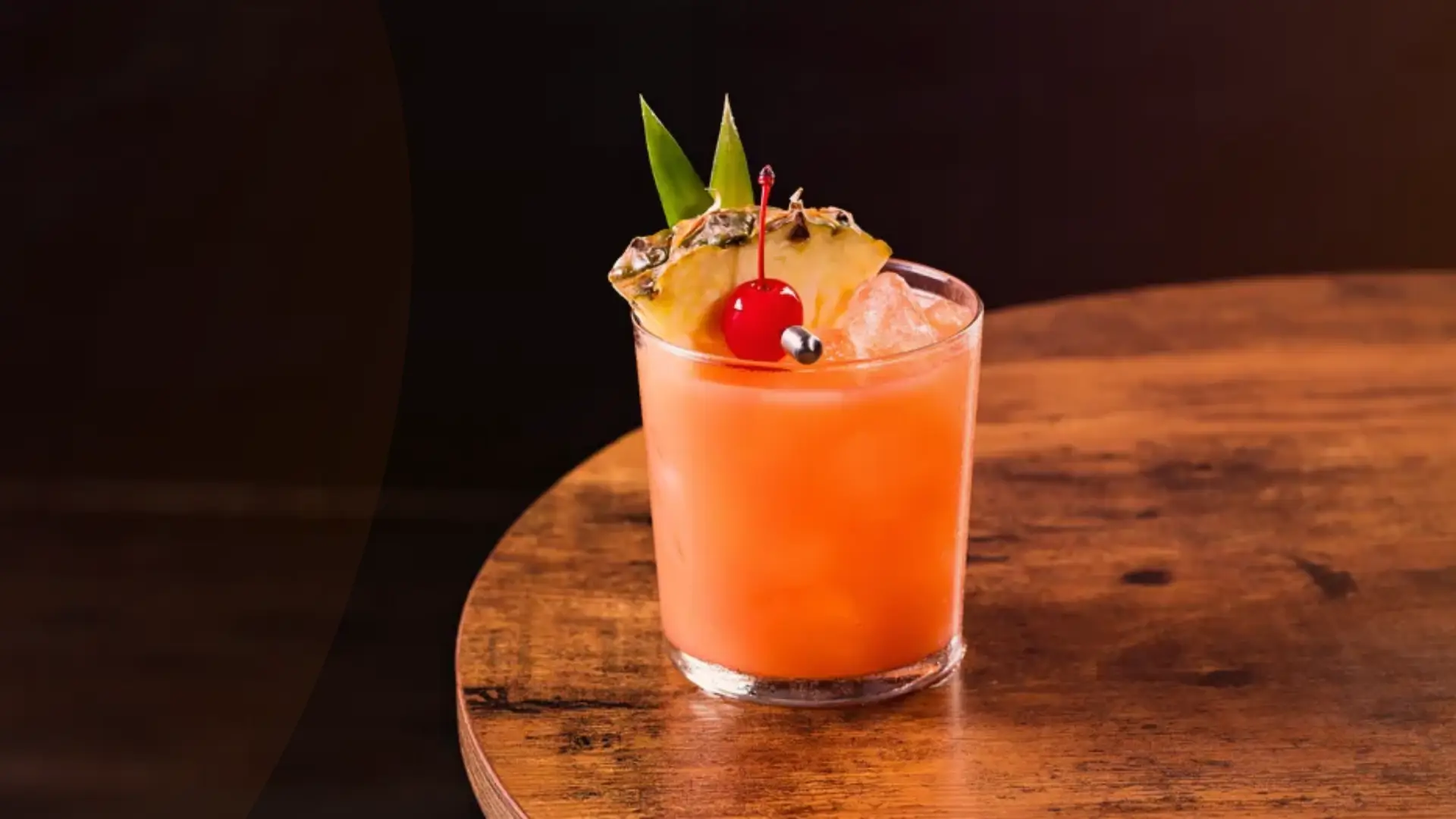
In 1944, as wartime austerity began to give way to postwar optimism, a cocktail emerged in Oakland that would outlast the décor of the era that produced it. The Mai Tai cocktail was not designed as a spectacle. It was constructed in balance. Beneath the bamboo, carved idols, and Polynesian fantasy that defined mid-century tiki culture, the drink itself was a study in proportion. Its longevity rests not on ornament but on engineering.
The Mai Tai cocktail endures because its architecture is correct.
The Mai Tai Cocktail at Trader Vic’s in 1944
The Mai Tai cocktail was created by Victor J. Bergeron in 1944 at Trader Vic’s. Bergeron, already an established restaurateur, sought to showcase aged Jamaican rum rather than conceal it beneath fruit juices.
The original formula, documented in Bergeron’s later writings and supported by archival accounts, consisted of two ounces of 17-year-old Jamaican rum from Wray & Nephew, half an ounce of fresh lime juice, half an ounce of orange curaçao, a quarter ounce of orgeat syrup, and a quarter ounce of rock candy syrup. The drink was shaken with crushed ice and poured unstrained into a glass filled with fresh crushed ice, garnished with a spent lime shell and mint.
There was no pineapple juice. No grenadine. No dark rum float. The Mai Tai cocktail was conceived as a rum-forward composition.
When the original 17-year rum became unavailable in the 1950s, Bergeron reformulated using blends of Jamaican rum and Martinique rhum to approximate the aromatic density of the original base spirit. Even in adaptation, the structure remained constant.
Rum Selection and Ester Structure in the Mai Tai Cocktail
The foundation of the Mai Tai cocktail is aged Jamaican rum with pronounced ester character. Esters, volatile compounds formed during fermentation, generate aromas of overripe fruit, spice, and subtle funk. These compounds are essential. Without them, lime acidity dominates and the drink loses backbone.
The 1944 rum choice was not incidental. Jamaican pot-still rum provided the aromatic intensity required to stand against citrus and almond sweetness. Modern historically aligned versions often combine high-ester Jamaican rum with Martinique rhum agricole to recreate both fruit depth and structural brightness.
In the Mai Tai cocktail, rum is not one ingredient among many. It is the axis.
Sweetness, Acidity, and the Dual-Syrup System
The sweetening structure of the Mai Tai cocktail is deliberate and often misunderstood. Orgeat syrup contributes almond character, subtle floral notes from orange blossom water, and viscosity that rounds the palate. Rock candy syrup adds neutral sweetness without altering aromatic balance.
This dual-syrup system prevents the almond from overwhelming the citrus while maintaining equilibrium. Remove the simple syrup and the drink skews nut-forward. Increase the lime and the rum recedes. Precision governs the interaction.
The half-ounce measure of fresh lime juice creates tension against two ounces of rum. The ratio is calibrated. The Mai Tai cocktail is not flexible without consequence.
Technique and Dilution as Structural Control
The preparation method is integral to the identity of the Mai Tai cocktail. It is shaken hard with crushed ice and poured unstrained into a double old-fashioned glass. Freshly crushed ice fills the glass. This open pour allows gradual dilution and aeration.
Fine-straining is historically inaccurate. Stirring would fail to achieve the necessary aeration. The crushed-ice method ensures the drink evolves as it is consumed, softening edges while preserving aromatic clarity.
Mint garnish is functional rather than decorative. As the drinker lifts the glass, volatile oils from mint interact with rum esters, reinforcing aromatic lift.
The Mai Tai cocktail was designed to transform without destabilizing.
West Coast Expansion and Tiki Preservation
Following its introduction, the Mai Tai cocktail spread throughout California and the Pacific Coast. Tiki-Ti, founded in 1961, maintained traditional rum structures even as commercial tiki interpretations grew sweeter elsewhere. Decades later, Smuggler’s Cove revived historically accurate rum programs and precise Mai Tai ratios. Forbidden Island reinforced balance over embellishment.
These bars did not reinvent the Mai Tai cocktail. They restored it.
In contrast, hotel and resort adaptations during the late twentieth century often introduced pineapple juice and grenadine, shifting the drink toward sugary excess. Such versions obscured its original balance.
The early 21st-century cocktail revival corrected this drift, reestablishing the 1944 structure as a reference point.
Sensory Architecture of the Mai Tai Cocktail
A properly constructed Mai Tai cocktail opens with bright citrus and mint aromatics. The mid-palate reveals almond softness and orange peel, integrated with rum’s ester-driven fruit and oak spice. As crushed ice melts, dilution introduces subtle bitterness and lengthens the finish.
Texture becomes silkier over time without losing definition. Alcohol integrates seamlessly. The drink remains coherent from first sip to last.
This is not accidental. It is structural maturity achieved through ratio discipline.
The Mai Tai Cocktail as a Technical Benchmark
The Mai Tai cocktail demonstrates that escapism and precision are not opposites. It embodies postwar fantasy while maintaining rigorous proportion. Its endurance across eight decades confirms that technical clarity sustains cultural relevance.
In the Mai Tai cocktail, aged Jamaican rum, fresh lime juice, orange curaçao, orgeat, and rock candy syrup operate within fixed structural boundaries.
The décor may belong to mid-century America. The architecture belongs to disciplined mixology. The Mai Tai cocktail remains one of the clearest examples that balance, once achieved, rarely requires reinvention.
Bar
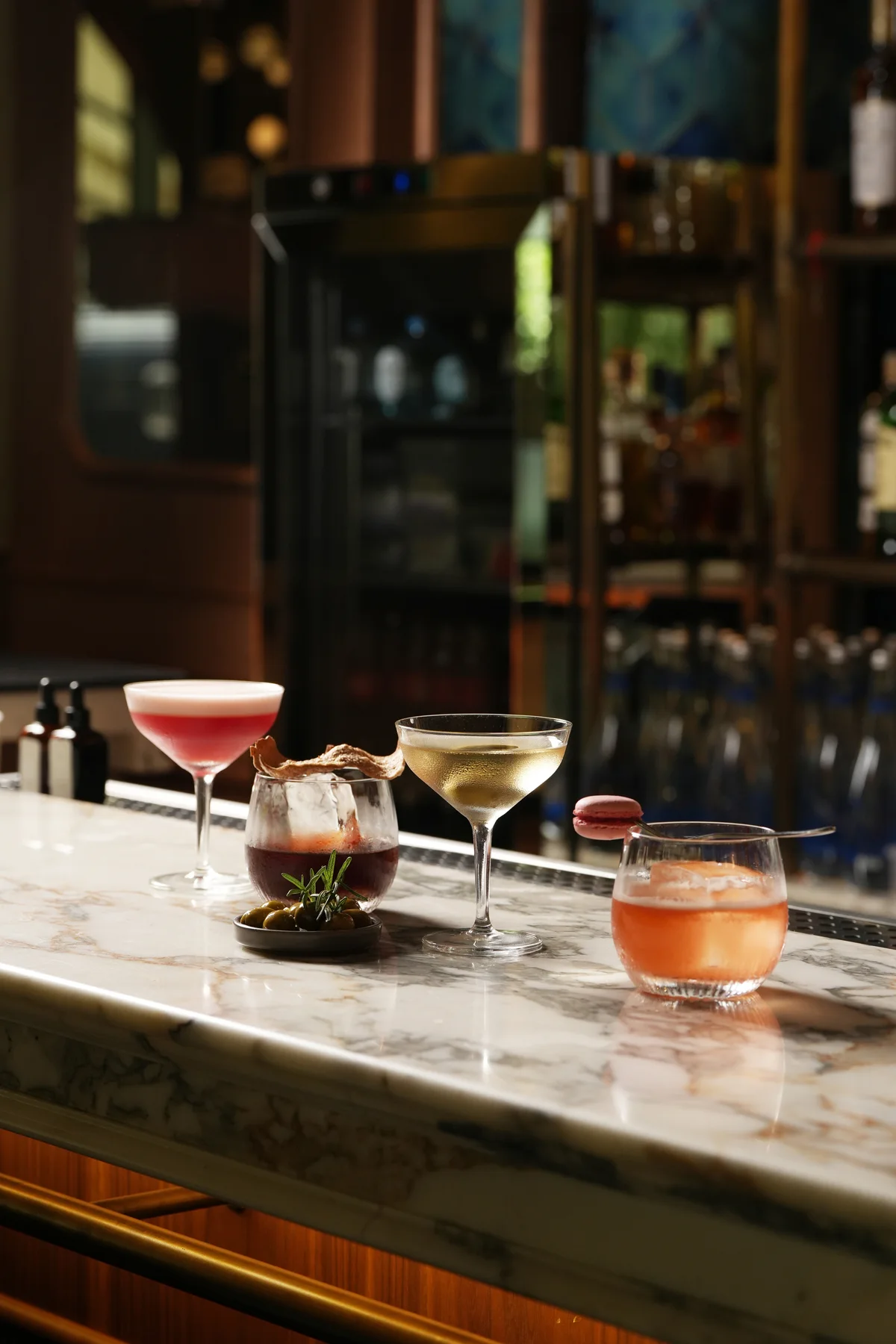
Tiki-Ti opened in Los Angeles in 1961, founded by Ray Buhen, who had a lifelong passion for Polynesian…
Bar
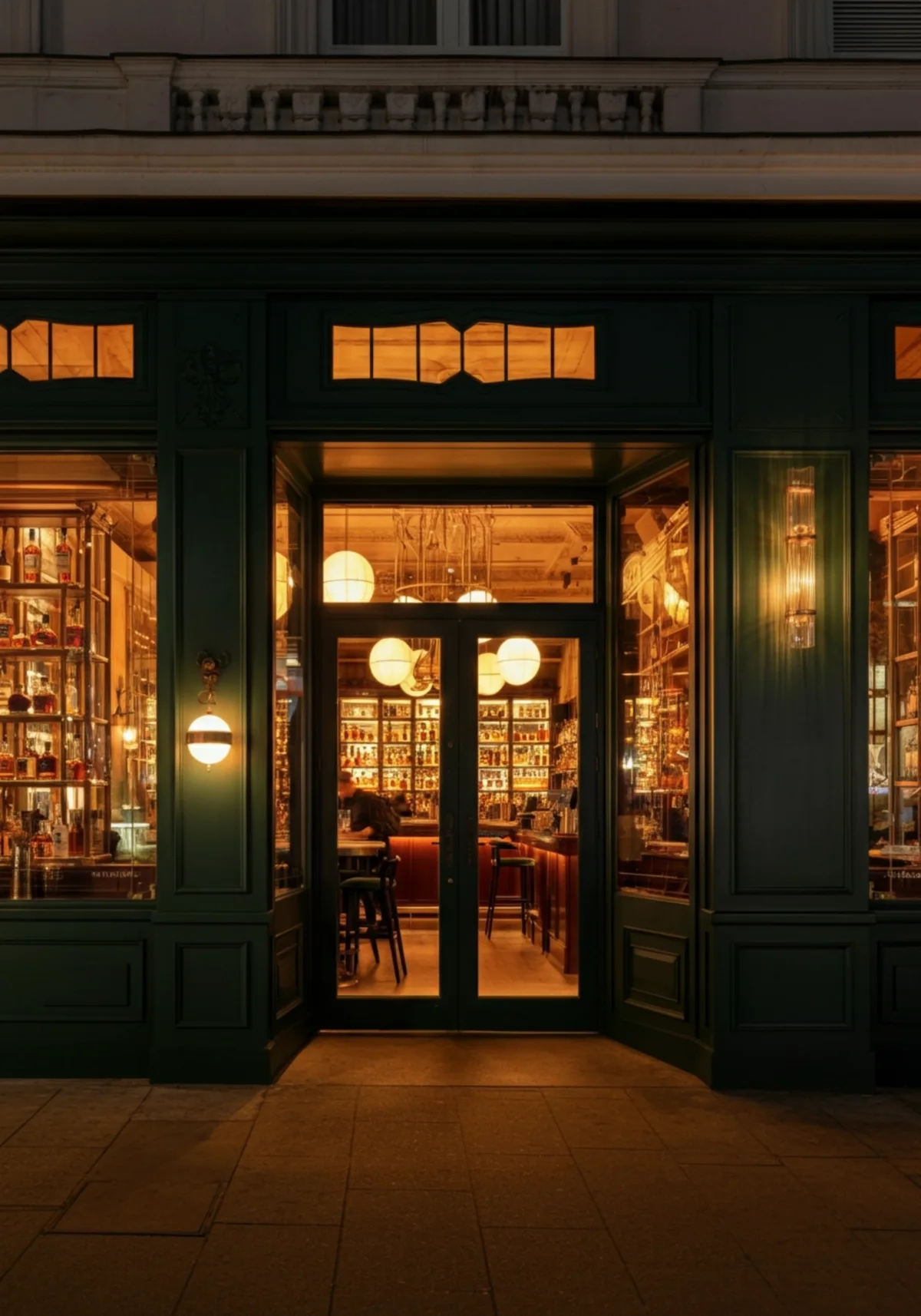
Smuggler’s Cove is a world-famous tiki bar located in San Francisco’s Hayes Valley, renowned for its deep dedication…
Cocktail
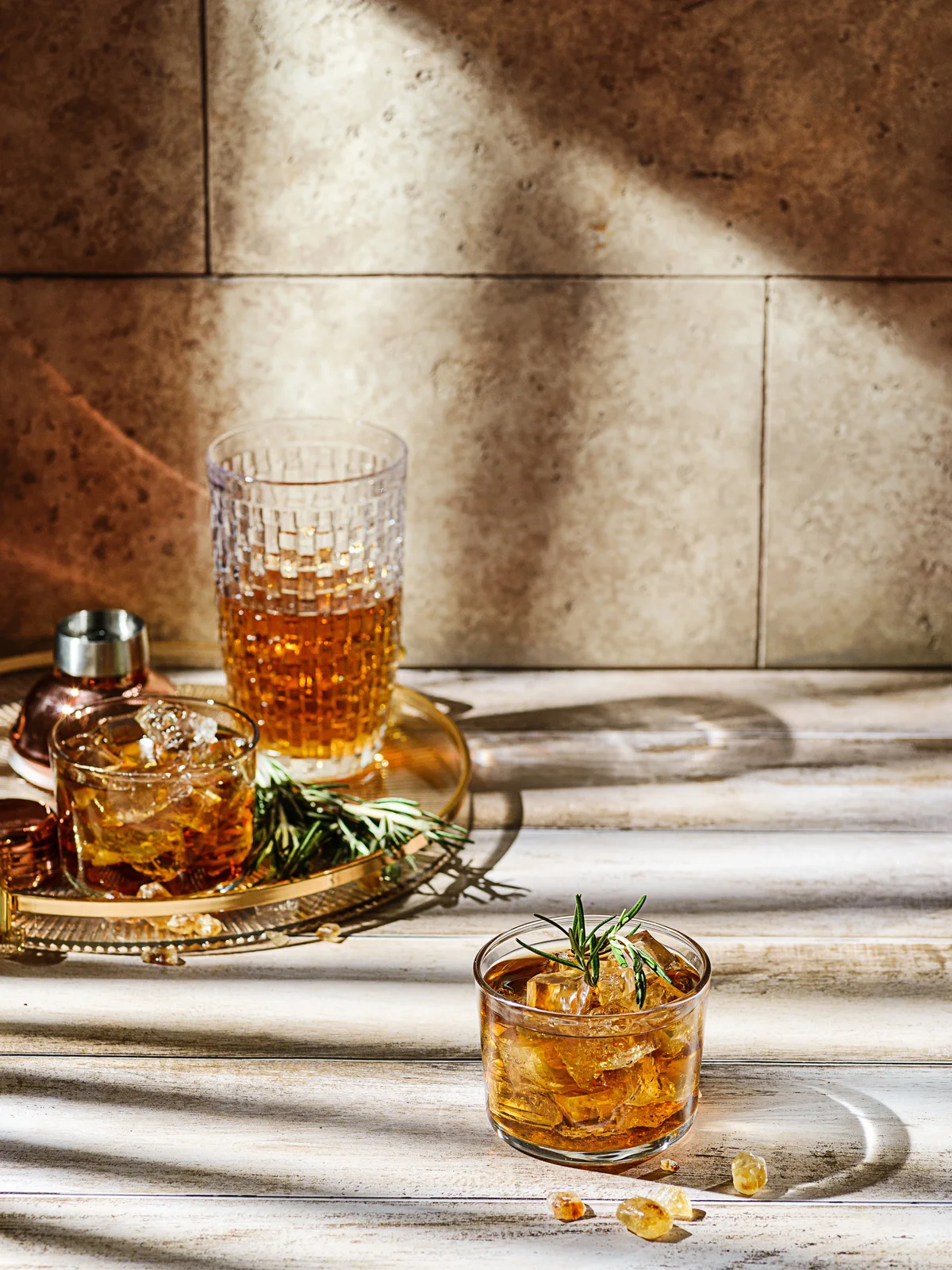
The Mai Tai is one of the most iconic creations of mid-twentieth-century tiki culture, a cocktail that has…
Spirit
Opportune 1791 Martinique Rhum Agricole XO
Opportune 1791 Martinique Rhum Agricole XO is a distinguished representation of the AOC Martinique agricultural rum. This Extra…
Spirit
Trois Rivieres 1975 Vieux Agricole Martinique Rhum
Trois Rivières 1975 Vieux Agricole Martinique Rhum is a venerable expression crafted in the heart of Martinique, showcasing…
Spirit
Wray & Nephew Overproof Rum is an iconic spirit recognized as the original Jamaican rum, celebrated for its…
Partnership
Don’s Special Daiquiri: How Donn Beach Redefined the Daiquiri in 1930s Hollywood
The classic Daiquiri, associated with Cuba in the late nineteenth and early twentieth centuries, is defined by restraint. Rum, fresh lime, and sugar create a precise equilibrium where each component is clearly legible. Donn Beach’s (known as Don’s Special Daiquiri)version begins with this structure but shifts its direction. Passion fruit introduces a broader tropical acidity, […]
August 6, 2026
Barlist
Grzegorz Nowicki: Where Control Turns Into Confidence
Not every bar scene announces itself when it starts changing. Sometimes it happens quietly. A few new venues open, standards begin to tighten, and suddenly the way drinks are made starts to feel different. Warsaw in the early 2010s moved like that. Nothing abrupt, but enough to shift expectations. Grzegorz Nowicki’s career developed right inside […]
September 28, 2026

Barlist
Pauline Le Berre: When Precision Becomes the Quietest Form of Control
Some bartenders build drinks that unfold. Others build drinks that settle. Pauline Le Berre’s work belongs to the second kind. Nothing in her approach pushes forward unnecessarily. The balance is already there, established before the drink reaches the glass, and held in place without adjustment. That way of working doesn’t come from experimentation alone. It […]
September 21, 2026