Vodka has always carried a paradox. It is expected to vanish in the glass, yet achieving that clarity requires meticulous engineering. Modern vodka is not about flamboyance, but about subtraction, repetition, and structural control. Its identity emerges not from what it expresses, but from what it deliberately removes.
Across Europe, distilleries have refined vodka into a category defined by precision. Fermentation is calibrated to reduce volatility. Column distillation isolates ethanol with minimal congeners. Filtration polishes without eroding the body. Water chemistry ensures stable dilution. Proof, base material, and filtration sequence are all architectural decisions, shaping perception and mouthfeel. Within this framework, subtle distinctions emerge, yet neutrality remains the guiding principle.
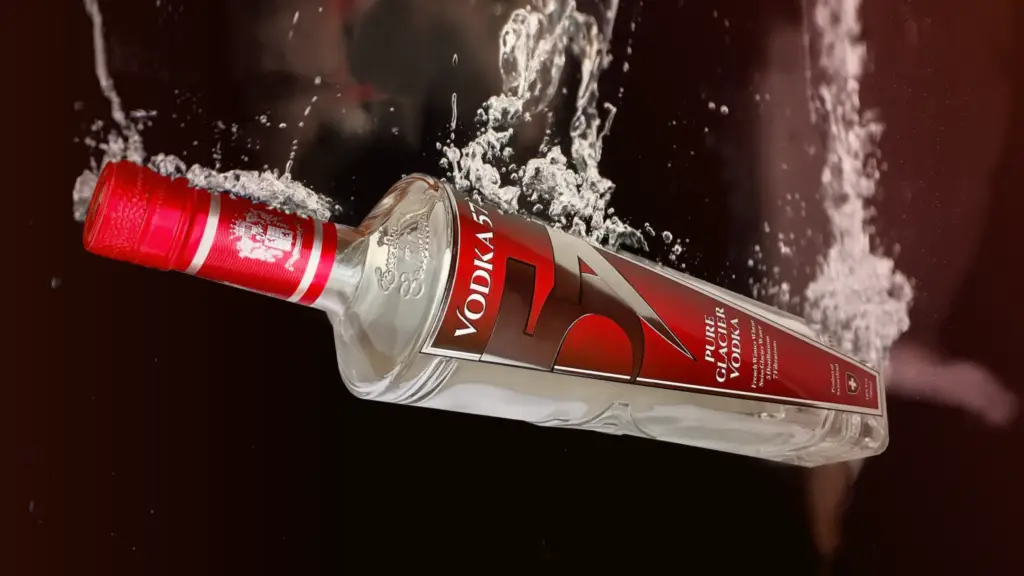
Swiss Precision: Vodka 57 Pure Glacier
In Switzerland, DIWISA AG produces Vodka 57 Pure Glacier Vodka using French winter wheat and Alpine glacier water. Its five distillation passes and seven-stage filtration reflect modern discipline. Glacier water stabilizes mineral balance rather than defining flavor. The spirit presents itself clean and refined, with faint floral and pear nuances that are structural traces rather than expressive statements. Each stage of production is deliberate, producing neutrality through repetition and precision.
Polish Discipline: Doa Premium and Pravda Bio Vódka
Poland demonstrates another approach to controlled production. At Polmos Bielsko-Biała, Doa Premium Vodka and Pravda Bio Vodka are distilled in column systems designed for repeatability and consistency. Fermentation is optimized for purity, ensuring minimal chemical volatility before distillation. Pravda Bio Vódka extends this control to the agricultural stage with certified organic grain, reducing variability in the wash. The resulting spirits achieve smoothness and consistency, demonstrating how process discipline translates into neutral, reliable vodka.
Organic Control: Pravda Bio Vódka
Polmos Bielsko-Biała produces Pravda Bio Vódka, an organic vodka crafted from certified grain. Every stage of production, from fermentation to distillation, is carefully monitored to ensure minimal variability and maximum purity. The spirit demonstrates how agricultural control complements distillation discipline. Subtle cereal and floral notes are present but contained within a neutral framework. Pravda Bio Vódka exemplifies how process transparency and organic sourcing can coexist with the engineered neutrality expected in modern vodka.
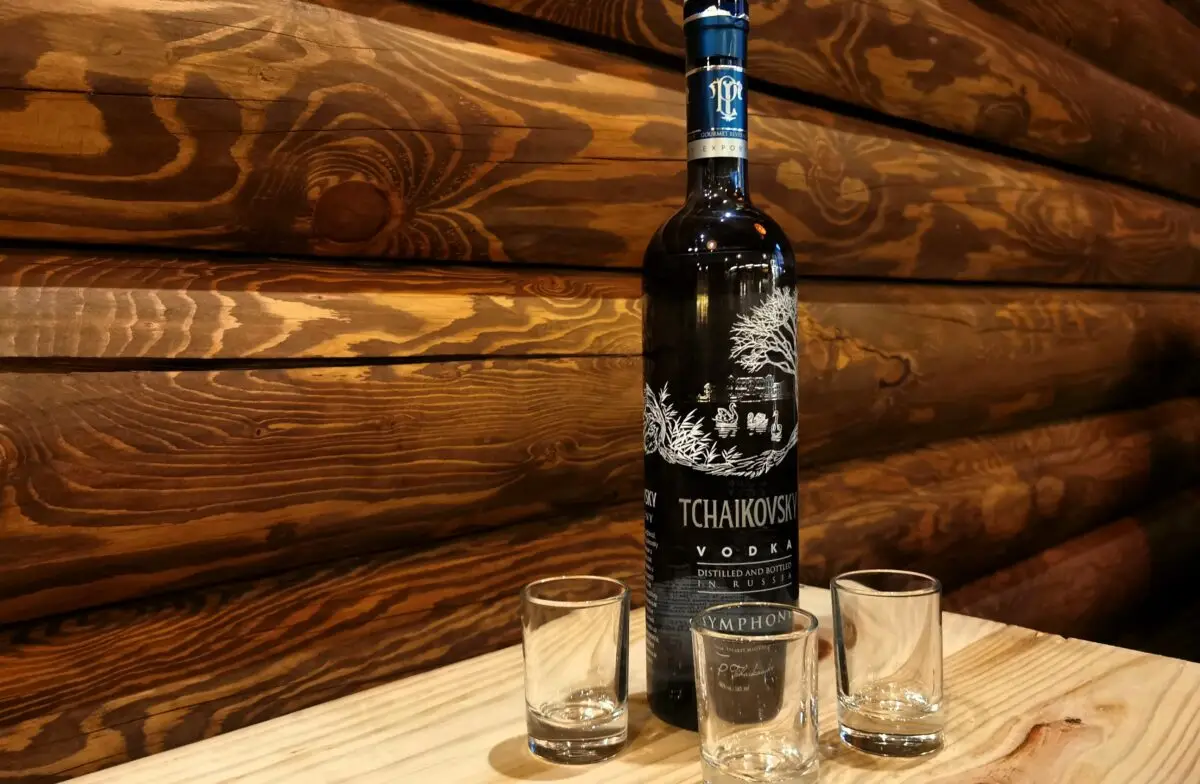
Russian Heritage Meets Modern Control: Tchaikovsky Vodka
At Syktyvkar Distillery, Tchaikovsky Vodka embodies a marriage of tradition and precision. Russian vodka has historically been valued for its repeated distillation and high-quality water. Today, these principles are enforced with exacting technical thresholds. The spirit retains subtle cereal warmth and a restrained pepper note, contained within a carefully narrowed spectrum. Heritage persists, but precision dictates the character in every batch.
French Expertise: Busnel Vodka 42,7°
Normandy’s Distillerie Busnel applies its expertise in precision distillation to Busnel Vodka 42,7°. Elevated proof alters perception, amplifying viscosity and warmth. At 42.7 percent alcohol, minor imbalances are easily exposed, demanding tighter distillation and filtration. Proof becomes architectural, shaping how the spirit communicates texture and lift while maintaining neutrality.
Potato-Based Textural Depth: Wódki Z Puszczy Ziemniak
Podole Wielkie Distillery produces Wódki Z Puszczy Ziemniak from potatoes rather than grain. Potato fermentation creates a denser, creamier texture even after multiple distillation cycles. Neutrality is preserved, yet mouthfeel deepens. Base material functions as a structural variable, showing how different raw materials influence texture without compromising technical consistency.
Flavored Precision: Wychowana W Luksusie Cherry & Blackcurrant
Polmos Łańcut produces Wychowana W Luksusie Cherry & Blackcurrant, demonstrating how infusion can coexist with discipline. Aromatic cherry and blackcurrant elements are integrated only after the neutral base meets structural standards. Flavor highlights overlay the engineered neutrality rather than replacing it, requiring careful balance. The process illustrates that flavored vodka must adhere to the same production philosophy as its unflavored counterpart.
Across these seven expressions, modern vodka reveals itself as a category of engineered discipline. Fermentation governs distillation efficiency. Distillation and filtration refine chemical composition and texture. Water stabilizes structure. Proof adjusts perception. Subtle variations such as glacier water, organic grain, elevated proof, potato density, and calibrated infusion emerge within a framework designed for consistency, not extravagance.
Vodka in 2026 is not measured by flamboyance or aromatics. Its quality lies in smoothness without dilution, clarity without harshness, and repeatability across batches. The invisible hand of discipline shapes every stage, proving that neutrality is not emptiness but the result of meticulous engineering.
Barlist approaches vodka through production literacy rather than branding or marketing narratives. By examining fermentation control, distillation architecture, filtration methodology, proof design, water chemistry, and base material selection, neutrality reveals itself as a deliberate technical outcome. Modern vodka is defined not by what it expresses, but by what it successfully removes.


Distillery
Polmos Łańcut is one of the oldest and most storied distilleries in Poland, known for its rich heritage…

Distillery
Polmos Bielsko Biała S.A. has long been recognized as one of Poland's leading producers of high-quality alcoholic beverages,…

Spirit
Tchaikovsky Vodka is a refined and ultra-pure spirit crafted in Armenia, honoring the legacy of the famed composer…
Spirit
Wychowana W Luksusie Cherry & Blackcurrant
Wychowana W Luksusie Cherry & Blackcurrant is a premium Polish flavored vodka that elegantly marries tradition with modernity.…
Spirit
Brancoveanu VS Romanian Vinars Brandy
Brancoveanu VS Romanian Vinars Brandy is a distinguished spirit recognized for its refined craftsmanship and dedication to quality.…
Spirit
Busnel Vodka 42,7° embodies the craftsmanship of its creators at the Distillerie Busnel, which is known for its…
Spirit
Wódki Z Puszczy Ziemniak is a distinctive vodka that embodies the spirit of craftsmanship and tradition inherent in…
Spirit
Vodka 57 Pure Glacier Vodka is a remarkable spirit that embodies the essence of Swiss craftsmanship. Created using…
Spirit
Pravda Bio Vodka represents the pinnacle of Polish vodka craftsmanship, meticulously distilled from solely organic ingredients. This premium…
Spirits
Vodka 57 Pure Glacier: Alpine Water, Winter Wheat, and the Discipline Behind Modern Vodka
Neutrality in vodka is often misunderstood. It is not emptiness, nor is it the absence of craft. It is the outcome of restraint. In the modern European vodka category, precision has replaced folklore as the defining value. Vodka 57 Pure Glacier Vodka sits firmly within this disciplined framework, where every stage of production exists to […]
March 11, 2026

Spirits
The Best 10 Scotch Whiskies Every Collector Should Try
Scotch whiskies collection is no longer simply about finding the oldest bottle or the most expensive name. A serious collection should tell a story about the spirit itself: where it comes from, how it is made, how oak changes it, how peat shapes it and why particular distilleries have earned lasting reputations. That makes choosing […]
August 21, 2026
Spirits
Havana Club and Bacardí: The Rum Rivalry Shaped by Revolution
The name Havana Club does not refer to the same rum everywhere. Across much of the world, it belongs to a Cuban produced brand managed through Havana Club International, the joint venture created by Corporación Cuba Ron and Pernod Ricard. In the United States, the name appears on a different rum made in Puerto Rico […]
June 22, 2026