Long before brand portfolios dominated back bars, whisky changed hands quietly in casks. Merchants purchased spirit from distilleries, matured it independently, and bottled it under their own labels. In today’s market, where multinational ownership shapes global distribution, that earlier model has returned with renewed force. The Rise of Independent Bottlers in Scotch Whisky reflects a shift in power from corporate blending houses to curators of singular casks, driven by transparency, scarcity, and the modern drinker’s appetite for provenance.
Independent bottlers do not distill. They select, mature, and release whisky sourced from established distilleries, often disclosing distillation dates, cask types, and outturn numbers. In doing so, they challenge the dominance of standardized house style and reintroduce the language of individuality.
Historical Foundations of Independent Bottling
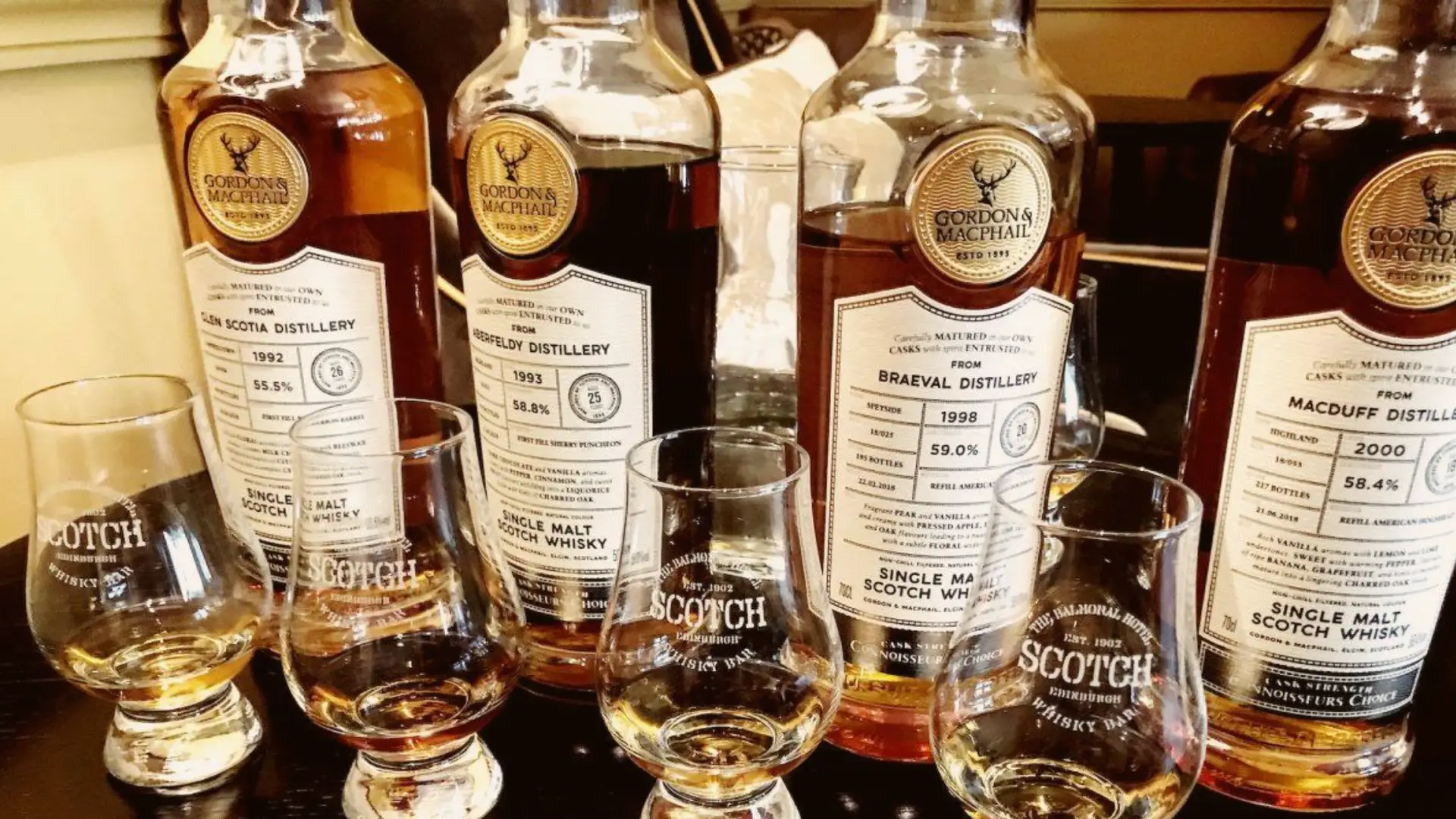
Independent bottling is not new. Companies such as Gordon and MacPhail, founded in 1895 in Elgin, began as grocers and wine merchants before maturing and bottling single malts from distilleries across Speyside and the Highlands. Cadenhead’s, established in 1842 in Aberdeen and now operating from Campbeltown, claims to be Scotland’s oldest independent bottler. These firms purchased casks when distilleries prioritized blends over single-malt branding.
Throughout much of the twentieth century, distilleries like Glenlivet and Macallan, founded in 1824, supplied bulk spirit to blended Scotch brands owned by larger conglomerates. Independent bottlers quietly retained parcels of casks, aging them beyond the needs of blending contracts. What appears as modern disruption is in fact a revival. The Rise of Independent Bottlers in Scotch Whisky reactivates a nineteenth-century commercial tradition.
Single Cask Transparency and the Modern Consumer
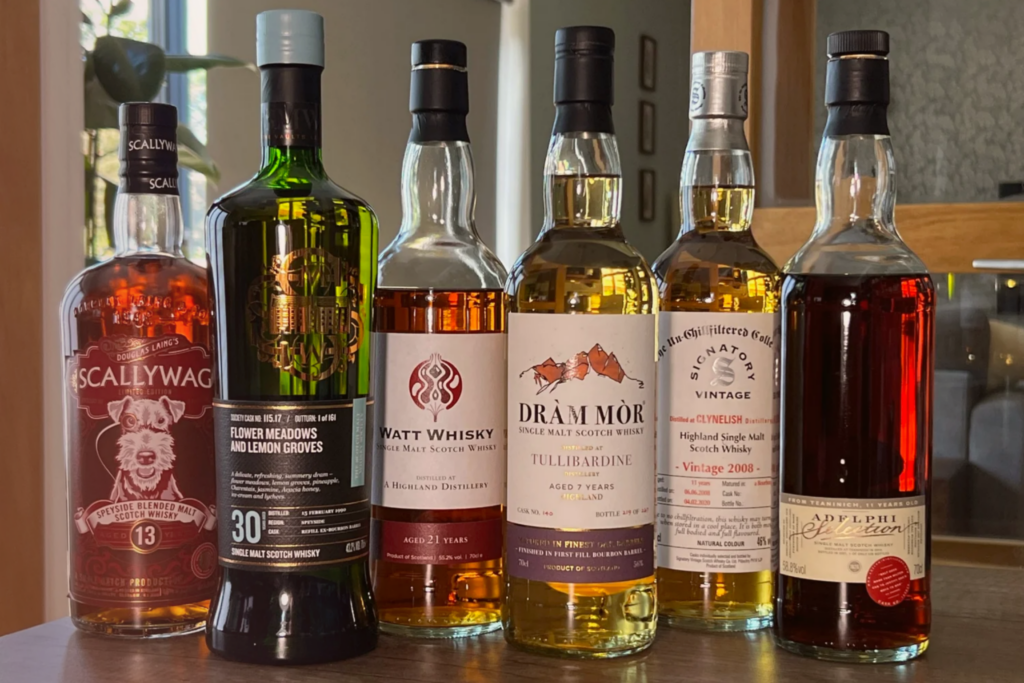
Contemporary drinkers demand detail. Age statements, cask types, distillation years, and bottling strength matter. Independent bottlers such as Signatory Vintage founded in 1988 and Douglas Laing established in 1948 have built reputations on releasing single cask expressions at natural cask strength. Labels frequently include cask numbers and bottle counts, sometimes fewer than three hundred bottles per release.
This level of disclosure contrasts with some official distillery releases that prioritize brand continuity over granular data. In an era where collectors track batch variation, The Rise of Independent Bottlers in Scotch Whisky aligns with transparency culture. It allows consumers to taste a 1993 Caol Ila matured in a refill sherry butt or a 2005 Glenallachie finished in a Madeira cask, each expression framed as unique rather than representative.
Distillery Identity Beyond House Style
Official bottlings are typically engineered to reflect consistent house character. Independent bottlers, by contrast, often celebrate deviation. A distillery known for orchard fruit elegance may reveal unexpected maritime salinity in a specific cask. For example, bottlings from Islay, distillery Laphroaig, founded in 1815, may appear under independent labels with reduced peat intensity or extended tropical fruit notes depending on maturation conditions.
Berry Bros and Rudd, founded in 1698 in London, though not exclusively a Scotch bottler, has long sourced casks to highlight alternative interpretations of distillery style. By selecting casks outside corporate blending programs, independents expand the narrative of what a distillery can express. The Rise of Independent Bottlers in Scotch Whisky, therefore, reframes authorship. The bottler becomes curator.
Economics and Access to Casks
Cask access defines viability. In the late twentieth century, as single malt branding surged under conglomerates such as Diageo, formed in 1997, distilleries tightened supply to external merchants. Some reduced or eliminated cask sales. Yet surplus stock and private cask ownership continued to feed independent pipelines.
Companies such as Adelphi, founded in 1826 and relaunched as an independent bottler in 1993, developed reputations for rigorous cask selection rather than volume output. The economics differ from official releases. Independent bottlers operate on smaller margins but higher variability, purchasing casks outright and assuming maturation risk.
In recent years, rising cask prices have complicated the model. Nonetheless, The Rise of Independent Bottlers in Scotch Whisky persists because scarcity itself enhances appeal. Limited outturn releases generate urgency in collector markets.
Globalization and the Digital Collector
Digital retail platforms and whisky forums have amplified independent visibility. Enthusiasts compare tasting notes across continents, sharing impressions of specific cask numbers. A single Signatory Vintage release of Glenlivet 1995 can achieve cult status within online communities. This networked dialogue supports the economics of small outturn bottlings.
Meanwhile, distilleries once silent on independent releases have begun acknowledging their value. Some collaborate directly with bottlers or release official single cask programs mirroring independent transparency. The boundary between official and independent narratives grows more porous.
Quality Versus Romanticism
Critics argue that not every cask merits bottling. Without the blending team’s balancing role, variability can produce uneven results. Yet advocates counter that variability is the point. Independent bottling celebrates cask specificity over brand homogeneity. The drinker becomes an active participant, evaluating each release on its own merits.
Gordon and MacPhail’s Private Collection series, featuring extremely long-aged whiskies such as a 1948 Glenlivet released decades later, illustrates how independent stewardship can rival official prestige bottlings. In such cases, independence does not imply inferiority but alternative authority.
The resurgence of independent bottling signals a broader cultural shift toward provenance and micro-narrative. The Rise of Independent Bottlers in Scotch Whisky demonstrates that authorship in spirits can reside outside distillery walls. Cask ownership, maturation choice, and bottling philosophy shape liquid identity as decisively as mashbill and still design.
Barlist traces these evolving power structures across the spirits landscape. By documenting producers, founding dates, and bottling philosophies, the platform highlights how independence reshapes tradition. In the glass of a single cask release, one encounters not only barley and oak but the quiet assertion that authority in Scotch whisky remains negotiable, dynamic, and richly contested.
Spirit
Ben Nevis 1966 50 YO Calvados Cask Finish Single Malt Whisky
The Ben Nevis 50 Year Old Calvados Cask Finish Single Malt Whisky is a remarkable expression that showcases…
Spirit
Château de Laubade XF Bas Armagnac
Château de Laubade XF Bas Armagnac is a distinguished expression of tradition and craftsmanship in the world of…
Spirit
Connoisseurs Choice Blair Athol 2005 Single Malt Scotch Whisky
Connoisseurs Choice Blair Athol 2005 Single Malt Scotch Whisky is a distinguished release from the Highland region of…
Spirit
Jacsi Martinique Rum is a historical rum that hails from the renowned region of Martinique. Crafted during a…
Spirit
Kavalan Ex Bourbon Cask Strength Selected by The Nectar Single Malt Whisky
Kavalan Ex-Bourbon Cask Strength Selected by The Nectar is a testament to the artistry inherent in the craftsmanship…
Spirit
Kusshh Grape Spirit Barrique Brandy
Kusshh Grape Spirit Barrique Brandy is a distinguished spirit crafted from the finest grapes native to Croatia. This…
Spirit
Mattentaarten Liqueur is a unique spirit that emerges from the tradition of Flemish sweets. This liqueur embodies the…
Spirit
Porter’s Straight 95 Rye Whiskey
Porter’s Straight 95 Rye Whiskey is a distinguished expression from the New York Distilling Company, known for its…
Spirit
The Hakushu Distiller's Reserve Single Malt Japanese Whisky
The Hakushu Distiller's Reserve is a distinguished expression from the House of Suntory, located in the Japanese Alps.…
Spirit
The Nectar Venezuelan 15 YO Rum
The Nectar Venezuelan 15 Year Old Rum stands as a testament to the rich rum-making traditions of Venezuela,…
Cocktail
A Midsummernight Dream is a whimsical and enchanting cocktail that blends floral, fruity, and spirit-forward elements to create…
Cocktail
The Amaretto Tea is a warm, comforting cocktail that elegantly combines the nutty sweetness of amaretto with the…
Cocktail
Apple Cider Punch is a festive beverage that highlights the crisp and comforting flavors of apples, making it…
Cocktail
Citrus Coke is a refreshing and lively cocktail that elevates the classic cola experience by introducing bright, zesty…
Cocktail
The Clover Club is a classic pre-Prohibition cocktail that exudes elegance, refinement, and a delicate balance of flavors.…
Cocktail
The Grasshopper is a classic, vibrant cocktail that is celebrated for its creamy texture, sweet minty flavor, and…
Cocktail
Homemade Kahlua is a rich and aromatic coffee liqueur that brings the luxurious flavors of freshly brewed coffee,…
Cocktail
The Jam Donut is a playful and indulgent cocktail that captures the sweet, comforting flavors of a classic…
Cocktail
The Pink Lady is a cocktail that perfectly captures the elegance and charm of early twentieth-century drinking culture,…
Cocktail
Tommy’s Margarita is a modern twist on the classic Margarita, celebrated for its clean, bright flavors and emphasis…
Distillery
ABD Maestro Pvt. Ltd. is the super-premium and luxury spirits arm of Allied Blenders and Distillers (ABD), one…
Distillery
Akkeshi Distillery is a pioneering force in the world of Japanese whisky, harmonizing traditional Scottish distilling practices with…
Distillery
Bee-Ginning Gin Co. is a vibrant craft distillery based in Manchester, renowned for its handcrafted premium gins. Founded…
Distillery
DHV Destilados is a modern distillery located in Valencia, Spain, that has made a name for itself in…
Distillery
Freeland Spirits is a distinguished craft distillery located in Portland, Oregon, celebrated for its exquisite selection of hand-crafted,…
Distillery
Hornitos Tequila Distillery is known for producing high-quality tequila that embodies the rich traditions and craftsmanship of Mexican…
Distillery
Intipalka Winery stands as a hallmark of modern viticulture in the enchanting Ica Valley of Peru. Known for…
Distillery
Ireland Craft Beverages, established in 2014, is at the forefront of a vibrant movement within the Irish craft…
Distillery
Maestro Dobel is a pioneering distillery known for its innovative approach to tequila production, combining traditional methods with…
Distillery
Real De Jalpa, S.C. De R.L. De C.v.
Real De Jalpa, S.C. de R.L. de C.V. is a distinguished craft distillery nestled in the heart of…
Bar
Bar Anima HK is a refined cocktail bar in Central, Hong Kong that’s built a reputation for thoughtful…
Bar
Bar Cobra occupies a relaxed, industrial‑chic space in one of Prague’s most dynamic neighbourhoods, offering a blend of…
Bar
Bodega Bar At The Berkshire Room
Bodega Bar at The Berkshire Room has been a standout in Chicago’s nightlife since opening in 2017. Conceived…
Bar
Coley Cocktail Bar is a distinguished establishment located in the vibrant neighborhood of Bangsar in Kuala Lumpur, Malaysia.…
Bar
Craftroom in Osaka has quickly earned a reputation as a destination for cocktail enthusiasts seeking quality, sophistication, and…
Bar
In Milan’s dynamic cocktail scene, Drinc has quickly become synonymous with creativity and energy. The bar thrives on…
Bar
In Osaka’s cocktail landscape, Juniper has established itself as a refined destination for lovers of gin and meticulously…
Bar
Mae’s Room is an intimate cocktail bar in Miami that exudes warmth and understated sophistication. The interior is…
Bar
Red Pub in Santiago has become a well‑loved destination for those who enjoy good drinks, good company, and…
Bar
wenty Two Beirut is a rooftop bar that has become a standout destination for both locals and visitors…
Barlist
How the Sazerac Company’s Distilleries Define Craft, Continuity, and Global Spirits Production
The story of modern American spirits is inseparable from the history of the Sazerac Company, a privately held producer whose distilleries have shaped bourbon, rye, Canadian whisky, and beyond. More than a portfolio of labels, Sazerac Company’s distilleries represent continuity of craft, adaptation to market conditions, and a willingness to preserve historic production while investing […]
April 9, 2026
Barlist
Pricing and Taxation in 19th-century European Spirits Consumption
In the early decades of the nineteenth century, the cost of a glass of spirits in London, Paris, or Warsaw was rarely determined by the distiller. It was determined by the state. A measure of whisky, Cognac, or vodka carried within it a structure of duties, controls, and transport costs that defined not only its […]
April 7, 2026
Barlist
The BenRiach Ownership Transitions That Changed Its Direction
BenRiach Distillery, nestled in the Speyside region of Scotland, has long been synonymous with innovation, peated experimentation, and a commitment to barley diversity. Since its founding in 1898 by John Duff, the distillery has weathered closures, acquisitions, and industry upheaval, each ownership transition leaving a distinct imprint on its whiskey philosophy and production trajectory. Understanding […]
March 20, 2026