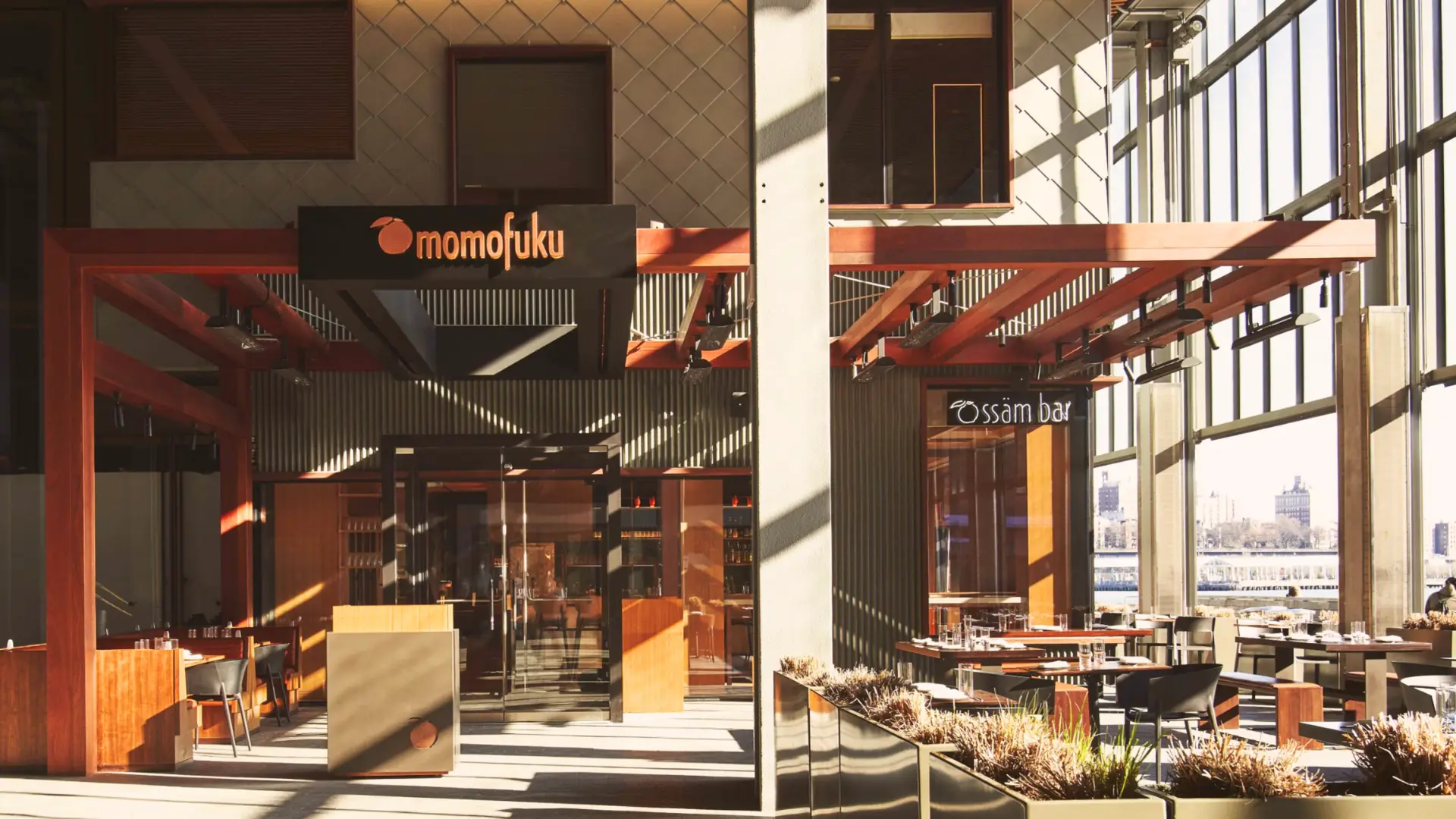
On a narrow stretch of East 13th Street in Manhattan, a restaurant opened that resisted definition from the beginning. Momofuku Ssam Bar did not present itself as a fixed concept, but as part of the expanding ecosystem of Momofuku. Under the direction of David Chang, it quickly moved beyond that role, becoming a space where format, structure, and expectation were constantly reworked.
Over fourteen years, Ssam Bar shifted between casual dining, large-format feasting, and tasting menu precision without settling into any one identity. Its closure ended the physical space, but the influence of what it introduced continues to define how restaurants operate.
New York Dining Before Ssam Bar
At the time of its opening, New York’s restaurant culture operated within clear boundaries. Fine dining emphasized formality, hierarchy, and price, while casual dining prioritized accessibility over experimentation. Few spaces existed between these extremes.
Ssam Bar emerged within that gap. It offered a chef-driven approach without adopting the rigidity of fine dining, combining Korean culinary references with American ingredients and contemporary technique. This positioning reflected a broader shift within the city, where diners were increasingly open to cross-cultural menus delivered through informal service. The restaurant did not attempt to resolve this divide. It operated within it, allowing tension between structure and flexibility to define its identity.
The Ssam and the Shift Toward Shared Experience
One of the restaurant’s defining contributions arrived not as a single dish, but as a format that reshaped the experience of dining. The bo ssam dinner centered on a slow-roasted pork shoulder served with oysters, rice, and condiments, but its significance extended beyond its components.
The meal required participation. Guests assembled each bite themselves, moving away from individual plating toward a shared structure that emphasized interaction. Dining became communal rather than isolated, while Korean culinary tradition was translated into a New York context shaped by local sourcing and restaurant culture. This shift in structure influenced not only food but also how drinks were consumed. Larger tables encouraged shared bottles, carafes, and formats that moved beyond individual cocktail service.
Beverage Structure and the Integration of Spirits
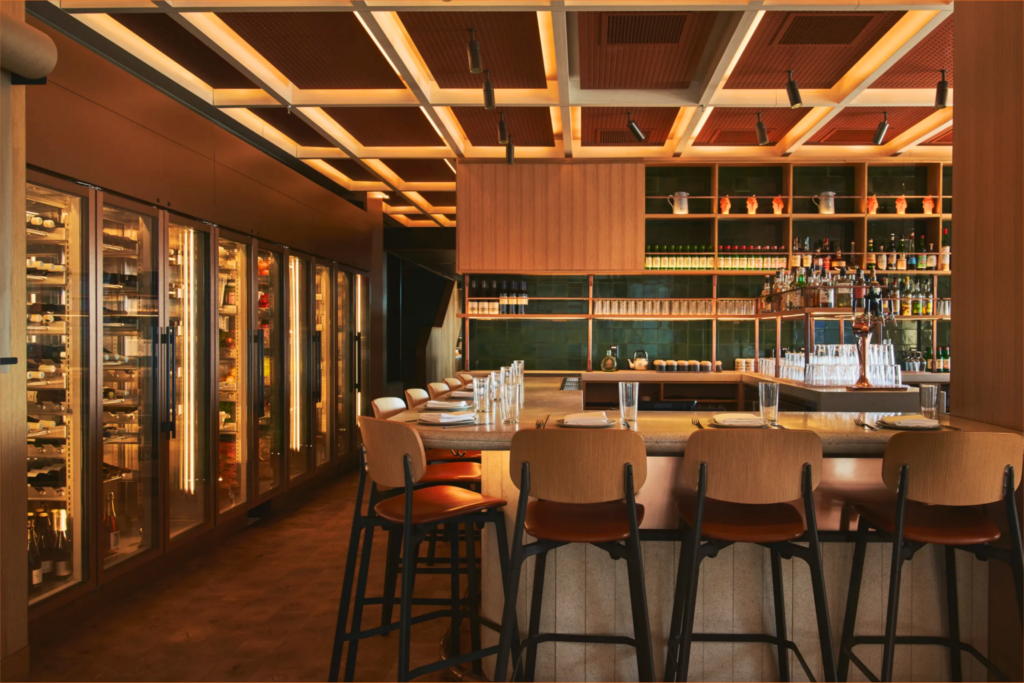
The beverage program at Ssam Bar developed alongside the kitchen, reflecting the same resistance to rigid categorization. Rather than building a cocktail identity separate from the food, the drinks were designed to integrate with it. Spirits such as bourbon, rye whiskey, and Japanese whisky appeared frequently in the program, offering structure against the richness of pork and the salinity of oysters. Classic formats like the Old Fashioned and Manhattan were adapted to suit the intensity of the menu, often with restrained sweetness and sharper balance.
At the same time, Sake and Shochu played a central role, reflecting the broader East Asian influence within the kitchen. These spirits provided a different kind of structure, lighter in alcohol but precise in texture, allowing them to move across dishes without overwhelming them. Wine selections leaned toward low-intervention producers, aligning with a shift that gained momentum in New York’s dining culture. These wines supported the variability of the menu rather than competing with it, reinforcing the idea that the beverage program functioned as part of a larger system.
Reinvention as a Working Method
Ssam Bar did not remain consistent over time. Its format evolved in response to both internal experimentation and external conditions. Early menus focused on small plates, allowing rapid exploration of ideas. Later, the restaurant adopted a more structured tasting menu before returning to a flexible hybrid model.
This pattern extended to the beverage program as well. Cocktail formats shifted, wine lists evolved, and the role of spirits adapted to each iteration of the menu. Stability was never the objective. Movement was. Within the broader Momofuku group, Ssam Bar operated as a platform for development rather than a finalized concept, contributing to the evolution of both food and beverage identity.
Economic Pressure Beneath Creative Flexibility
By the late 2010s, the conditions that had supported Ssam Bar’s model began to change. Operating a restaurant in New York became increasingly expensive, with rising rent, labor costs, and regulatory demands placing pressure on margins.
Restaurants positioned between casual and fine dining faced a structural challenge. They required the creativity and staffing associated with high-level kitchens, while operating within pricing structures that limited financial flexibility. This pressure extended to beverage programs as well. Maintaining a diverse and adaptable drinks offering required inventory depth and staffing that became harder to sustain under tightening margins.
2020 and the End of the Space
The immediate disruption came when indoor dining in New York was suspended. Ssam Bar’s format, built around shared plates and close interaction, could not easily adapt to distancing requirements. The decision to close marked the end of the physical space and aligned with a broader shift within the Momofuku group toward new directions, including packaged products and more scalable concepts.
The space ended, but the trajectory it represented had already moved forward.
What Ssam Bar Changed
The influence of Ssam Bar is visible in how restaurants now approach structure and identity. Shared dining formats have become common, and the boundary between casual and fine dining has blurred significantly.
The integration of beverage programs into the overall dining system also became more deliberate. Rather than functioning as a separate offering, drinks are increasingly designed to align with food in both structure and intent. Ssam Bar demonstrated that restaurants could operate as evolving systems, where food and drink move together rather than independently.
Ssam Bar is best understood as a sequence of decisions rather than a single concept. Its movement between formats reflects a broader shift in how hospitality operates, where adaptation replaces permanence. Within the Barlist framework, it parallels developments seen in modern bars, where cocktails are increasingly treated as systems of structure and control. The restaurant did not aim to perfect a model. It aimed to test one.
Its closure marks the end of that process within a single space, but the ideas it generated continue to shape how both food and drink are understood.