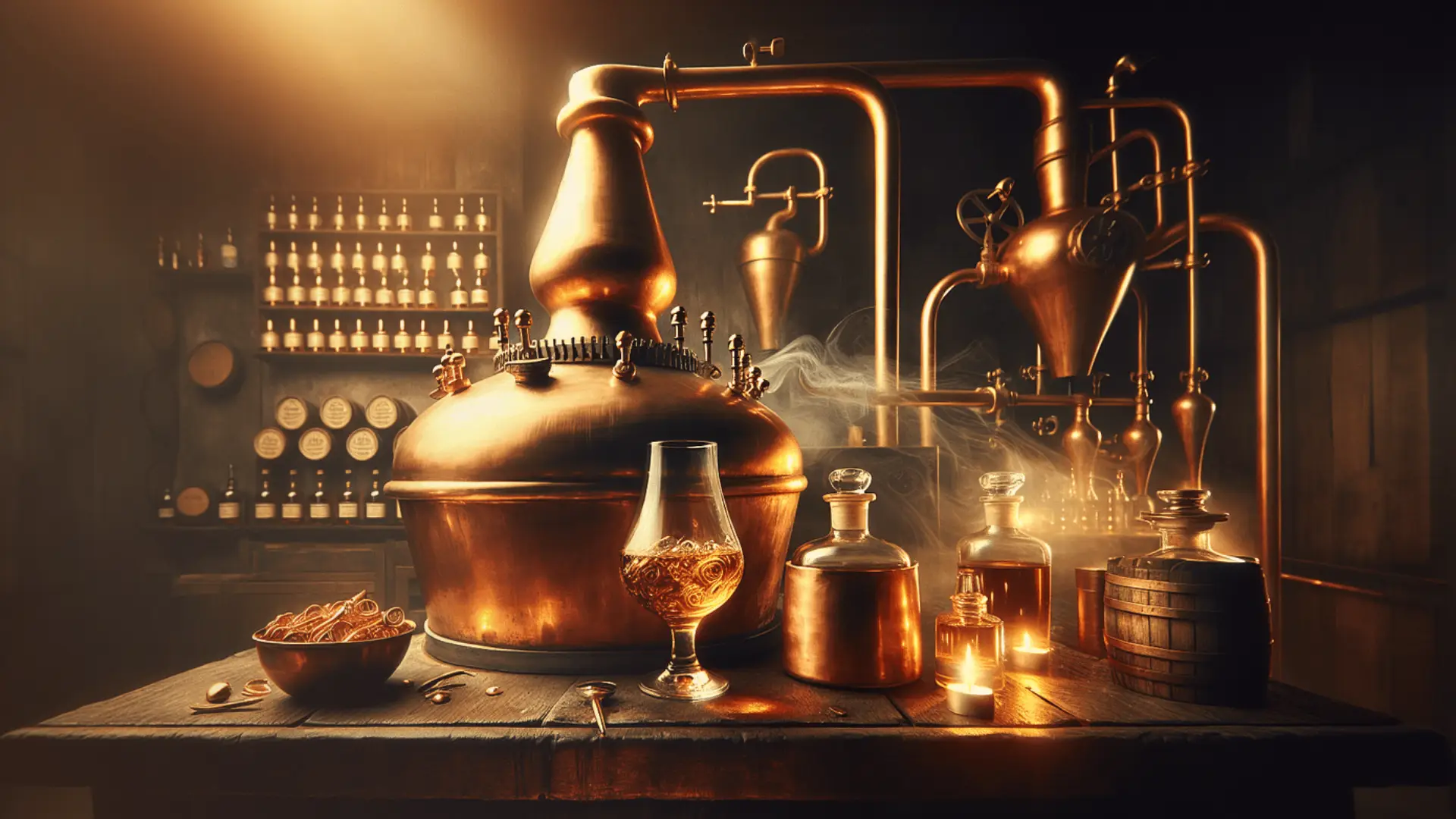
Irish Whiskey belongs to an island where grain, law, migration, taxation, decline, and revival all shaped the meaning of the name. Its history is not only the story of old distilleries or familiar labels. It is the story of how cereal spirit made in Ireland became legally tied to a place, a method, and a reputation that had to be protected.
For centuries, distilling formed part of Irish agricultural and commercial life. Barley, oats, wheat, and other cereals could be converted into a more durable and valuable product. Over time, Irish distillers developed styles that became distinct from neighbouring whisky traditions, especially through the use of unmalted barley in pot still whiskey and through maturation on the island.
Today, Irish Whiskey, Uisce Beatha Eireannach, and Irish Whisky are protected as a Geographical Indication (GI). The protection covers the island of Ireland, including both Ireland and Northern Ireland. The legal system does not belong to one county or one distillery. It belongs to an island production culture defined by cereals, fermentation, distillation, maturation, verification, and the right to use the name.
An Island Name With a Long Memory
The Irish term uisce beatha means « water of life, » a phrase that links whiskey to older Gaelic language and distilling culture. The modern legal name carries that older memory, but the protected system is built through more recent law and verification.
Irish distilling developed across a complex history of monasteries, farms, licensed distilleries, illicit production, taxation, and export. By the nineteenth century, Irish Whiskey had become one of the most important whiskey traditions in the world. Dublin pot still whiskey held a major reputation, and Irish producers supplied markets far beyond the island.
The twentieth century changed that position dramatically. War, trade disruption, Prohibition in the United States, changing market tastes, and competition from blended Scotch all weakened the industry. Many distilleries closed. Production became concentrated in a small number of sites.
The modern Geographical Indication sits on top of that history. It protects not a static museum piece, but a category that survived contraction and then rebuilt itself through law, investment, technical clarity, and renewed interest in Irish styles.
The Island as Legal Territory
Irish Whiskey is protected by geography, but not by one small district. The territory is the island of Ireland. This includes Ireland and Northern Ireland, making the system unusual because the protected name crosses political administration while remaining tied to a single island production identity.
The Irish Whiskey Act 1980 defined Irish Whiskey in Irish law. Later, the European spirit drinks framework and the Irish Whiskey Technical File gave the name its Geographical Indication structure. Since January 2016, Irish Whiskey has been protected under the geographical indication scheme alongside Irish Poteen and Irish Cream.
The legal meaning is clear. A spirit cannot be marketed as Irish Whiskey unless it follows the relevant requirements. The product must come from the island system and comply with the Technical File. This is what separates Irish Whiskey from whiskey merely inspired by Irish style.
The island is therefore not a decorative origin claim. It is the legal space where the core production stages must give the spirit its identity.
Cereals, Malt, and the Grain Base
Irish Whiskey begins with cereals. The Irish Whiskey Act requires distillation from a mash of cereals that has been saccharified by the diastase of malt contained in it, with or without other natural diastases, fermented by yeast, and distilled in a way that keeps aroma and flavour from the materials used.
This grain base is one of the reasons Irish Whiskey has such range. It can include malted barley, unmalted barley, and other cereals depending on the style being made. The system does not force every Irish Whiskey into one mash bill.
That flexibility is important, but it exists inside legal boundaries. The spirit must still be cereal-based, must be fermented, and must be distilled so that the distillate retains character from the raw material. It cannot become neutral spirit and still carry the protected name.
Irish Whiskey’s protected identity is therefore agricultural as well as geographic. It begins with grain and with the conversion of cereal starch into fermentable sugars.
Pot Still Whiskey and the Barley Question
One of Ireland’s most distinctive contributions to world whiskey is Pot Still Whiskey. Its identity comes from the use of both malted and unmalted barley, a tradition historically shaped by tax, availability, and distilling practice.
Single Pot Still Whiskey is especially important because it expresses an Irish style that does not fit neatly into the single malt model. The combination of malted and unmalted barley can produce texture, spice, weight, and cereal complexity. This is not only a flavour preference. It is part of the cultural memory of Irish distilling.
Irish malt whiskey follows a different logic, built around malted barley and pot still distillation. Irish grain whiskey uses cereal grains and column distillation to create a lighter style. Blended Irish Whiskey brings together two or more whiskey types, allowing the category to balance pot still weight, malt character, and grain softness.
These styles show why Irish Whiskey cannot be reduced to one technical cliché. It is often associated with triple distillation, but triple distillation is not the legal definition of the category. The legal identity is broader, built from cereal mash, fermentation, distillation below the required maximum strength, island maturation, and compliance with the Technical File.
Distillation Below Neutrality
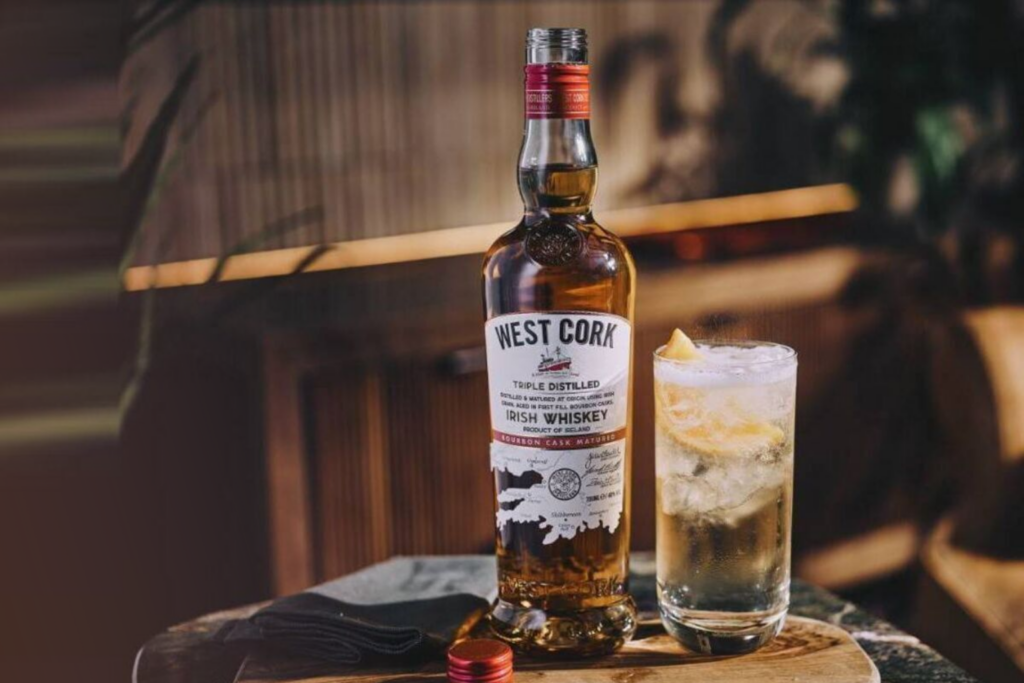
Irish Whiskey must be distilled at less than 94.8% ABV. This maximum matters because it protects character. A spirit distilled too high would become too neutral and would lose the aroma and flavour derived from cereals and fermentation.
Irish Whiskey may be made through pot still distillation or column still distillation, depending on the style. Pot still distillation is central to malt and pot still styles. Column still distillation is central to grain whiskey. Some Irish whiskeys are double distilled, while others are triple distilled. The law does not require one universal number of distillations for every product.
This flexibility has allowed Irish Whiskey to evolve while remaining legally controlled. The production system protects tradition without freezing all producers into one method. The important legal point is the retained character of the distillate. Irish Whiskey must emerge from distillation as whiskey spirit, not as neutral alcohol waiting for flavour to be added later.
Three Years on the Island
Maturation is the point where Irish Whiskey becomes legally complete. The spirit must mature in wooden casks on the island of Ireland for at least three years. The Technical File places a maximum cask capacity of 700 litres.
This requirement ties time to place. The spirit cannot be distilled in Ireland, shipped elsewhere in cask, matured abroad, and still claim the protected name. Maturation must happen within the island system.
The cask rule is also distinctive because Irish Whiskey is not restricted only to new oak. Wooden casks, such as oak, may be used, and this has allowed Irish producers to work with ex-bourbon, sherry, fortified wine, rum, wine, and other cask histories within legal and quality controls.
Age statements must reflect the youngest whiskey in the product. This protects the meaning of age on the label and prevents maturity claims from being separated from the liquid inside the bottle. Irish Whiskey must be bottled at a minimum strength of 40% ABV. This gives the category a clear legal floor for presentation to the market.
Verification as Protection
A Geographical Indication depends on control. For Irish Whiskey, the Technical File sets out the production requirements, and verification systems ensure that producers and processors comply.
In Ireland, the Department of Agriculture, Food and the Marine is responsible for policy coordination on spirit drink Geographical Indications and provides guidance on interpretation of the Technical File. The Revenue Commissioners undertake verification for Irish Whiskey. In the United Kingdom system, HM Revenue & Customs (HMRC) verifies relevant Irish Whiskey production processes connected with Northern Ireland and UK-regulated activity.
This shared structure matters because Irish Whiskey is an island-wide GI with production and verification realities on both sides of the border. The protection of the name depends on documentation, premises verification, production checks, and label control.
The legal system is not only about defending exports. It is about making sure that the name Irish Whiskey continues to mean a product made through the required island-based process.
Decline, Revival, and Modern Identity
The modern Irish Whiskey story is also one of recovery. After decades of contraction, the category began to rebuild from the late twentieth century onward. New distilleries opened, older names regained attention, and styles such as Single Pot Still Whiskey became central again to discussions of Irish identity.
This revival created a challenge. A growing category needs clear rules. Without a protected framework, new production could weaken the meaning of the name as quickly as it expanded it. The GI system helps prevent that by ensuring that growth remains tied to the island, the Technical File, and verified production.
Modern Irish Whiskey can be traditional or experimental. It can be pot still, malt, grain, or blended. It can be matured in many types of wooden cask. It can come from long-established distilleries or newer producers. But it must remain inside the protected system.
That balance between revival and control is what gives the category its current importance.
A Protected Spirit Made Across One Island
Irish Whiskey is legally defined by more than nationality. It is shaped by cereal agriculture, island production, fermentation, distillation, cask maturation, and a verification structure that protects the name in law.
Its GI status does not reduce the category to one style. Instead, it protects a family of whiskey traditions that share an island origin and a legal foundation. Pot Still Whiskey, Malt Whiskey, Grain Whiskey, and Blended Irish Whiskey can all belong to the system when they meet the rules.
The protected name carries history, but it also creates accountability. Irish Whiskey remains meaningful because the law keeps the name attached to the place and process that made it recognisable.

Renowned freelance spirits consultant, award-winning author, and international spirits judge, recognized globally as a leading authority on spirits selection, historical distillates, and market innovation.


Spirit
Clonakilty Port Cask Finish Blended Irish Whiskey
Clonakilty Port Cask Finished Blended Irish Whiskey is a luxurious expression hailing from the Clonakilty Distillery in Ireland.…
Spirit
Teeling Single Pot Still Whiskey
Teeling Single Pot Still Whiskey represents a bold revival of Dublin's whiskey-making heritage, merging tradition with innovation. As…
Spirit
Skellig Distillery Exclusive 2024 Single Pot Still Irish Whiskey
The Skellig Distillery Exclusive 2024 Single Pot Still Irish Whiskey showcases the pinnacle of craftsmanship that embodies traditional…
Spirit
Bushmills Steamship Collection #3 Char Bourbon Cask Reserve Single Malt Irish Whiskey
The Bushmills Steamship Collection #3 Char Bourbon Cask Reserve is a unique addition to the prestigious legacy of…
Spirit
Green Spot Château Léoville Barton Single Pot Still Irish Whiskey
Green Spot Château Léoville Barton is an outstanding expression of Irish whiskey, celebrated for its unique and intricate…
Discovery and Education
The 1909 Royal Commission and the Battle over Malt, Grain, and Blending
By the beginning of the 1900s, Britain and Ireland were producing whisky on an industrial scale, exporting it across an expanding commercial world and presenting it as a drink rooted in tradition. Yet the industry could not agree on a basic question. What, legally and culturally, was whisky? For pot still distillers, particularly those defending […]
June 27, 2026
Partnership

The Port of Bordeaux and the Trade Routes That Built Cognac
Cognac did not become a global spirit because of vineyards alone. Its rise depended on water, ships, and merchants long before it depended on distilleries. The identity of Cognac was shaped as much by the port of Bordeaux as by the chalk soils of Charente. Without Bordeaux’s access to Atlantic trade routes, cognac would likely […]
September 16, 2026
Partnership
Jamaica Rum and the Sugar Estate Landscape Behind a Protected GI
Jamaica’s Rum story begins with sugar estates, limestone water, heavy fermentations, coastal trade, and a landscape where cane became both wealth and memory. The island’s reputation was not made by one house or one parish. It grew across estates, distilleries, ports, and rural communities where sugar production and rum making became inseparable from the country’s […]
September 13, 2026