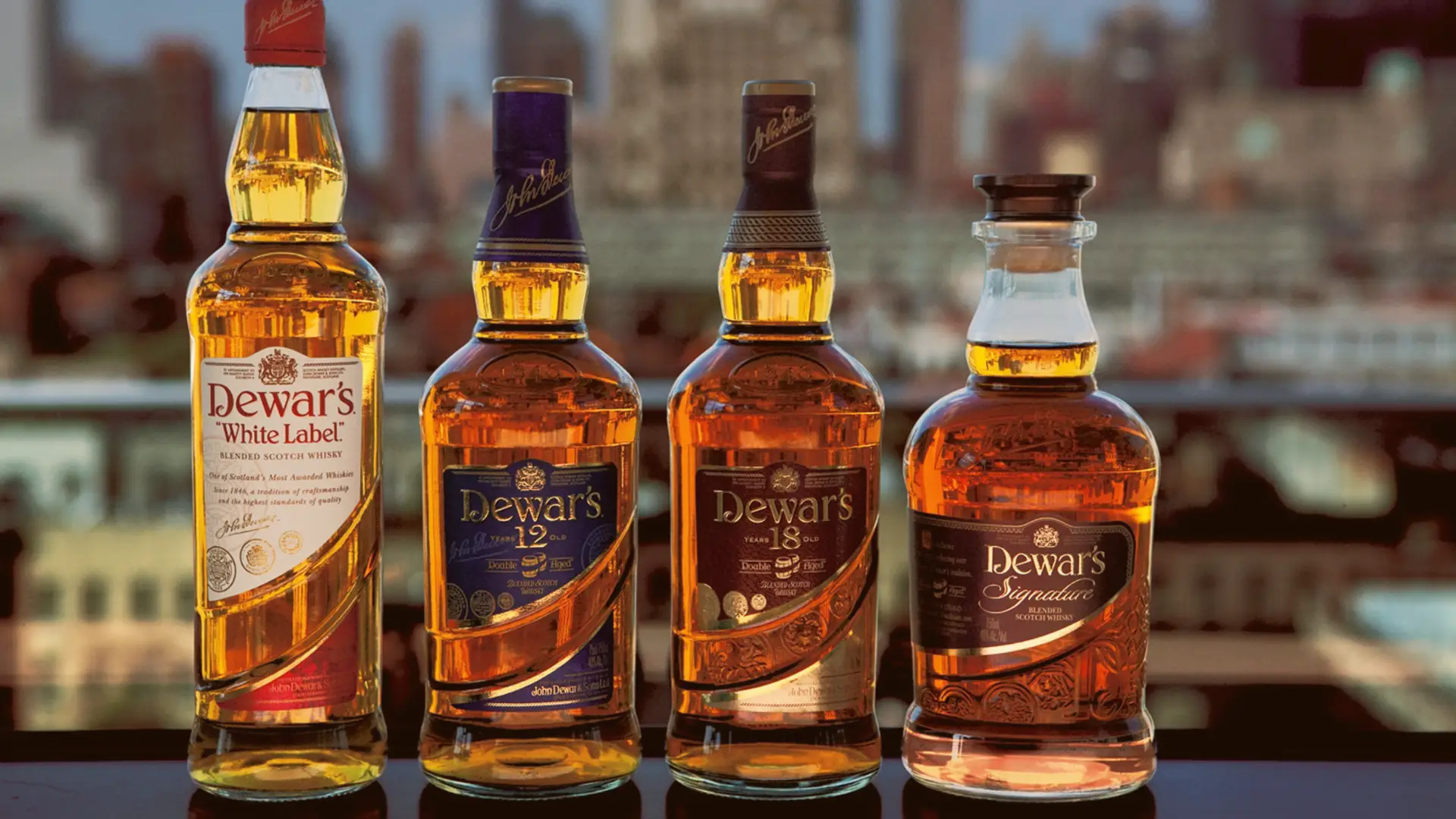
The story of Dewar’s White Label Scotch whisky runs through the rise of blended Scotch as a global language of consistency. Long before single malts became the dominant conversation in specialist circles, blends taught the wider world what Scotch could taste like, how it could be served, and how a brand could be trusted across borders. Dewar’s White Label Scotch whisky by Dewar & Sons did not become iconic through scarcity. Its influence came from repeatable style, broad availability, and a commercial vision built in nineteenth-century Scotland.
The Perth origins that shaped Dewar’s White Label Scotch whisky
The foundation story begins with John Dewar, born in 1805, who built his career in the wine and spirits trade before establishing his own merchant shop on Perth’s High Street in 1846. That timing mattered. Victorian era commerce rewarded reliability, and blending offered a way to deliver a consistent profile when whisky was still often sold locally and irregularly.
Dewar’s house narrative emphasises that early focus on selection and blending, describing how the business moved toward proprietary blends during the 1860s. In the broader Scotch context, this was the period when merchants and blenders became central to export growth, because they could offer the same whisky experience in different cities and countries, even when component whiskies varied by batch.
The 1899 creation that made Dewar’s White Label Scotch whisky portable
Dewar’s White Label was first blended in 1899, a date repeated in Dewar’s own brand material and in independent whisky reference timelines. This was the era when branded bottling and international shipping made a recognisable label commercially powerful. A blend could now travel not only as liquid, but as identity.
Dewar’s describes White Label as a blend built from multiple malt and grain whiskies, designed to be approachable and consistent rather than dominated by a single regional style. The significance is not only flavour. It is the idea that Scotch could be introduced to new drinkers through balance and familiarity, without requiring specialist knowledge.
Aberfeldy Distillery and the malt heart of the blend
A critical anchor for the house is Aberfeldy Distillery, planned in 1896 by the sons of John Dewar to supply malt whisky for Dewar’s blends. Aberfeldy’s own heritage material describes the distillery as built to provide the heart malt content for Dewar’s blends, connecting the blend to a deliberate production backbone rather than anonymous sourcing.
Independent producers and reference histories also emphasize construction beginning in 1896 and opening toward the end of the century, aligning with the period when Dewar’s was scaling internationally. In practical terms, this relationship illustrates what many drinkers forget about blends: behind consistency sits a supply architecture built around specific distilleries and a planned house style.
Prohibition and the advantage of a known global label
The Prohibition era in the United States lasted from 1920 to 1933, disrupting legal alcohol markets while creating new pressures on international spirits brands. For established Scotch labels, brand recognition and export networks mattered more than ever, because familiarity could survive disruption and reappear quickly when markets reopened.
Dewar’s global presence was already well developed by the early twentieth century, and its identity as a dependable blend supported its long cultural endurance. The broader historical point is that blended Scotch did not become global by accident. It became global because brands like Dewar’s were built to be repeatable, widely distributed, and easy to understand.
Bacardi ownership and modern continuity without reinvention
In modern corporate terms, a key milestone came in 1998, when Bacardi acquired the Dewar’s brand, an event documented both by Bacardi and by regulatory reporting in the United States. Bacardi has also described operating multiple Scotch distilleries through John Dewar and Sons Ltd, including Aberfeldy, reinforcing that the blend remains connected to an owned production network rather than a purely sourced product.
Dewar’s White Label illustrates how blending craftsmanship and strategic vision transformed Scotch whisky into a global language. On Barlist, such spirits are explored not as commodities but as cultural milestones that connect history production and everyday drinking culture into a shared narrative.


Distillery
Dewar's Aberfeldy Distillery is a prominent single malt Scotch whisky distillery located on the outskirts of Aberfeldy, in…

Distillery
Dewar's, officially known as John Dewar's & Sons, is a distinguished Scottish whisky producer renowned for its exceptional…

Spirit
Dewar’s White Label Scotch Whisky
Dewar’s White Label Blended Scotch Whisky is renowned for its unique smoothness and refreshing taste, creating an approachable…
Distilleries & Producers
James Buchanan & Co: The Blending House That Turned Scotch into a Modern Brand
The history of James Buchanan & Co belongs to a crucial moment in Scotch whisky’s transformation. In the late nineteenth century, Scotch was no longer only a regional spirit sold through merchants, casks, clubs, hotels, and local trade. It was becoming a bottled product with labels, reputation, visual memory, and commercial reach. The whisky itself […]
July 11, 2026

Discovery and Education
The 1909 Royal Commission and the Battle over Malt, Grain, and Blending
By the beginning of the 1900s, Britain and Ireland were producing whisky on an industrial scale, exporting it across an expanding commercial world and presenting it as a drink rooted in tradition. Yet the industry could not agree on a basic question. What, legally and culturally, was whisky? For pot still distillers, particularly those defending […]
June 27, 2026

Spirits
Why Scotch Whisky Blend Remains the Foundation of Whisky Culture Globally
Long before single malts captured global attention, scotch whisky blend quietly shaped how whisky was understood, enjoyed, and shared across continents. Its story runs parallel to the rise of modern whisky culture, bringing balance, accessibility, and consistency to a spirit that once varied dramatically from cask to cask. To understand whisky as a global language […]
December 12, 2025