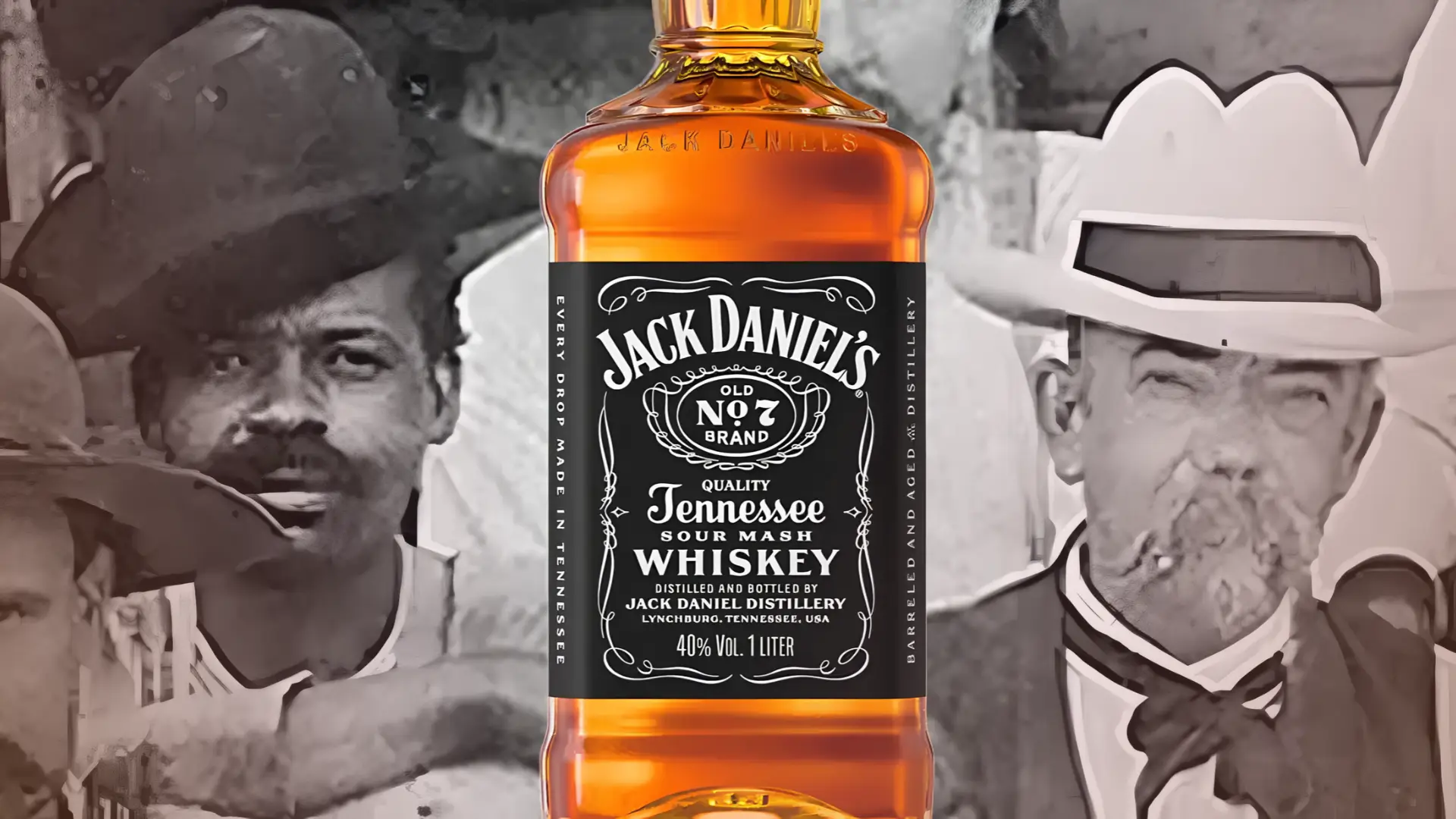
Long before Tennessee whiskey became an internationally recognised category, the hills around Lynchburg, Tennessee, were home to a network of farms, mills and small distilling operations where whiskey-making knowledge was passed from one generation to another. Among the distillers working in this community was Nathan “Nearest” Green, an African American whiskey maker whose name would eventually become closely connected with the origins of one of America’s most famous whiskey traditions.
Much of Green’s early life remains difficult to reconstruct. He was born into slavery, probably around 1820, and worked as a distiller in Lincoln County, an area where whiskey production was already well established. The surviving records provide only fragments of his life, but those fragments, together with family history and later research, reveal a man who possessed considerable practical knowledge of whiskey production.
Green’s historical importance is closely connected with Jasper Newton Jack Daniel, the young distiller who would later establish the brand that became Jack Daniel’s. The traditional story of Daniel’s early years has often focused on Dan Call, the preacher and whiskey maker who employed him. More recent research has brought Green into that story, identifying him as an experienced distiller who helped teach Daniel the practical craft of whiskey making.
The relationship is particularly significant because Green was an enslaved worker at the time. His technical knowledge was valuable enough to be passed to a young white apprentice, yet his name did not become part of the commercial story that eventually surrounded the whiskey.
That imbalance would remain for generations.
The Craft Behind the Whiskey
Distilling in 19th-century Tennessee required considerably more knowledge than simply operating a still. A successful whiskey maker needed to understand grain, water, fermentation, heat, distillation and the effects of storage. Much of this knowledge was practical rather than written, learned through observation and experience and passed between distillers.
Green appears to have been highly skilled in this environment. Later accounts describe him as an accomplished distiller, and the Green family preserved the story of his connection with Daniel across generations. His importance becomes even clearer when the development of Tennessee whiskey is considered through the process that would eventually distinguish it from other American whiskey traditions.
The Lincoln County Process, in which newly distilled spirit is filtered through sugar maple charcoal before entering the barrel, became one of the defining characteristics of Tennessee whiskey. Green is widely associated with the practice and is credited in family and company histories with helping perfect the technique that Daniel later used in his own whiskey production.
The distinction between invention and transmission is important. Charcoal filtration was not created by Green alone, nor did it suddenly appear in Tennessee through one person. Similar methods existed elsewhere. Green’s importance lies in his role as a skilled practitioner and teacher within the Lincoln County tradition.
The Young Jack Daniel Learns the Trade
The precise details of the relationship between Nathan Green and Jack Daniel are not fully documented. There is no surviving apprenticeship record setting out exactly when Green taught Daniel or which individual techniques he demonstrated.
What survives instead is a combination of historical evidence, family testimony and later research.
According to the Green family history investigated by Fawn Weaver, Green became an important teacher to the young Daniel. Weaver’s research into Green’s descendants helped reconstruct a story that had remained largely outside the mainstream history of American whiskey.
The traditional account of Daniel’s early life places him around the Call family’s farm and distilling operation. Green was also working there, and his experience as a distiller would have placed him in a natural position to pass practical knowledge to a younger worker.
For a young Daniel, this was an education that could not have been gained from a recipe book alone. Whiskey making depended upon recognising fermentation, managing a still and understanding how spirit changed through the production process. Green had already spent years developing those skills.
The relationship therefore matters not because it provides a simple “master taught apprentice” anecdote, but because it reveals how whiskey knowledge actually travelled through nineteenth-century Tennessee.
It moved through people. And Green was one of those people.
From Enslavement to Freedom
Green’s story also reflects the profound changes taking place in the American South during his lifetime.
Born into slavery, he was later recorded as a free man following the Civil War. The 1880 United States census identifies Green as a distiller, providing an important documentary link between his life after emancipation and his continuing involvement in whiskey production.
Freedom did not erase the inequalities that had shaped his earlier life, but it allowed Green and his family to build an independent future around skills that had previously been exploited under slavery. His sons also became involved in distilling, creating a family tradition that extended beyond Green himself.
That continuity is important. Green’s contribution was not simply a historical footnote attached to Jack Daniel. His knowledge belonged to a broader African American tradition of skilled work within American whiskey production.
For much of the industry’s history, however, those contributions were poorly documented. Commercial histories tended to preserve the names of distillery owners, entrepreneurs and brands, while the people performing skilled labour remained largely invisible.
Green’s story is one of the clearest examples of what that imbalance could mean.
The Rise of Jack Daniel’s
After the Civil War, Jack Daniel established his own whiskey-making operation and eventually built the business that would become the Jack Daniel’s Distillery.
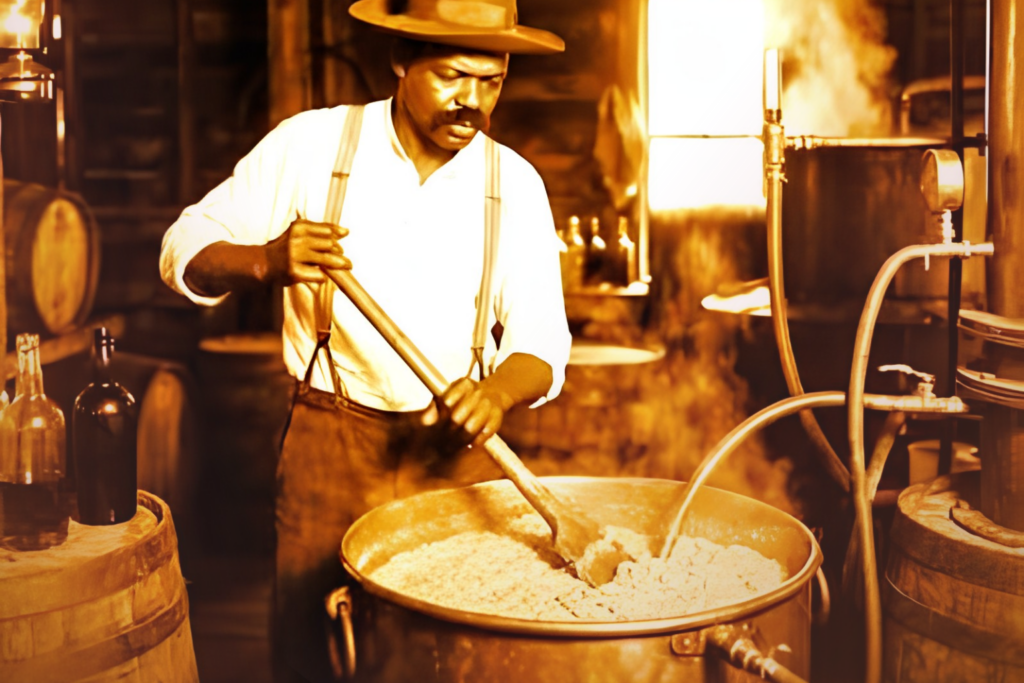
In 1866, the distillery was registered with the federal government, making it the oldest registered distillery in the United States. Over the following decades, the Jack Daniel’s name became increasingly associated with the distinctive whiskey produced in Lynchburg.
The brand’s identity eventually came to rest on several elements: Tennessee provenance, charcoal mellowing, maturation in oak and the distinctive character of Old No. 7. As Jack Daniel’s expanded, the story of its founder became increasingly prominent.
Green’s name did not. That disappearance is difficult to separate from the social conditions of the nineteenth century. An enslaved African American distiller could possess technical knowledge without receiving the recognition normally attached to skilled craftsmanship. When the commercial history of American whiskey was later written, the names that survived most clearly were those attached to ownership and brands.
The result was an extraordinary historical imbalance. The whiskey tradition continued. The process continued. The distillery became famous. But one of the people associated with teaching the craft remained largely absent from the public narrative.
A Family That Remembered
The Green family did not lose his story. Descendants preserved accounts of his work and his relationship with Jack Daniel, and those memories later became central to efforts to reconstruct his life.
Family history cannot answer every historical question. Memories passed through generations can change, and documentary evidence remains essential when establishing specific claims. But in Green’s case, family testimony provided an important starting point for research into a man whose life had left comparatively few conventional records.
That research gathered momentum in the twenty-first century when Fawn Weaver began investigating Green’s story.
Weaver’s work involved descendants, historical documents, census records and the wider history of the Lynchburg whiskey community. What emerged was not a complete biography, because too much of Green’s early life remains undocumented, but a much clearer understanding of his importance.
His name could finally be separated from the shadows of someone else’s success.
The Rediscovery of Nearest Green
The modern revival of Green’s story eventually led to the creation of Uncle Nearest Premium Whiskey.
Founded by Fawn Weaver, the company was established to honour Green and place his contribution to American whiskey at the centre of a new Tennessee whiskey brand. The first products reached the market in 2017, giving Green something that history had denied him for generations: a whiskey carrying his own name.
The significance was greater than the creation of another Tennessee whiskey. For more than a century, Green’s contribution had been discussed, if at all, through the story of Jack Daniel. Uncle Nearest reversed that perspective. The brand made Green the subject rather than the footnote.
It also created a physical home for the legacy through Nearest Green Distillery in Shelbyville, Tennessee, allowing the story to exist not only in books and family archives but within a working distillery. The whiskey itself follows the Tennessee tradition associated with Green, including the use of the Lincoln County Process.
That connection gives the brand historical depth, but it also places a responsibility on the modern industry. Remembering Green should not mean replacing one simplified story with another. His life deserves the same historical care given to any important figure in American whiskey.
The Meaning of the Lincoln County Process
The charcoal-mellowing process offers one of the clearest connections between Green’s historical story and contemporary Tennessee whiskey.
Freshly distilled spirit is passed slowly through charcoal made from sugar maple before it enters oak barrels for maturation. The process changes the character of the new spirit and has become a defining part of the Tennessee whiskey identity.
At Jack Daniel’s, charcoal mellowing remains central to production. At Uncle Nearest, the process is likewise part of the whiskey’s connection to the Tennessee tradition. The technique therefore links the two brands through a shared production heritage.
But Green’s story adds another dimension to that connection. Production techniques are never simply mechanical instructions. They are accumulated knowledge. Someone has to learn how the process works, understand its limitations and teach it to another person. In Green’s case, that transmission of knowledge became part of a much larger story.
Two Whiskeys and an Intertwined Legacy
Today, Jack Daniel’s and Uncle Nearest occupy very different positions in the American whiskey market, yet their histories intersect around Nathan Nearest Green. Jack Daniel’s became one of the world’s most recognisable whiskey brands, carrying the Lynchburg tradition into international markets and maintaining the charcoal-mellowing process associated with Tennessee whiskey.
Uncle Nearest was created more than a century later to honour the distiller whose contribution had largely disappeared from that mainstream story. The relationship is therefore not simply about two competing brands. It is about two ways of remembering the same whiskey tradition.
Jack Daniel’s represents the commercial legacy that grew from the Lynchburg distilling tradition. Uncle Nearest represents an effort to restore the name of a skilled African American distiller whose knowledge was part of that tradition.
The connection has also developed beyond historical storytelling. The Nearest & Jack Advancement Initiative, established by Uncle Nearest and Jack Daniel’s, supports professional development and opportunities for people from underrepresented communities within the spirits industry.
That modern relationship is significant because it acknowledges that historical recognition can have consequences beyond the past.
A History Written Through Peopl
The story of Nathan Green changes the way Tennessee whiskey history can be understood. Instead of beginning with a famous brand, it begins with a distiller. Instead of focusing only on ownership, it considers knowledge.
Instead of treating the Lincoln County Process as simply a technical step, it asks who understood the process, who practised it and how that knowledge moved from one generation to another. This broader perspective reveals something common throughout the history of spirits.
Distilling traditions rarely belong to a single person. They are built collectively through farmers, coopers, labourers, distillers, engineers and generations of practical experience. Green’s story is particularly important because the social system in which he lived made it easier for that contribution to disappear.
His technical skill could be recognised privately while his name remained absent publicly. The modern recovery of his story cannot reconstruct every missing detail. It can, however, restore his place within the history that remains.
The Name Behind the Tradition
Nathan Nearest Green‘s legacy is ultimately larger than the claim that he taught Jack Daniel.
He represents a generation of African American distillers whose skills helped shape American whiskey but whose names were rarely preserved with the prominence given to owners and brands. His story demonstrates how technical knowledge can survive even when the person who carried it is forgotten.
The rise of Uncle Nearest Premium Whiskey has given that history a new platform. It has placed Green’s name on bottles, established a distillery in his honour and brought his story to a new generation of whiskey drinkers.
At the same time, Jack Daniel’s remains a living expression of the Tennessee whiskey tradition with which Green’s story is intertwined.
The relationship between the two is therefore best understood through history rather than rivalry. One brand carries the legacy of a global whiskey institution; the other has helped restore the name of a distiller whose contribution had been obscured by that institution’s success.
That makes Green’s story particularly powerful.
The most important histories in spirits are not always found on the front label. Sometimes they exist in the techniques passed from one distiller to another, in family memories that survive without formal records, and in the people whose expertise shaped a spirit long before the world knew their names.
Nathan Nearest Green was one of those people. His name nearly disappeared. His whiskey knowledge did not.
And today, every bottle carrying the name Uncle Nearest offers drinkers an opportunity to encounter a part of American whiskey history that was once too easily left out.


Distillery
Nearest Green Distillery is a groundbreaking establishment located in Shelbyville, Tennessee, that pays homage to Nearest Green, the…

Distillery
Jack Daniel's Distillery, the oldest registered distillery in the United States, is a storied landmark nestled in Lynchburg,…

Distillery
American Whiskey Distillery embodies the spirit of traditional America by embracing craft distillation methods and sourcing local ingredients…
Spirit
Uncle Nearest Master Blend Edition Tennessee Whiskey
The Uncle Nearest Master Blend Edition Tennessee Whiskey represents the pinnacle of craftsmanship within the realm of Tennessee…
Spirit
Uncle Nearest 1856 Premium Aged Whiskey
Uncle Nearest 1856 Premium Aged Whiskey is a tribute to Nathan 'Nearest' Green, the first known African American…
Spirit
This 15-year-old American Whiskey stands as a testament to the artistry of whiskey-making in the United States. With…
Spirit
Tennessee Hills Brewstillery Spitfire Vodka
Tennessee Hills Brewstillery Spitfire Vodka exemplifies the innovative spirit and craftsmanship of craft distilling. This vodka is meticulously…
Distilleries & Producers
Pernod Ricard and Brown-Forman: Scale, Slowdown, and the Structural Reset of Global Spirits
Speculation around a potential alignment between Pernod Ricard and Brown-Forman has surfaced not as a confirmed transaction, but as a revealing signal of where the spirits industry stands today. The idea itself reflects a deeper tension. When companies of this scale are hypothetically combined, the conversation is no longer about expansion. It is about how […]
March 31, 2026
History
What Is a Distillery and How It Defines Spirit Identity
The question – what is a distillery, reaches far beyond a physical location where alcohol is produced. A distillery is the point where geography, raw materials, regulation and human intent converge. It is where spirit identity is formed long before branding or bottling enters the picture. Every spirit category, whether whisky, rum, gin, brandy or […]
December 28, 2025

Distilleries & Producers
Roseisle Distillery: The High-Tech Speyside Giant Behind a New Generation of Whisky
In Speyside, where whisky is often associated with generations of tradition, Roseisle Distillery represents something very different. Built by Diageo near Elgin and officially opened in 2010, Roseisle was designed as a modern, large-scale malt whisky distillery, combining traditional pot-still production with advanced engineering, energy recovery and unusual flexibility in how its spirit can be […]
September 2, 2026