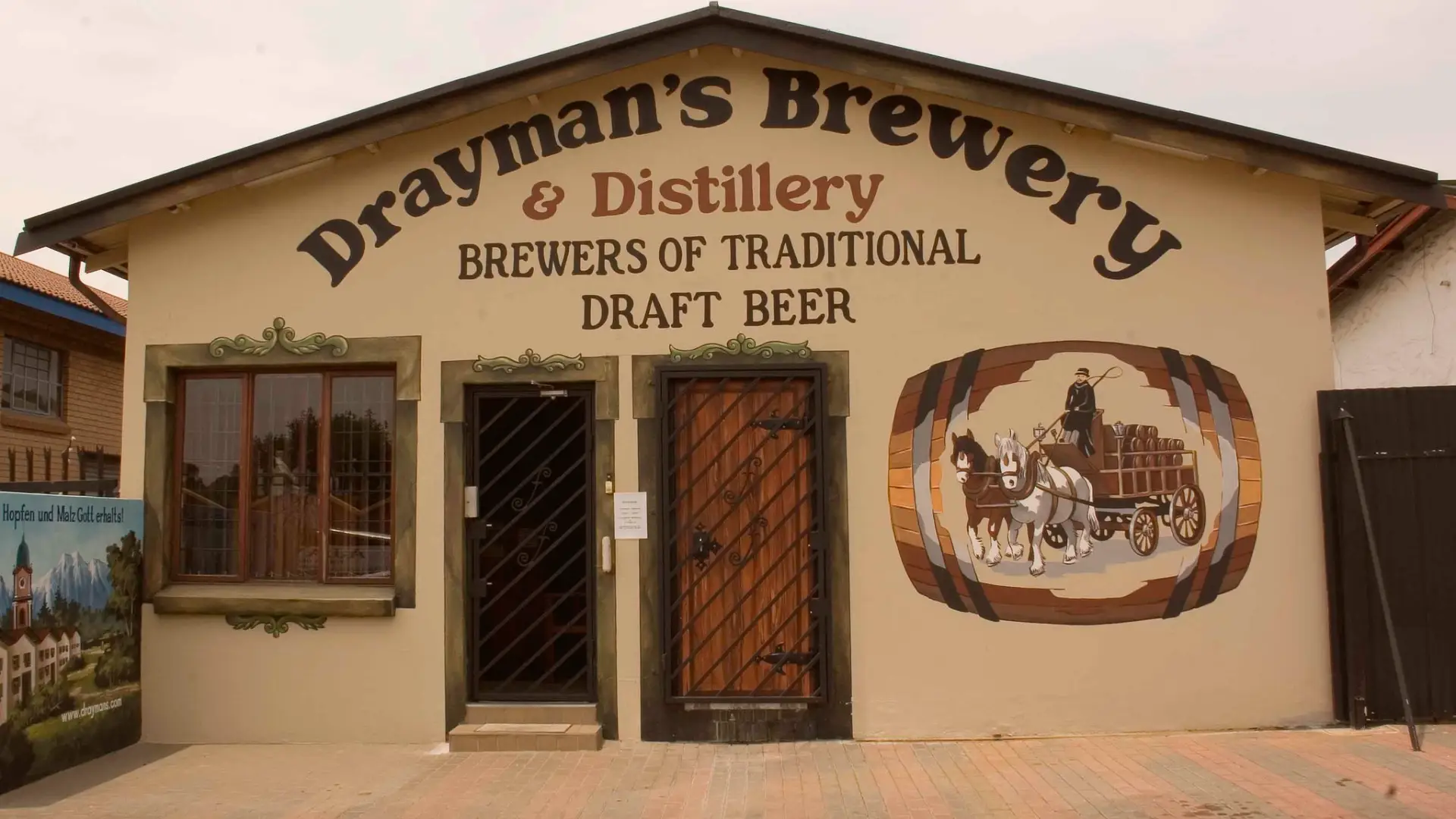
The story of Drayman’s Brewery & Distillery begins not in Scotland, Ireland or one of the traditional centres of whisky production, but in Pretoria, South Africa. The brewery was registered in 1997, beginning on a small scale in the Kallmeyer family’s home garage before moving to its present property in Silverton in 2002. That early history matters because the distillery that followed was built from an established brewing operation rather than created as a standalone whisky project.
The founder, Moritz Kallmeyer, came to brewing from a background in biokinetics and developed Drayman’s around small-scale production and German-influenced brewing traditions. The brewery’s present range still reflects that foundation, with styles including Weissbier, German-style ales, lager and stout. Its brewing identity provided something that would later prove particularly useful for whisky: a long familiarity with malt, mashing, fermentation and the practical discipline of working in small batches.
That connection between brewing and distilling is central to understanding Drayman’s. Whisky does not begin at the still. Its story begins with grain and fermentation, and a brewer already understands much of that earlier stage.
The Move into Distilling
Drayman’s expansion into spirits came from the same hands-on philosophy that had shaped its brewery. Independent whisky references record the first distillation in 2006, placing the beginning of the distilling operation almost a decade after the brewery was established.
The timing is significant. South Africa already possessed a history of whisky production, but much of the country’s international whisky identity was associated with larger producers and the broader wine and spirits industries. Drayman’s represented a different model: a small brewery developing its own distilling capability and applying existing fermentation knowledge to whisky.
That made the operation unusual not because it rejected whisky tradition, but because it approached that tradition from a different starting point.
The brewery’s experience became part of the distillery’s technical identity. Drayman’s own account of its Highveld Single Malt Whisky describes malt being mashed at the brewery, with the wort then fermented using yeast collected from its beer fermenters. The relationship between the two sides of the business was therefore more than a matter of shared ownership. Brewing was directly connected to the production of the whisky.
Brewing Knowledge Becomes Distilling Knowledge
The most interesting feature of Drayman’s is the way brewing and whisky production remain connected.
The distillery’s account describes the use of two-row barley malt, with mashing carried out on site. The brewery’s long experience with mashing gave Kallmeyer a practical foundation before whisky distillation was introduced. Drayman’s states that he had already completed more than 2,000 mashes in the brewery, illustrating how much of the whisky-making process grew from established brewing practice rather than being learned independently from scratch.
Fermentation became another point of connection. The distillery describes a prolonged fermentation using ale yeast from its brewing operation, followed by additional fermentation intended to influence the character of the resulting wash.
This is where Drayman’s begins to differ from the conventional mental picture of a whisky distillery. The still is important, but the operation’s identity begins further upstream, with a brewer’s understanding of malt and fermentation.
A Distillery at High Altitude
The location adds another dimension.
Drayman’s operates in Silverton, Pretoria, on South Africa’s Highveld, at roughly 1,600 metres above sea level. The distillery has presented this elevation as an important part of its whisky identity, particularly because maturation in a high-altitude environment can develop differently from maturation in traditional Scottish whisky regions.
It would be too simplistic to claim that altitude alone determines whisky character. Maturation depends on many variables, including temperature, warehouse conditions, barrel type, spirit strength and time. Yet the Highveld gives Drayman’s something that established whisky regions cannot reproduce: a distinct geographical setting in which to mature spirit.
The result is a useful example of how whisky production has expanded beyond its traditional centres. Rather than attempting to become another Scottish distillery in another hemisphere, Drayman’s has used Scottish whisky as a reference point while developing its own South African context.
The Highveld Single Malt
The most important expression of Drayman’s distilling ambitions is its Highveld Single Malt Whisky.
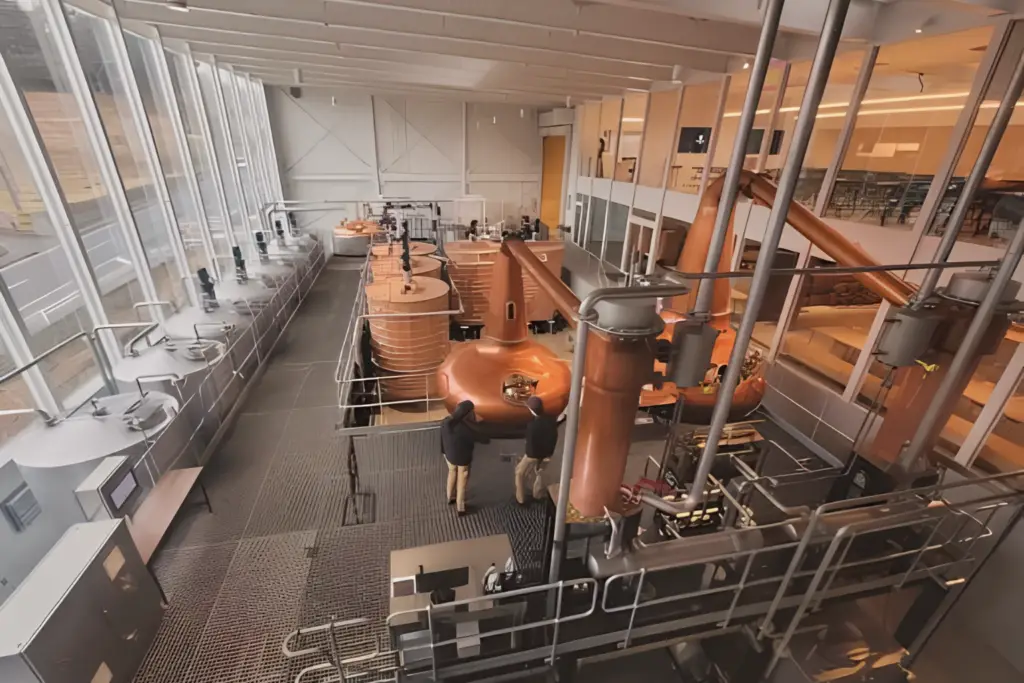
The distillery presents it as the first single malt produced in the Highveld of South Africa, making the whisky significant not simply as another craft spirit but as a marker of regional production. The claim is specifically geographical, and it reflects the importance Drayman’s places on making whisky in Pretoria rather than importing the identity of a traditional whisky region.
The whisky is made from malted barley and produced at the Silverton brewery and distillery. Drayman’s describes a double-distillation process and maturation in French oak casks, linking the spirit to the wider tradition of wood-driven whisky development while giving it a South African production context.
That distinction is important. Whisky does not need to imitate Scotland to demonstrate technical seriousness. South African whisky producers have increasingly shown that the category can develop through local climate, agriculture, maturation conditions and production choices.
Drayman’s contribution is particularly interesting because its identity is rooted in a brewery that predates its whisky operation by almost a decade.
From Single Malt to Experimental Spirits
The distillery has not limited itself to a single whisky style.
Its current small-batch whisky range includes Highveld Single Malt Whisky and Protea Smoked Whisky, the latter a blended whisky built around a distinctly South African approach to smoke. Drayman’s describes the Protea expression as using proteas to create a form of smoke different from the peat-associated character traditionally connected with Scottish whisky. It is matured in French oak and positioned as an exploration of an alternative South African interpretation of smoked whisky.
The importance of this approach lies less in novelty than in the question it raises: what happens when a whisky-making tradition is transferred into a country with its own botanical landscape and production culture?
Drayman’s answer has been to experiment without abandoning the underlying whisky framework. The result is not an attempt to erase the influence of Scotland. Instead, the distillery uses that influence as a starting point and introduces ingredients, climate and production decisions that belong to South Africa.
That is a more interesting form of whisky localisation than simply giving a familiar style a South African label.
The Solera Experiment
Before the current focus on small-batch whisky, Drayman’s also developed a Solera whisky project.
The operation used a series of French oak barrels in a Solera-style maturation system, with older and younger stocks progressively connected through the process. The first Drayman’s Solera Whisky was bottled in 2009, according to a detailed account of the project.
The Solera approach was significant because it showed the distillery experimenting with maturation and blending rather than treating whisky production as a fixed sequence inherited entirely from established Scotch practice.
It also reflected the flexibility of a small producer. A large whisky company may need enormous volumes of consistent stock to support a global brand. A small distillery can instead use its scale to explore alternative maturation systems and develop products around limited production.
The Solera project therefore belongs to the same wider story as the Highveld single malt: a South African producer learning the language of whisky while developing its own accent.
Honigjäger and the Wider Spirits Portfolio
Drayman’s distilling work has also extended beyond whisky.
The Honigjäger honey and whisky liqueur, launched in 2013, combines honey with whisky before further maturation in French oak. The product illustrates another feature of the Drayman’s model: the distillery does not treat spirits as a single-category exercise, but as an extension of its broader craft production philosophy.
The current portfolio also includes mampoer, a traditional South African fruit spirit, alongside whisky and other products.
That range gives Drayman’s a wider place in South African spirits history. It is not simply a brewery that happens to make whisky. It has developed into a small family operation exploring several forms of fermentation, distillation, maturation and local ingredient use.
A Different Kind of Whisky Heritage
Whisky heritage is often discussed through age.
The older the distillery, the deeper the history appears. Scotland has distilleries with documented histories stretching back centuries, while newer whisky-producing countries have had to build their reputations within a much shorter period.
Drayman’s offers a different definition of heritage.
Its significance lies in the continuity between 1997, when the brewery began, and the later development of its distillery. The whisky operation grew from an existing craft business and retained the family involvement that had shaped the brewery from the beginning.
That continuity matters because South African whisky is still relatively young as a globally recognised category. Producers such as Drayman’s are not inheriting centuries of established whisky geography. They are helping create the geography themselves.
The Highveld becomes part of the story because the whisky is being made there, matured there and defined there.
From Scottish Inspiration to South African Expression
Drayman’s has never hidden the influence of Scotch whisky. Its own description openly compares the Highveld Single Malt with whisky traditions associated with the Highlands and Islay, while acknowledging that the operation is working on a craft scale in South Africa.
That honesty is important. Every emerging whisky region faces the question of how much it should follow established models and how much it should develop independently. Drayman’s demonstrates one possible answer: learn from the great whisky traditions, but allow local conditions to change the result.
The Highveld is not Scotland. Its climate, elevation, agricultural environment and maturation conditions are different. The distillery therefore has an opportunity that an established Scottish producer does not have: to create a whisky identity from the beginning around a distinctly South African environment.
That process takes time. It also requires a willingness to accept that local whisky may eventually become interesting precisely because it does not taste or behave exactly like whisky from somewhere else.
The Brewery Remains Part of the Story
Perhaps the most distinctive part of Drayman’s is that the brewery never disappeared from the narrative.
The company still operates as both a brewery and distillery in Silverton, and the present family team remains involved across production and business operations. Wiehan Kallmeyer, son of Moritz and Hester Kallmeyer, is described by the company as a key figure in day-to-day operations, marketing and product development, while Gerhard leads brewing after studying at the Institute of Brewing and Distilling.
That continuity gives the business a character that is difficult to reproduce in a large industrial distilling group.
The whisky is part of a family production system that began with beer. The knowledge passes between categories, and the physical site remains important to the identity of both.
Drayman’s therefore tells a broader story about how craft beverage businesses can evolve. A brewery can become a distillery without abandoning its original identity, provided the second discipline grows from genuine technical knowledge rather than simply from a desire to add another product category.
The Significance of the Pretoria Location
For decades, whisky geography was dominated by a handful of familiar names: Scotland, Ireland, Kentucky, Canada and, increasingly, countries such as Japan, India and Taiwan. South Africa has gradually strengthened its place in that wider whisky conversation.
Pretoria offers a particularly unusual setting. It is far removed from Scotland’s traditional whisky regions and is better known internationally for its political and administrative importance than for whisky production. Yet the Highveld provides the physical environment in which Drayman’s has developed its distilling identity.
The location is therefore not a background detail. It is part of the argument. If whisky is ultimately shaped by water, grain, fermentation, distillation, wood and climate, then moving production into a different environment inevitably creates new possibilities. Drayman’s represents one small example of that process in South Africa.
A Small Distillery with a Larger Historical Role
Drayman’s is not one of the world’s largest whisky producers, nor does it need to be.
Its historical value comes from something else. It demonstrates how whisky production can emerge from a craft brewery, develop through experimentation, and become tied to a particular region that had no established single malt tradition of its own.
The distillery’s story also reflects the changing geography of whisky. The category is no longer defined solely by the places that established it centuries ago. New producers are asking how established methods behave when they encounter different climates, ingredients, economies and cultural traditions.
Drayman’s answers that question from Pretoria’s Highveld. Its story begins with beer, moves through fermentation and distillation, and eventually reaches a whisky that carries the name of its landscape. That progression is what makes the operation worth remembering.
The significance of Drayman’s Brewery & Distillery is therefore not simply that it makes whisky in South Africa. It is that the whisky emerged from an existing culture of craft brewing and gradually became part of the country’s evolving spirits heritage.
For a young whisky-producing region, that kind of continuity matters. Heritage does not always have to be inherited. Sometimes it is built, batch by batch, until a place begins to acquire a drinks history of its own.


Cocktail
Apple Cider Punch is a festive beverage that highlights the crisp and comforting flavors of apples, making it…
Distillery
DHV Destilados is a modern distillery located in Valencia, Spain, that has made a name for itself in…

Distillery
Bee-Ginning Gin Co. is a vibrant craft distillery based in Manchester, renowned for its handcrafted premium gins. Founded…
Spirit
Jacsi Martinique Rum is a historical rum that hails from the renowned region of Martinique. Crafted during a…
Spirit
Château de Laubade XF Bas Armagnac
Château de Laubade XF Bas Armagnac is a distinguished expression of tradition and craftsmanship in the world of…
Partnership
Boban Lazarević: Built in a Training Room, Proven on a World Stage in 20224
Before Boban Lazarević won the title, before the stage lights, there was repetition. In Belgrade, bartending doesn’t always begin behind a busy counter. For many, it begins in a classroom. Inside Bar Central Belgrade, run by the Bartenders Association of Serbia, drinks are broken down long before they are served. Recipes are practised until they […]
August 17, 2026

Partnership
Jigger and Pony: The Craft of Hospitality Behind Asia’s Most Consistent Cocktail Bar
Energy carries the room at Jigger and Pony. Not noise, not spectacle, but a steady, deliberate rhythm shaped by people who understand that a bar lives or dies by how it makes guests feel. Set within Amara Singapore in Singapore, the bar has built its reputation not on a single defining drink or concept, but […]
August 15, 2026

Partnership
Gohar Gasparyan: Building Precision in a Scene That Had to Start From Zero
By the time Gohar Gasparyan stepped onto the World Cocktail Championship stage in 2024, Armenia was not expected to win. Not because of a lack of talent, but because the country’s cocktail culture was still finding its footing. Unlike established markets, where bartending is shaped by decades of accumulated technique, Armenia’s scene was newer, more […]
July 27, 2026