
The Gin Craze is often told as a morality tale. Cheap spirit flooded London, the population lost control, William Hogarth exposed the damage, and Parliament restored order. The real history is less convenient. Government policy helped expand the market in the first place. Poverty and overcrowding made the consequences more visible. An attempt to suppress the trade through extreme taxation failed badly, while a later law worked through licences, premises, merchants, and distribution. Even then, legislation was only part of the answer.
The craze did not create British distilling from nothing. London had distillers long before it began. What the crisis helped produce was a more recognisable spirits industry, one built around excise, licensed retail, permanent businesses, and producers whose names could carry commercial value. That change took decades. It began with grain, war, and a policy that looked sensible on paper.
Parliament Encourages Grain Distilling
The political setting changed when William III and Mary II took the English throne in 1689. War with France restricted the position of imported French brandy, while domestic distilling offered an outlet for English grain. It could support agriculture, reduce reliance on a political rival, and generate revenue for the state.
In 1690, Parliament passed legislation encouraging the distillation of brandy and spirits from corn. At the time, corn referred broadly to cereal grains rather than maize.
The measure did not create an unrestricted market overnight, but it formed part of a wider shift towards domestic spirit production. Grain that was unsuitable for brewing or breadmaking could still be distilled, giving farmers and merchants another possible buyer.
Distilling could also be established on a relatively modest scale. A brewery needed space, storage, equipment, and an organised route to the drinker. A small distilling operation could fit into a cellar, garret, workshop, or back room, which made entry easier but supervision far more difficult.
The policy encouraged production before the government had developed an effective system for tracing where the spirit came from, who sold it, or what was actually in it.
Cheap Spirit in a Crowded Capital
London was growing quickly during the early 1700s. People arrived looking for work, but much of that work was irregular. Housing was crowded, wages were insecure, and food prices could rise sharply after a weak harvest.
Cheap spirit entered a city already under pressure. The product described as gin during the craze did not necessarily resemble the cleaner, drier styles associated with later commercial distilleries. The term could cover grain spirit compounded or flavoured in several ways, and the quality varied enormously.
Juniper was present in many examples, but sugar, spice, and strong flavourings could also be used to soften or conceal rough spirit. There was no stable category standard and very little traceability.
Retail was just as fragmented. Gin was sold through dram shops, cellars, houses, market stalls, workshops, and rooms with no obvious commercial frontage. It could be purchased in small amounts, which placed it within reach of people with very little money.
The scale of the trade made gin unusually visible. Beer, wine, and brandy were also consumed across society, but cheap spirits in poor districts appeared in streets, courts, workhouses, and parish records. It became difficult to separate the drink from the condition of the city around it.
Madam Geneva and the Politics of Poverty
London gave gin a public personality and called the spirit Madam Geneva. The name appeared in pamphlets, songs, reports, and satire. Gin became a character through whom writers could discuss crime, illness, idleness, family neglect, and the apparent collapse of social discipline.
Some of that concern reflected real damage. Heavy consumption could deepen debt, poor health, violence, and instability within households already close to destitution. Still, gin offered an unusually simple explanation for much larger problems. Insecure labour, hunger, overcrowding, poor sanitation, and limited public support were difficult to capture in one dramatic image. A bottle was easier. It gave reformers something visible to blame.
Class shaped the argument. Alcohol consumed in private dining rooms did not attract the same language as spirits sold in crowded streets. The habits of the poor were treated as a threat to national order, while the economic conditions surrounding those habits received less consistent attention.
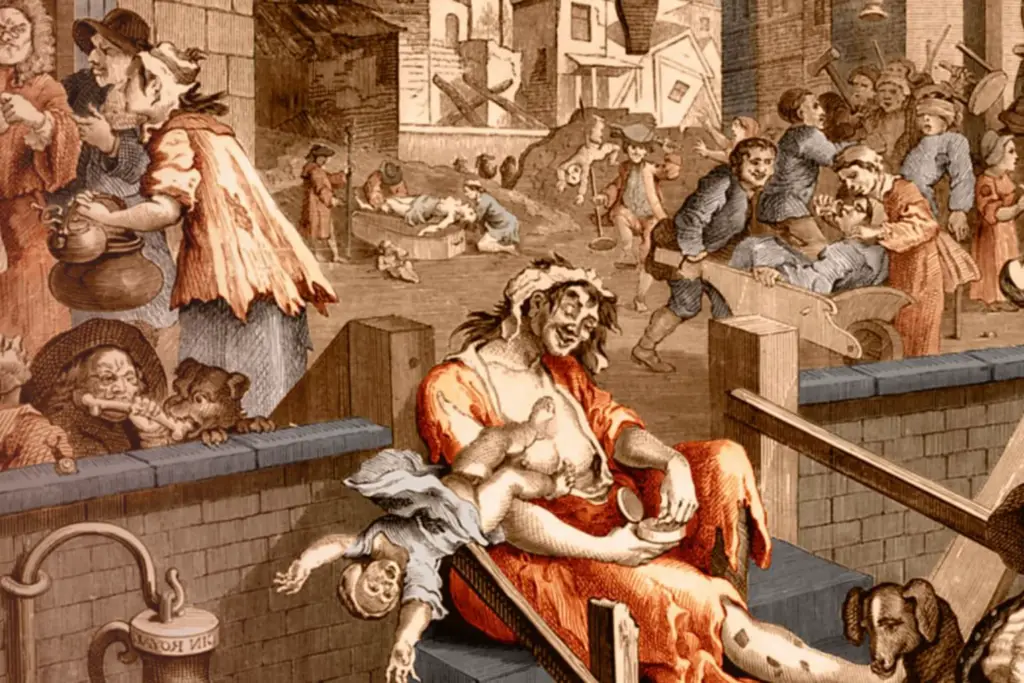
Women were placed at the centre of the panic. Satirists presented them as drinkers, sellers, negligent mothers, and signs of failed domestic life. These images were powerful precisely because they reduced complicated lives to recognisable moral figures.
The craze changed London’s drinking culture, but it also changed how poverty was described.
Real Fact of Gin Craze: Why the Gin Act of 1736 Failed
Parliament tried several measures before passing the law commonly known as the Gin Act of 1736. The Act imposed a duty of 20 shillings per gallon on spirit sold at retail and required sellers to purchase an annual licence costing £50.
That was not a realistic fee for the cellar sellers, lodging house traders, and small shopkeepers who formed much of the market. It was designed to suppress legal retail rather than bring traders into a workable system. Legal selling almost disappeared, but gin selling did not. Transactions were hidden, informal premises became harder to identify, and the trade moved further beyond excise control.
Informers were paid to identify illegal sellers, which brought intimidation, retaliation, and public hostility. The state had made the market less visible at the very moment it wanted greater control over it. The law also exposed a basic problem with taxation used as a prohibition. A trade pushed almost entirely underground becomes difficult to inspect, regulate, or tax. The government loses information along with revenue.
By 1743, Parliament had retreated from the harshest terms. A new measure reduced the licence fee and duties, accepting that the earlier system could not be enforced on the scale required. Suppression had not produced order. It had produced evasion.
Hogarth and Fielding Shape the Debate
The campaign against gin reached its most memorable form in 1751, when William Hogarth published the paired prints Beer Street and Gin Lane. They were designed to be read together.
Beer Street presented strong bodies, active trades, solid buildings, and English prosperity. Gin Lane showed hunger, neglect, pawnbroking, violence, death, and physical collapse. The contrast was not subtle, and it was never meant to be.
Hogarth was making a political and moral argument, not recording an ordinary street with documentary neutrality. The details were arranged to persuade viewers that cheap gin had destroyed work, family life, health, and civic order.
The prints appeared during the same public campaign as Henry Fielding’s An Enquiry into the Causes of the Late Increase of Robbers. Fielding, a magistrate as well as a novelist, linked cheap spirits with crime, illness, and disorder.
Together, the writer and the artist gave the campaign two different forms. Fielding supplied legal and social arguments. Hogarth created an image that people remembered. That image has sometimes overwhelmed the history behind it. Gin Lane shows how campaigners wanted the crisis to be understood. It does not, by itself, explain why the market had grown.
The Settlement of 1751
The measure commonly called the Gin Act 1751 was formally the Sale of Spirits Act 1750, receiving royal assent in June 1751. Its approach was more practical than the failed law of 1736.
Rather than relying on one impossible licence intended to destroy retail, it tightened the chain between distiller, merchant, and seller. Distillers were prohibited from supplying unlicensed retailers. Licences were directed towards substantial householders operating recognised premises, and magistrates gained greater influence over who could enter the legal trade.
This favoured established businesses. Small informal sellers found it harder to remain within the law, while producers and retailers with permanent premises, capital, and local standing gained a clearer route to legal trade.
The Act did not end the Gin Craze on its own. Poor harvests and rising grain prices reduced the supply of cheap spirit, while restrictions on using domestic grain for distillation added further pressure by 1757. The market contracted because several conditions changed together. Even so, the legislation left an important framework behind.
Production, wholesale supply, and retail were now being treated as connected but separate stages. Licences and recognised premises created points at which the state could inspect, tax, and restrict the movement of spirits. A distribution system was beginning to take shape.
From Informal Sellers to Named Distillers
The early gin market placed little value on the identity of the producer. A customer bought a measure from a seller. The distiller might be unknown, the strength uncertain, and the next supply quite different from the last. A more regulated trade gave the producer’s name greater importance. Permanent distilleries could keep records, supply licensed merchants, maintain recipes, and build reputations beyond a single street or neighbourhood. Consistency became an economic advantage.
In 1769, Alexander Gordon opened a distillery in Southwark and established the business that became Gordon’s.
The date is revealing because it came after the most intense years of the craze, when the market was moving away from anonymous spirit and towards named commercial producers. The appearance of Gordon’s does not mean the 1751 law created the company directly. History rarely works that neatly. It does show, however, that a producer could increasingly build value around a fixed business, a repeatable product, and a recognisable name.
Technical developments during the 1800s pushed the industry further in that direction. Improved rectification and column still technology made a cleaner base spirit more widely available. Distillers could build controlled botanical recipes around juniper without relying as heavily on sweetness or strong flavouring to cover faults.
The dry gin styles later associated with London belonged to this later industrial world, not to the rough and inconsistent market of the Gin Craze.
The Gin Craze: What the Craze Left Behind
The Gin Craze changed more than the amount of spirit sold in London. It altered retail culture by carrying distilled spirits beyond inns and established drinking houses. It exposed the weakness of laws that demanded compliance without offering a workable legal route.
The crisis also gave excise officers, magistrates, merchants, and property holders a greater role in determining who could trade. That brought more traceability and commercial consistency, but it also concentrated power. Larger businesses could afford premises, licences, stock, equipment, and administration. Smaller producers and sellers faced greater difficulty remaining within the regulated market.
This pattern would return throughout spirits’ history. Governments encouraged production for agricultural and fiscal reasons, then imposed tighter controls when the social consequences became politically difficult. Revenue and restraint developed side by side.
The Gin Craze did not invent the British spirits business. It accelerated the movement from a scattered and partly anonymous trade towards an industry organised around excise, licences, recognised premises, distribution, and brands.
The simplest version of the Gin Craze ends with Parliament rescuing London from a destructive spirit. That version leaves too much out.
Government policy had helped enlarge the market. The law of 1736 failed because it demanded a level of compliance that most sellers could never afford. The settlement of 1751 worked better because it addressed how spirits moved among producers, merchants, and retailers. Even then, regulation was not enough. Grain scarcity, prices, and harvests also changed the market.
The people shown in Gin Lane were not living inside a crisis caused by one bottle. They lived within a city shaped by insecure work, hunger, crowded housing, weak public support, and a cheap spirit that could deepen every one of those conditions. What survived the craze was a new commercial order. London’s spirits trade became easier to identify, supervise, and tax. Named producers gained value. Permanent premises mattered. Licences shaped access to the market.
The city did not solve poverty through gin legislation. It did, however, learn how to build an industry around the trade it had first encouraged and then failed to control.


Distillery
Gordon Distillery is a boutique spirits producer that embodies a passion for craftsmanship and innovation. Nestled in a…
Spirit
Gordon & MacPhail 1974 Demerara Vintage Rum
Gordon & MacPhail 1974 Demerara Vintage Rum is a fine representation of aged Caribbean spirits, showcasing the complexity…

Spirit
Station Brandy is a unique spirit that is steeped in rich tradition and crafted with a meticulous attention…
Spirit
Gin de Cologne is a premium dry gin produced in the vibrant neighborhood of Ehrenfeld, Cologne. With a…
Spirit
Le Gin Français Wambrechies est un exemple remarquable de l'artisanat français en matière de distillation. Produit par la…
Spirit
Gordon & MacPhail 1974 Demerara Rum
The Gordon & MacPhail 1974 Demerara Rum is a remarkable expression that pays homage to the rich heritage…
Spirit
Braastad XO Fine Champagne Cognac
Braastad XO Fine Champagne Cognac epitomizes exceptional craftsmanship, showcasing the intricate artistry involved in producing this fine spirit.…
Spirit
Gin Campi is a unique expression of Italian craftsmanship that captures the essence of the Emilian countryside. This…

Partnership

Pisco: A Spirit Claimed by Two Nations
Pisco is one of the few spirits whose identity is divided by national borders rather than defined by them. Both Peru and Chile claim pisco as a national spirit, each supported by legal frameworks, historical narratives, and active production. This dual claim is not a modern branding dispute. It is the outcome of colonial administration, […]
October 7, 2026
Partnership
Singani: Bolivia’s High-Altitude Spirit and a Forgotten Andean Heritage
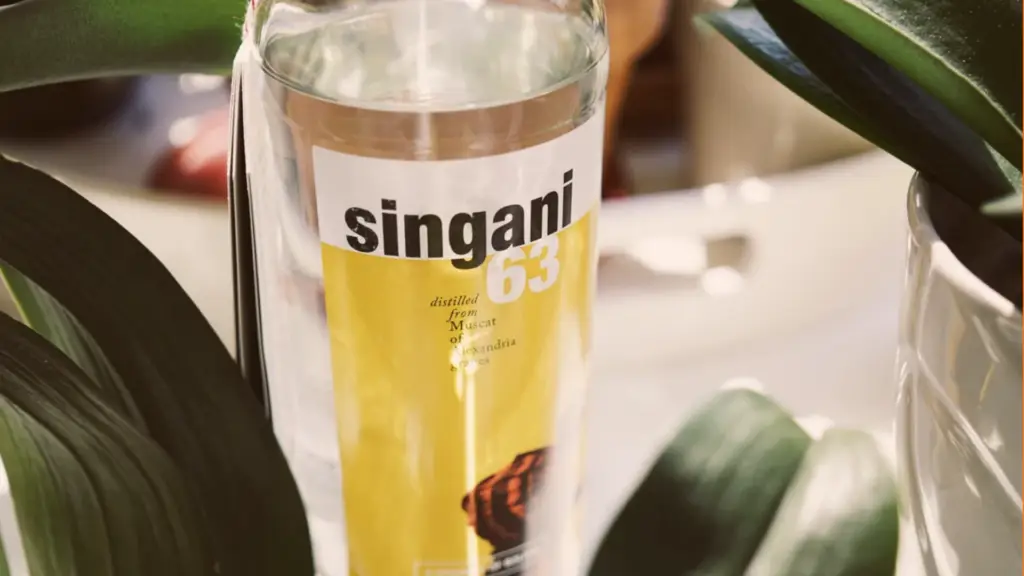
Singani is one of the least understood legally protected spirits in the world. Despite centuries of continuous production in Bolivia, it remains largely absent from global spirits discourse. This absence is not due to ambiguity or lack of definition. Singani is one of the most tightly structured grape distillates in existence, defined by altitude, grape […]
September 30, 2026
Partnership
Kweichow Moutai: The Protected Origin of Sauce Aroma Baijiu
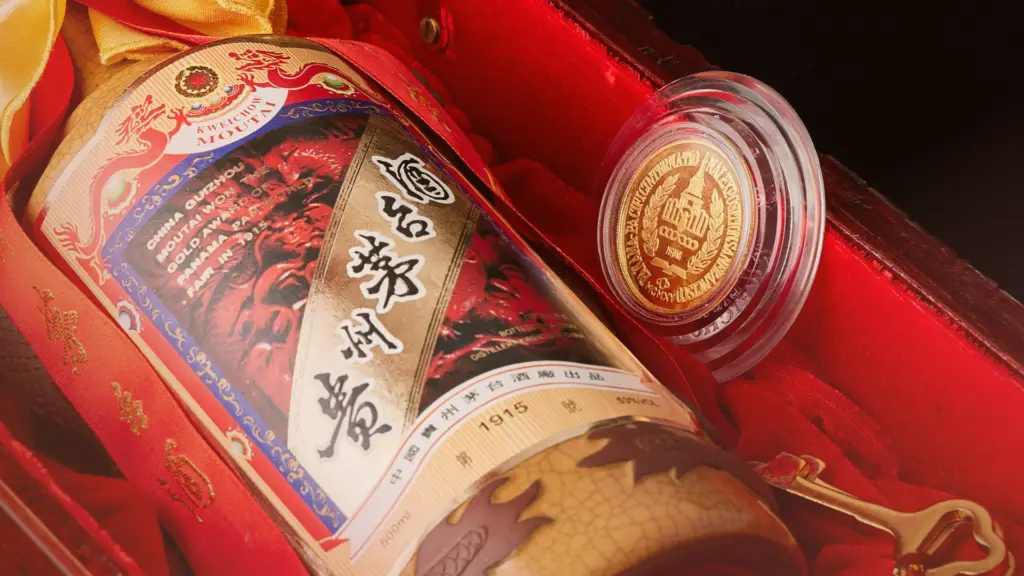
Moutai begins in a bend of the Chishui River, in a town where geography has been asked to explain taste for generations. The river, the valley heat, the purple-red soils, the surrounding hills, and the microbial life of Maotai Town are all part of the story people tell when they try to explain why this […]
September 27, 2026