
In the early decades of the nineteenth century, the cost of a glass of spirits in London, Paris, or Warsaw was rarely determined by the distiller. It was determined by the state. A measure of whisky, Cognac, or vodka carried within it a structure of duties, controls, and transport costs that defined not only its price, but its place in society.
This was the century in which alcohol became one of the most dependable sources of government revenue. Spirits, unlike grain or wine, could be measured precisely by strength and volume. They could be taxed, stored, and monitored with consistency. As a result, taxation systems across Europe began to shape not only markets, but taste itself.
Britain, excise control, and the restructuring of whisky
The turning point in Britain came with the Excise Act of 1823, a law that fundamentally altered whisky production. Before its introduction, illicit distillation dominated much of Scotland. Small-scale producers operated outside legal systems, avoiding taxation but producing inconsistent spirits.
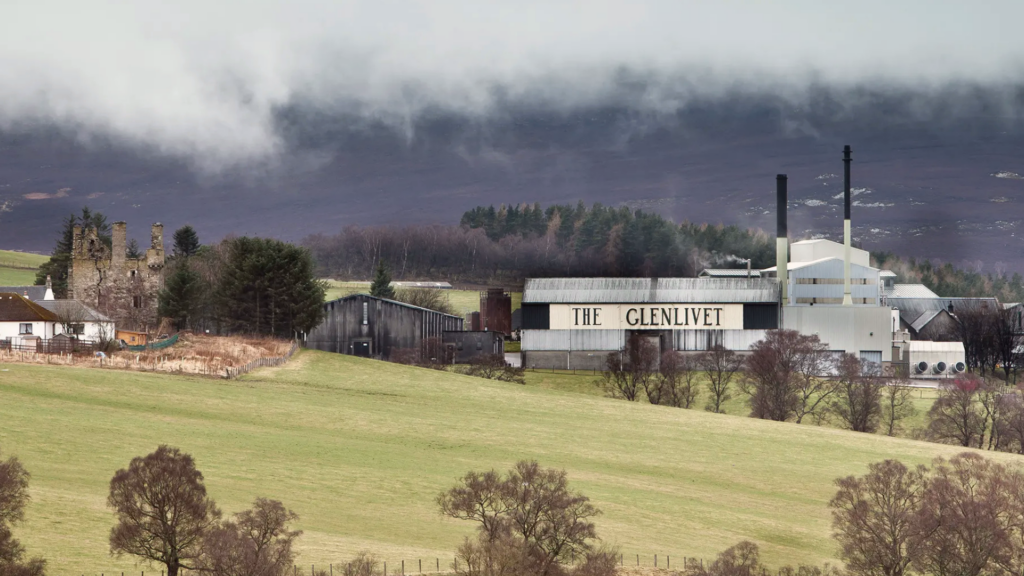
The 1823 Actallowed licensed distillation under controlled conditions, provided duty was paid. This shift brought distilleries such as Glenlivet Distillery into legality, marking one of the earliest transitions from illicit to regulated Scotch whisky production.
Equally significant was the expansion of bonded warehousing. Spirit could be stored without immediate tax payment, allowing it to age before entering the market. Over time, this system contributed directly to the development of aged Scotch whisky as a commercial category. Without deferred taxation, long-term maturation would have been economically unviable.
At the consumer level, however, high excise duties ensured that spirits remained more expensive than beer. Porter and ale continued to dominate working-class consumption in industrial cities, while whisky began to occupy a more structured and gradually premium position.
France, Cognac, and export-driven pricing
In France, taxation operated through layered indirect systems, affecting production, movement, and sale. The impact was particularly visible in Cognac, where houses such as Hennessy, Martell, and Rémy Martin had already established export networks by the early nineteenth century.
By the 1830s and 1840s, Cognac shipments through ports such as La Rochelle and Bordeaux were increasingly directed toward Britain and Russia. Export markets could absorb higher prices, allowing producers to operate beyond the constraints of domestic taxation.
This created a structural divide. Within France, consumption often favored simpler, locally produced spirits due to lower cost. Outside France, Cognac became a premium product, its price shaped by international demand, transport costs, and duties applied at import. The distinction between domestic and export pricing reinforced Cognac’s identity as a global luxury spirit.

State control and vodka in Eastern Europe
In the Russian Empire and parts of Poland, spirits production was closely tied to state revenue systems. By the mid-nineteenth century, vodka had become a standardized commodity, produced at scale and taxed according to volume.
Unlike whisky or Cognac, vodka requires no extended aging. This made it ideal for taxation systems focused on rapid turnover and predictable output. State monopolies and licensing structures ensured that production remained measurable and controlled.
Distilleries operating under these systems emphasized consistency above all. Neutral spirit production aligned with fiscal requirements. A product that could be produced, taxed, and distributed efficiently became central to both consumption and revenue. In this context, vodka’s neutrality was not only a technical outcome. It was an economic one.
Transport, infrastructure, and the geography of price
The expansion of railways across Europe during the 1830s to 1870s altered the economics of spirits distribution. Regions connected to major transport routes gained access to wider markets, while isolated areas faced higher costs.
Ports such as Bordeaux and La Rochelle enabled Cognac houses to scale exports. In Scotland, improved inland transport allowed whisky from Speyside and the Highlands to reach urban centers more efficiently. This reduced regional price disparity, though it did not eliminate it.
Distance continued to influence cost. Imported spirits carried tariffs, handling fees, and shipping risks. A bottle’s final price reflected not only its production, but its journey.
Adulteration, regulation, and the price of integrity
High taxation created incentives for adulteration. In 19th-century Britain, lower-quality spirits were frequently diluted or altered to increase volume and maintain margins. This practice undermined both quality and trust.
Regulatory response followed. The Food and Drugs Act of 1875 introduced stricter controls on adulteration, marking a shift toward enforceable standards in food and drink. Similar movements across Europe gradually improved product integrity.
For producers operating within legal frameworks, compliance adds cost. For consumers, it introduced a clearer relationship between price and quality.
The emergence of structured pricing tiers
By the late nineteenth century, European spirits markets had begun to stratify. Whisky producers, benefiting from bonded aging, introduced more mature expressions. Cognac houses formalized blending and aging systems that support consistent quality. Vodka remained largely standardized, though regional distinctions persisted.
Pricing reflected these developments. Entry-level spirits remained accessible, while aged and branded products occupied higher tiers. The difference was not only sensory. It was structural, shaped by taxation, storage, and time. The foundations of modern premium spirits were established within this framework.
Pricing and taxation in 19th-century Europe did not simply influence spirits. They defined them. Excise systems determined what could be produced. Transport networks determined where it could be sold. Regulation determined how it could be trusted.
Whisky became aged because taxation allowed storage. Cognac became global because export markets supported higher pricing. Vodka became neutral because standardization suited fiscal control.
These were not parallel developments. They were interconnected outcomes of economic design. Understanding this structure reveals that every bottle carries more than its production history. It carries the imprint of law, trade, and taxation systems that shaped its existence.


Distillery
Hennessy Cognac is renowned as the world's leading producer of cognac, representing a harmonious blend of tradition and…

Distillery
The Glenlivet Distillery is an iconic Scottish whisky producer situated in the picturesque region of Speyside, near Ballindalloch…

Distillery
Maison Martell, established in 1715, stands as the oldest of the prestigious cognac houses located in the heart…
Distillery
Rémy Martin is a prestigious French distillery renowned for its exceptional production of cognac, with a rich heritage…
Distillery
Hennessy Cognac is renowned as the world's leading producer of cognac, representing a harmonious blend of tradition and…
Distillery
The Glenlivet Distillery is an iconic Scottish whisky producer situated in the picturesque region of Speyside, near Ballindalloch…
Distillery
Maison Martell, established in 1715, stands as the oldest of the prestigious cognac houses located in the heart…
Distillery
Rémy Martin is a prestigious French distillery renowned for its exceptional production of cognac, with a rich heritage…
Distilleries & Producers
George Smith and The Glenlivet: The License That Changed Scotch Whisky
In the early 1800s, the Livet valley already had a reputation for whisky before it had legal certainty. Small Highland stills operated through geography, local protection, taxation pressure, and rural necessity. Whisky from the Glenlivet area was known beyond the valley, but much of the system that produced it remained outside formal law. The turning […]
June 6, 2026

Trending
International Cognac Day: History, Appellation, and the Spirit of Charente
International Cognac Day is observed each year on June 4, but the spirit it recognizes belongs to a much longer calendar. Cognac is shaped by harvests, distillation seasons, oak maturation, and a legal framework that has turned a regional wine distillate into one of France’s most carefully protected spirits. Its identity begins in the Charente, […]
June 4, 2026

Distilleries
Bunnahabhain: How One Distillery Broke Islay’s Peat Identity
A distillery at the edge of Islay’s map On the northeastern coast of Islay, facing the Sound of Islay toward the Isle of Jura, the landscape shifts. The Atlantic influence is still present, but it arrives differently. The coastline is less exposed than the southern shore where peat smoke dominates the identity of distilleries such […]
April 24, 2026