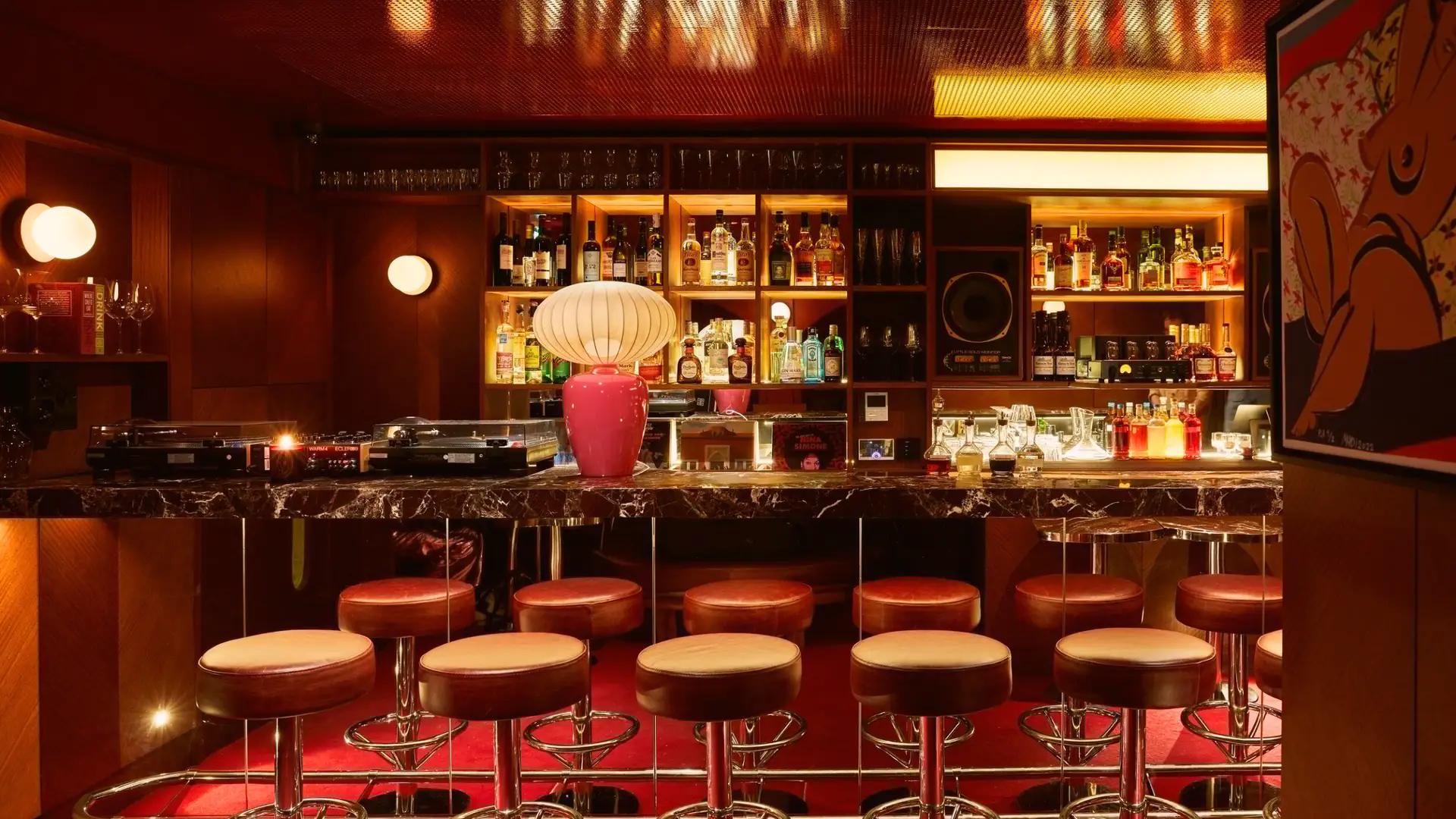
In 2013, a small basement bar opened in Hoxton, London, that removed what most bartenders considered essential. At White Lyan, there was no ice behind the bar. No citrus. No fresh garnishes. Cocktails were not built during service. They were designed, batched, and stabilized in advance.
Founded by Ryan Chetiyawardana, the bar introduced a system that shifted the focus of cocktail culture. Drinks were no longer dependent on real-time technique. They were controlled through preparation, measured composition, and repeatable structure.
The model challenged a fundamental assumption. Those cocktails must be made in the moment.
Before White Lyan, the dominance of fresh service
From the late 1990s through the 2000s, the cocktail revival in London and New York reestablished classic technique. Bars emphasized fresh citrus juice, solid ice, and precise shaking and stirring. Quality was tied directly to execution at the bar.
Yet this system carried inherent variability. Citrus oxidizes within hours. Ice differs in density and melt rate. Dilution depends on the technique. Even with trained bartenders, two drinks built from the same recipe could differ across services.
White Lyan approached this not as a question of skill, but as a question of structure.
Eliminating citrus and ice as variables
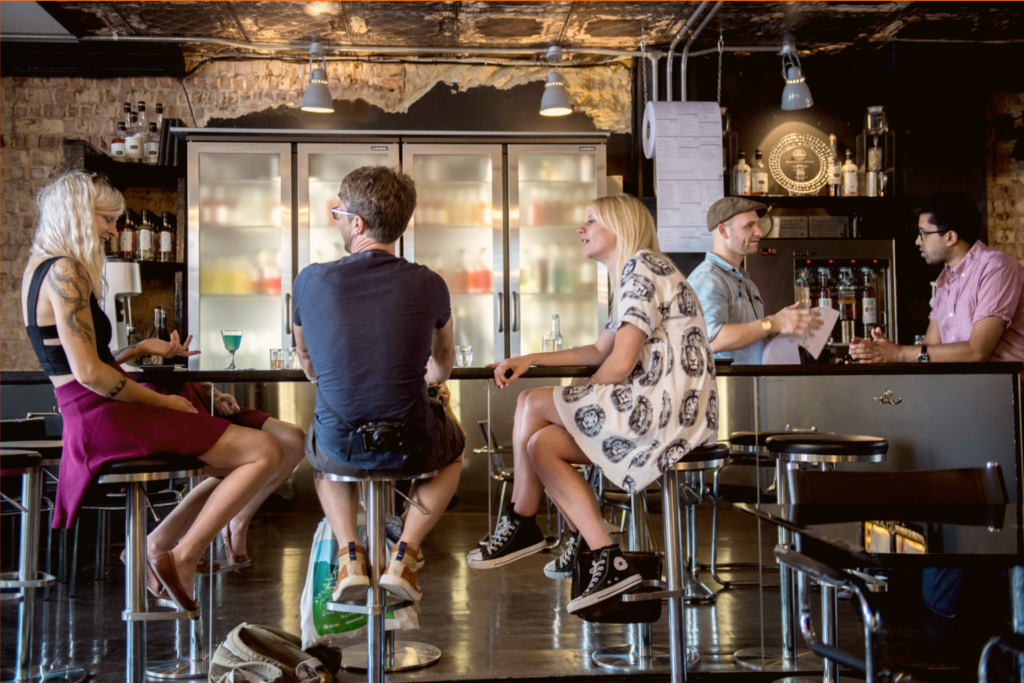
The bar’s defining decision was the removal of perishables. Fresh citrus was replaced with acid solutions, typically blends of citric, malic, and lactic acid. These allowed acidity to be measured and replicated without degradation.
Ice, traditionally responsible for both chilling and dilution, was removed entirely. Instead, dilution was calculated during preparation. Water was added to each batch in controlled ratios, ensuring that every cocktail reached the same final structure.
Temperature was managed through refrigeration and glassware rather than melting ice. This created a system where every variable was fixed before service began.
Pre-batching and the control of composition
At White Lyan, cocktails were pre-batched, bottled, and stored before service. This meant that:
Alcohol content was fixed, Dilution was predetermined, Acidity was stabilized, and flavor balance was locked. Service became an act of delivery rather than creation.
This approach aligned more closely with distillation practice than traditional bartending. Distilleries design the spirit before bottling. White Lyan applied the same logic to cocktails.
The result was complete repeatability. Every drink served matched its original formulation.
The drinks that defined the system
White Lyan’s menu reflected its philosophy. Cocktails such as Bone Dry Martini reinterpreted the classic structure using controlled dilution and stabilized aromatics rather than fresh vermouth service. The Moby Dick Sazerac used pre-treated spirits and precise seasoning to maintain consistency without real-time adjustment.
These drinks were not simplified versions of classics. They were re-engineered systems, built to remove instability while preserving balance.
Spirits played a central role in this process. Base distillates such as Scotch whisky, bourbon, and neutral spirits were modified through infusion, clarification, and controlled dilution before bottling.
Waste reduction and measurable efficiency
White Lyan’s system also addressed a major operational issue. Waste.
Traditional cocktail bars incur losses due to citrus spoilage, melting ice, and discarded garnishes. By removing perishables, White Lyan significantly reduced waste.
Ingredients were stabilized and stored for longer periods. Inventory became predictable. Cost variability decreased.
This created a model where sustainability aligned with operational precision. Waste reduction was not an additional goal. It was a result of system design.
The Final 12 and the deliberate closure
White Lyan operated from 2013 to April 8, 2017. Before closing, the bar introduced a final series of menus known as the Final 12, marking the culmination of its approach.
The closure was intentional. The concept had reached its limit within its own framework. The space transitioned into Super Lyan, a more accessible bar format, and later into Cub, which combined food and drink with a focus on sustainability and ingredient sourcing.
Subsequent projects, such as Lyaness, opened in 2018 at Sea Containers London, continued to evolve these ideas within a more traditional service environment.
White Lyan did not end. It transitioned into a broader system of experimentation.
Influence on modern bar practice
The impact of White Lyan extended beyond its lifespan. Many of its methods became standard practice in high-level bars.
Pre-batching is now widely used to improve consistency. Acid adjustment has become a recognized technique for controlling flavor. Controlled dilution is increasingly applied in both cocktails and bottled drinks.
Bars such as Connaught Bar and Dante incorporate elements of these systems while maintaining traditional service.
White Lyan demonstrated that cocktails could be engineered without losing identity.
The end of real-time cocktail making as a concept
White Lyan did not eliminate real-time cocktail making across the industry. It redefined it.
By proving that drinks could be fully designed before service, it separated two ideas that had long been combined. Creation and service.
In traditional bars, these occur simultaneously. At White Lyan, there were distinct processes.
This separation allowed for: Greater consistency, Reduced waste, Scalable production, and Measured control. The bar reframed cocktail-making as a production system rather than a performance. White Lyan represents a structural shift in how cocktails are understood. It moved the focus from technique at the bar to decisions made before the bar opens. The removal of ice, citrus, and real-time assembly was not an aesthetic choice. It was a method of eliminating variability. In doing so, it aligned cocktail production with the logic of distillation, where consistency defines quality. The concept did not replace traditional bartending. It expanded its boundaries.
Within that expansion lies its significance. White Lyan showed that a cocktail does not need to be made in front of the guest to be precise. It needs to be designed with intention.
Bar
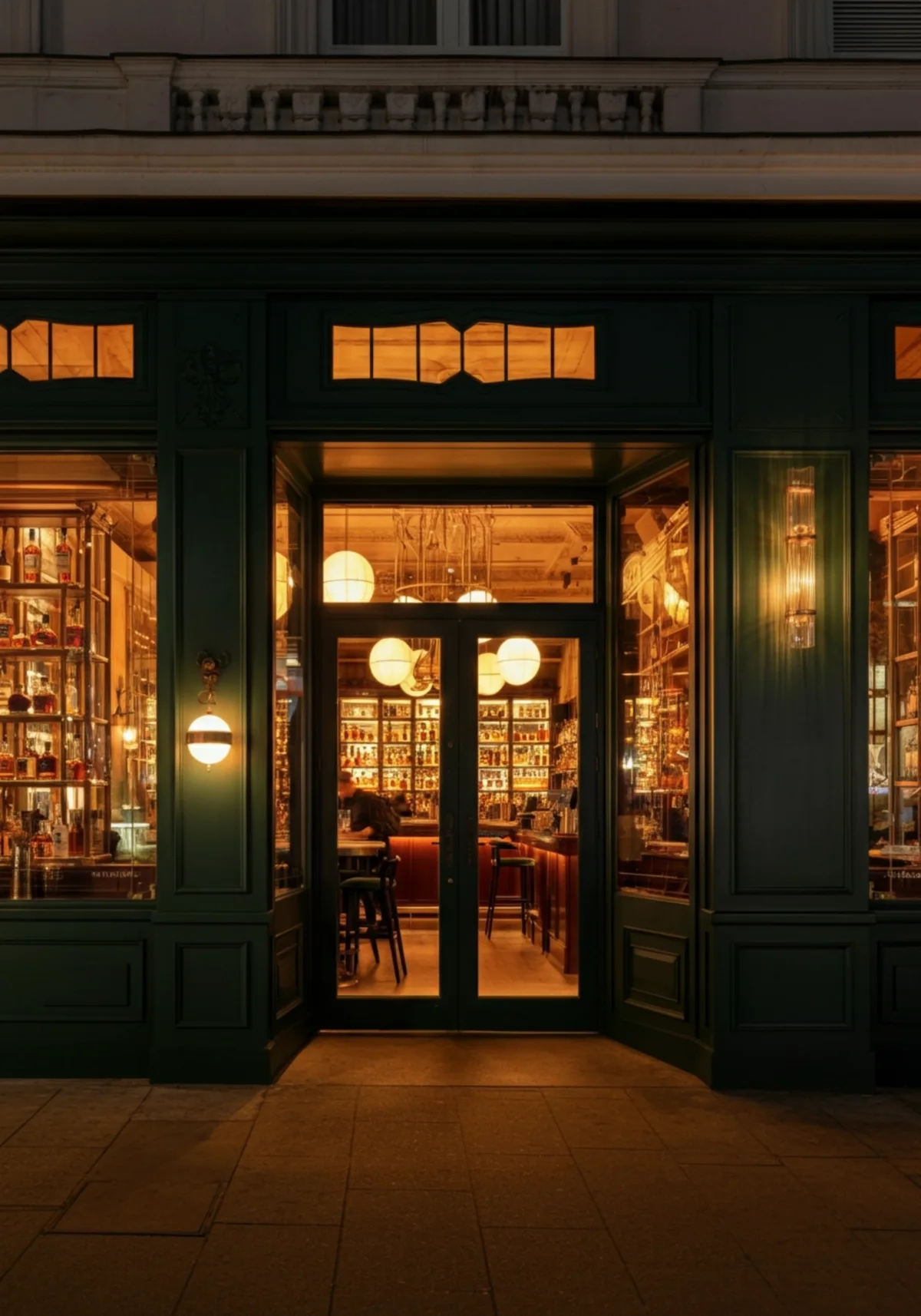
In the heart of Mayfair, behind the storied façade of The Connaught Hotel, stands the Connaught Bar —…
Bar
Super Lyan is a vibrant all-day cocktail venue situated at Nieuwezijds Voorburgwal 3 in the heart of Amsterdam,…
Bar
Dante is a storied Italian-style cocktail bar and café situated at 551 Hudson Street in New York’s West…
Spirit
Bourbon Barrel Aged Four Peel Gin
Bourbon Barrel Aged Four Peel Gin is a remarkable artisanal spirit that stands out in the crowded world…
Bar
In the heart of Mayfair, behind the storied façade of The Connaught Hotel, stands the Connaught Bar —…
Bar
Super Lyan is a vibrant all-day cocktail venue situated at Nieuwezijds Voorburgwal 3 in the heart of Amsterdam,…
Bar
Dante is a storied Italian-style cocktail bar and café situated at 551 Hudson Street in New York’s West…
Spirit
Bourbon Barrel Aged Four Peel Gin
Bourbon Barrel Aged Four Peel Gin is a remarkable artisanal spirit that stands out in the crowded world…
Discovery and Education
Tradition Meets Innovation: J. Blake Layfield and Maker’s Mark’s New Generation
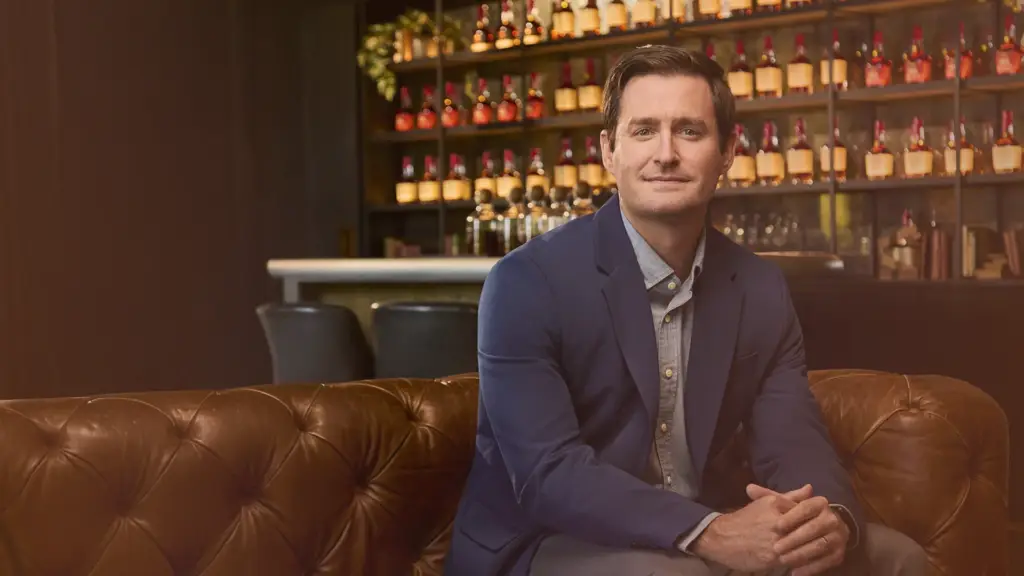
When J. Blake Layfield, Ph.D. became the ninth Master Distiller at Maker’s Mark in 2024, he inherited one of Kentucky bourbon’s most recognisable production philosophies. The responsibility was larger than maintaining a familiar recipe. Maker’s Mark had spent more than seven decades building an identity around a particular approach to bourbon, from its use of […]
August 12, 2026
Interviews & Insights
Elmer T. Lee: The Master Who Revived Bourbon’s Soul
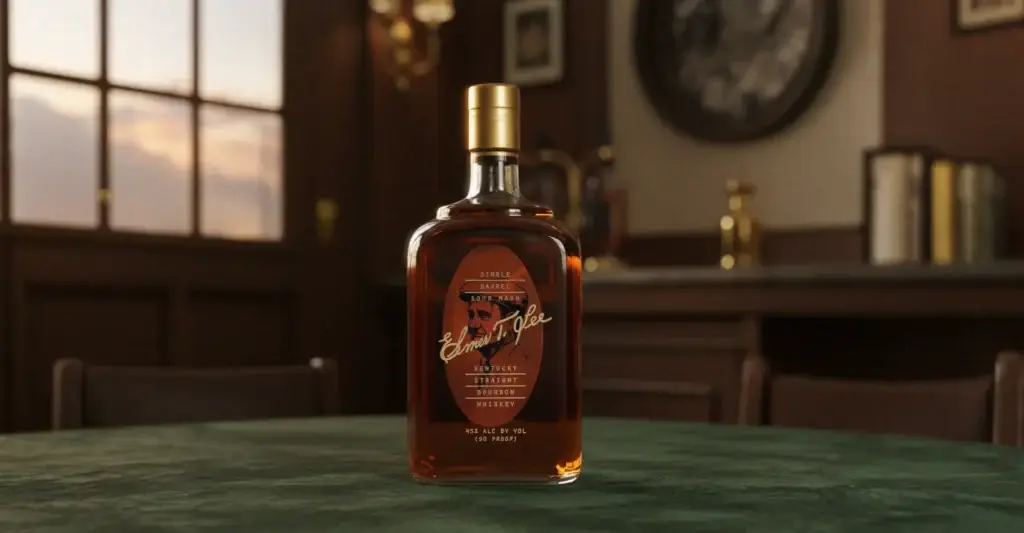
In 1949, a young Elmer T. Lee walked into the George T. Stagg Distillery in Frankfort, Kentucky, looking for a job. He had recently returned from the Second World War, where he had served as a radar bombardier aboard a B-29, and had graduated with honours in electrical engineering from the University of Kentucky. The […]
August 5, 2026
Partnership
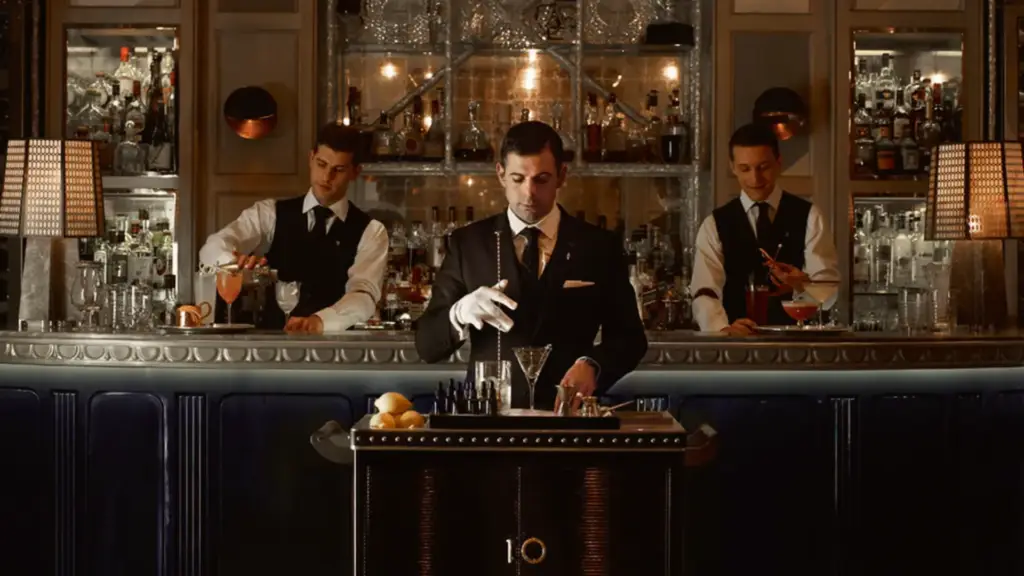
The Connaught Bar: Precision, Ritual, and the Martini That Set the Standard
Some bars are defined by their drinks. Others by their atmosphere. At Connaught Bar, it is service that holds everything together. Tucked within The Connaught in London, the bar has, over time, established itself as a reference point for what modern classic bartending can look like when precision and ritual are treated as inseparable. This […]
August 1, 2026