For decades, alcohol free spirits existed as failed substitutes. Non Alcoholic Spirits attempted to replicate the taste of gin, whisky, or rum by removing alcohol and hoping flavour would survive the process. It rarely did. What remained lacked bitterness, weight, and persistence. Bars rejected these products not out of prejudice, but because they collapsed in a glass.
The first modern non alcoholic spirits succeeded because they abandoned imitation and instead focused on function. They treated alcohol not as a flavour to be removed, but as a structural element to be replaced.
Why Early Alcohol Free Spirits Failed
Before the mid 2010s, alcohol free spirits were designed around absence. Alcohol was removed after fermentation or distillation, stripping out aromatic carriers and texture. Without ethanol, flavours flattened. Sweetness dominated. Drinks lacked length.
Most products performed poorly in cocktails. Citrus overwhelmed them. The ice diluted them instantly. Bitterness disappeared. For bartenders trained in balance and structure, these liquids behaved like flavoured water rather than base spirits.
By the early 2000s, the category had lost credibility behind the bar.
The Structural Breakthrough
The first modern non alcoholic spirits worked because they redesigned the category from the ground up. Instead of asking how to remove alcohol, producers asked how alcohol functions in drinks.
Alcohol provides bitterness support, aromatic lift, mouthfeel, and persistence. The new generation replaced those functions using botanical extraction, acidity, tannin, spice, and controlled bitterness.
This shift marked the beginning of credibility.
Seedlip and the End of Imitation
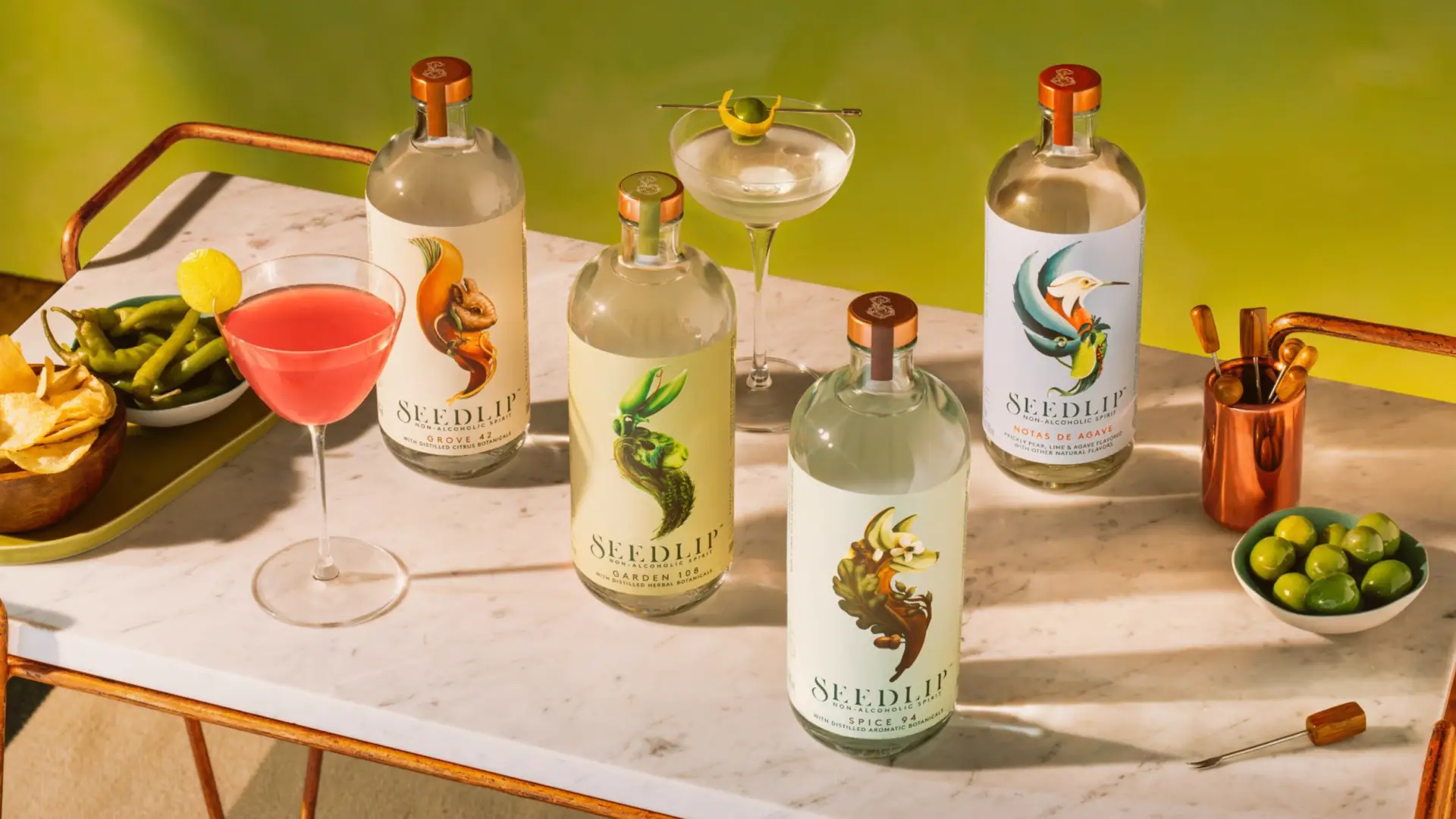
The clearest structural reset came in 2015 with the launch of Seedlip, founded by Ben Branson in England. Seedlip did not claim to be gin without alcohol. It introduced non alcoholic spirits as their own category.
Liquids such as Seedlip Garden 108 and Seedlip Spice 94 were crafted using botanical distillation, with copper stills adapted for water-based extraction rather than ethanol. Garden 108 emphasised peas and herbs. Spice 94 focused on allspice and bark.
What mattered was not flavour similarity, but behaviour. These liquids carried bitterness, dryness, and aromatic persistence in mixed drinks. Bartenders could build with them rather than compensate for them.
Seedlip worked because it refused to promise an alcohol-free gin and instead delivered a new base with a clear purpose.
Function Over Flavour
Successful non alcoholic spirits share one trait. They prioritise structure over mimicry. Bitterness replaces alcohol warmth. Acidity replaces lift. Tannin replaces grip.
This approach aligned with bar logic. Spirits are tools before they are tastes. When non alcoholic spirits began behaving like tools, adoption followed.
Ritual Zero Proof and Cocktail Utility
Founded in 2019 in the United States, Ritual Zero Proof approached the category through cocktail performance. Products such as Ritual Gin Alternative were formulated specifically to hold up in classic builds like gin and tonic or Negroni-style structures.
Ritual focused on bitterness, spice, and dilution resistance rather than neat sipping. This framing resonated with professional bars, where drinks are evaluated by how they survive ice, citrus, and time.
Ritual succeeded by speaking the language of bartenders rather than consumers.
Lyre’s and Controlled Referencing
Founded in 2019 in Australia, Lyre’s took a broader approach. Rather than rejecting reference entirely, Lyre’s offered a wide portfolio of recognisable styles.
Liquids such as Lyre’s Dry London Spirit and Lyre’s American Malt were not successful because they perfectly matched gin or whisky. They succeeded because they allowed bars to preserve menu architecture.
Lyre’s enabled alcohol free versions of familiar drinks without requiring separate conceptual framing. Its strength lay in versatility rather than purism.
Why Bars Accepted the Category
The first modern non alcoholic spirits were accepted by bars before they were embraced by retail. This mattered. Bars are unforgiving environments. If a liquid fails structurally, it disappears quickly.
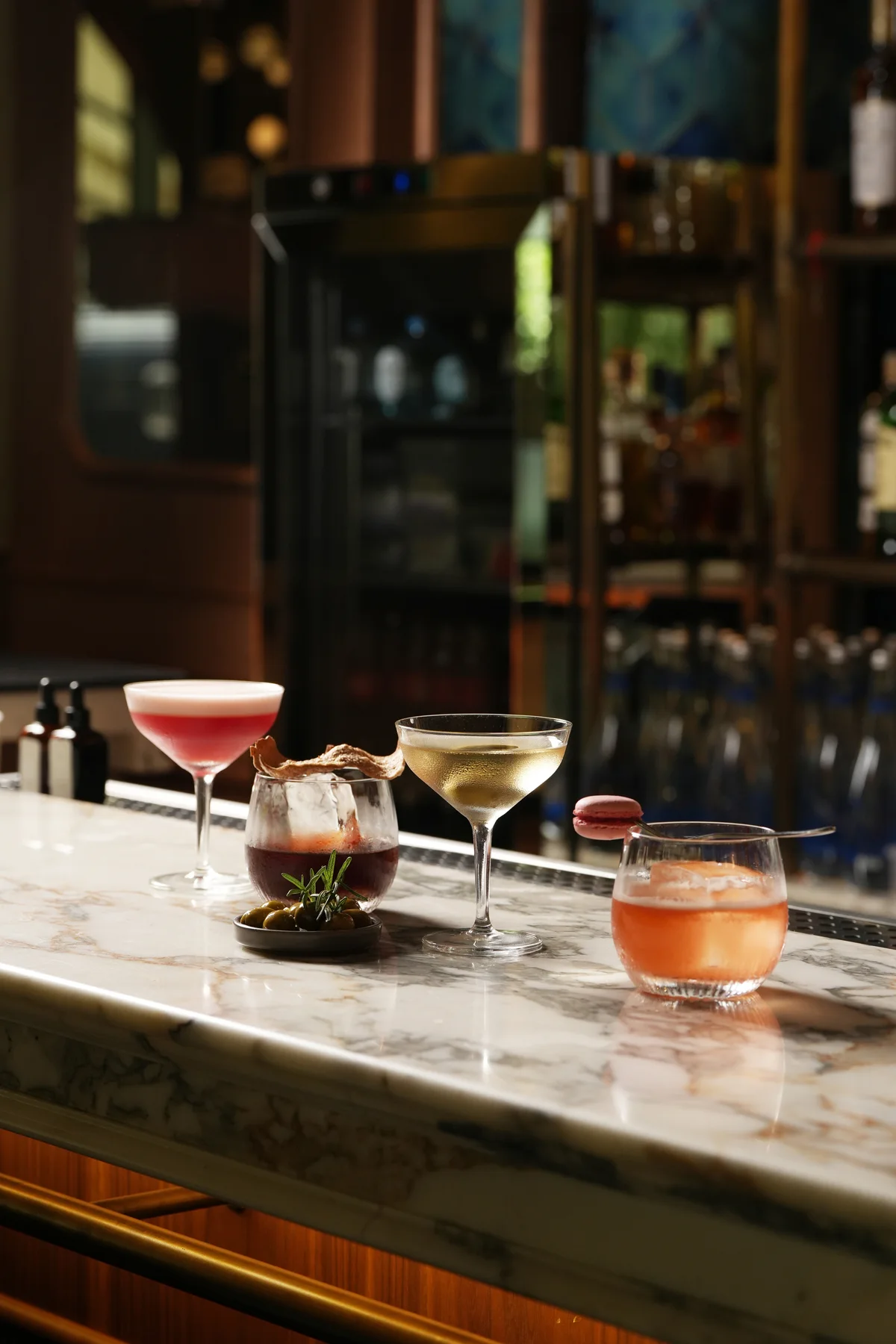
In London, New York, and Melbourne, non alcoholic spirits entered menus as priced, intentional cocktails rather than afterthoughts. They were not offered as apologies. They were offered as choices.
Once bars legitimised the category, consumers followed.
Timing Without Trend Dependency
Mindful drinking created attention, but attention alone did not build trust. The category succeeded because it emerged after decades of cocktail technique development. Bartenders understood balance, bitterness, and structure. Non alcoholic spirits finally met those expectations.
This timing mattered more than wellness narratives.
The End of the Substitute Era
The defining moment for the category was philosophical. The first modern non alcoholic spirits stopped asking to replace alcohol. They were asked to coexist with it.
Seedlip refused imitation. Ritual focused on function. Lyre’s focused on structure. Each succeeded by understanding what alcohol actually does in a drink.
The first modern non alcoholic spirits worked because they respected the craft of drinking. They replaced structure, not intoxication. Their credibility came from technical clarity rather than moral positioning.
Non alcoholic spirits did not become accepted because people stopped drinking. They became accepted because the liquids finally behaved like spirits.
Distillery
Seedlip is widely celebrated as the pioneer of the non-alcoholic spirits movement, fiercely dedicated to redefining the drinking…
Distillery
Lyre's Spirit Co. is an innovative distillery based in Leichhardt, New South Wales, Australia, recognized for its exceptional…
Spirit
Seedlip Notas de Agave emerges as a notable entry in the realm of non-alcoholic spirits, meticulously crafted to…
Spirit
Lyre’s Amaretti is an innovative, premium non-alcoholic almond liqueur that emulates the classic Italian amaretto. Crafted with a…
Spirit
Seedlip Garden 108 is a pioneering non-alcoholic spirit that encapsulates the essence of the English countryside. Crafted with…
Region
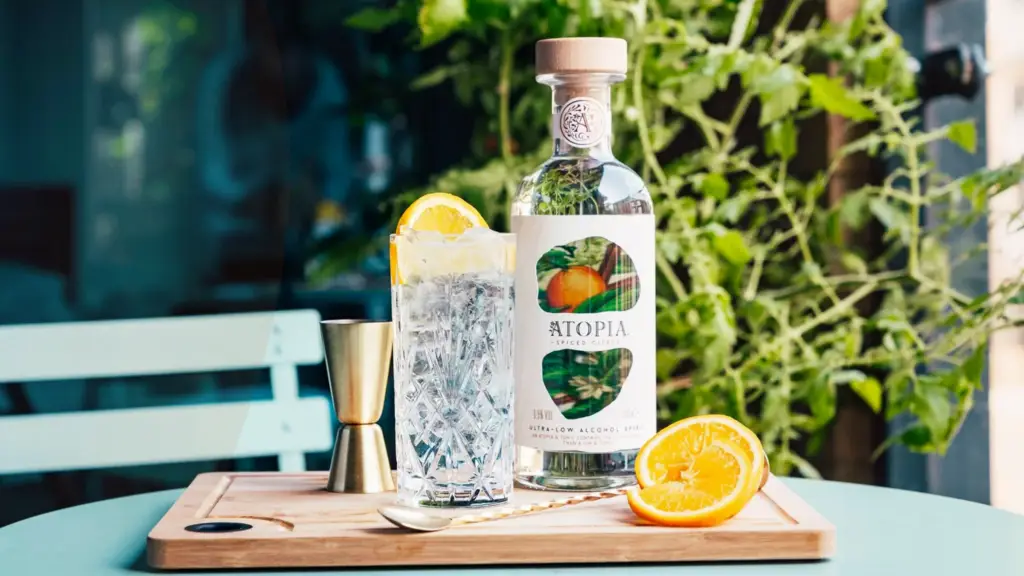
How Much Alcohol Is Low Alcohol Really? A Country-by-Country Comparison
Low-alcohol beverages have become a major topic of discussion globally, both among consumers seeking moderation and among regulators defining safe limits. While low alcohol may appear straightforward, the term carries different legal meanings in different countries. Understanding these distinctions requires examining production thresholds, labeling rules, and the historical evolution of definitions of low alcohol across […]
March 25, 2026
Discovery and Education
The Rise of Non Alcoholic Spirits Top Picks of 2025
In the evolving world of mixology, a quiet yet powerful transformation is taking place. The surge of non alcoholic spirits represents more than a passing trend; it reflects a cultural shift toward mindfulness, balance, and inclusion. Once seen as an afterthought, alcohol free alternatives now stand proudly beside their traditional counterparts, offering sophistication without compromise. […]
November 1, 2025
Spirits
The Best 10 Scotch Whiskies Every Collector Should Try
Scotch whiskies collection is no longer simply about finding the oldest bottle or the most expensive name. A serious collection should tell a story about the spirit itself: where it comes from, how it is made, how oak changes it, how peat shapes it and why particular distilleries have earned lasting reputations. That makes choosing […]
August 21, 2026