Aller au contenu

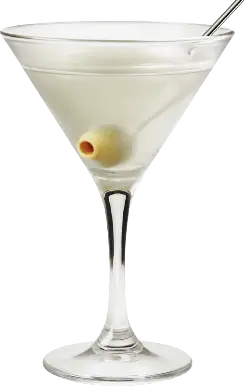
The Martini is perhaps the most iconic cocktail in the world, a symbol of elegance, sophistication, and modernity. With its clean, spirit-forward character and crystalline presentation, it has become more than just a drink—it is a cultural emblem that has spanned generations of writers, statesmen, film icons, and discerning drinkers. Yet beneath its simple appearance lies a fascinating history, rooted in nineteenth-century bartending traditions and shaped by evolving tastes across the twentieth century.
The Martini’s origins are closely tied to the Martinez, a richer, sweeter cocktail that combined gin, sweet vermouth, maraschino liqueur, and bitters. As dry vermouth became increasingly available toward the end of the nineteenth century, bartenders began experimenting with drier, more streamlined formulas. By the 1890s, the Martini had emerged as a distinct drink, typically calling for London Dry gin, dry vermouth, and a dash of orange bitters. The shift marked a turning point in cocktail culture, reflecting a growing preference for sharper, less sweet flavors.
Over the decades, the Martini evolved into numerous variations. The early twentieth century saw the rise of the “dry Martini,” which used less vermouth, sometimes just a rinse or a few drops, emphasizing gin’s crisp botanicals. By the mid-twentieth century, especially in the United States, the drink had become drier still, to the point where some recipes practically eliminated vermouth altogether. Vodka also entered the picture, giving rise to the Vodka Martini, which became especially popular in the latter half of the century.
Preparation is deceptively simple: gin and vermouth are stirred with ice until perfectly chilled, then strained into a stemmed cocktail glass and garnished with either a lemon twist for brightness or an olive for a savory touch. The ritual of preparation, however, is almost as important as the ingredients. The Martini is a drink that demands precision, from the ratio of gin to vermouth to the choice of garnish, each decision shaping its character.
Culturally, the Martini is unmatched in its symbolism. Writers like Ernest Hemingway and F. Scott Fitzgerald celebrated it in prose, while figures such as Winston Churchill became associated with ultra-dry versions. Its most famous cultural association, however, came through film—James Bond’s “shaken, not stirred” order cemented the Martini as a drink of glamour, intrigue, and individuality. At the same time, the Martini glass itself, with its sharp V-shape, has become one of the most recognizable silhouettes in the world of drinking.
Today, the Martini continues to inspire debate and devotion. Purists argue for the classic gin-and-vermouth formula, while modern drinkers experiment with variations ranging from Dirty Martinis, laced with olive brine, to contemporary infusions using artisanal gins and vermouths. Despite these variations, the essence of the Martini remains constant: it is a drink defined by balance, simplicity, and ceremony.
In the history of cocktails, few drinks have achieved the Martini’s level of fame. It is both timeless and ever-evolving, a drink that manages to be at once historic and modern, austere and indulgent. To raise a Martini is not only to enjoy a cocktail but also to partake in a cultural ritual that has endured for more than a century.