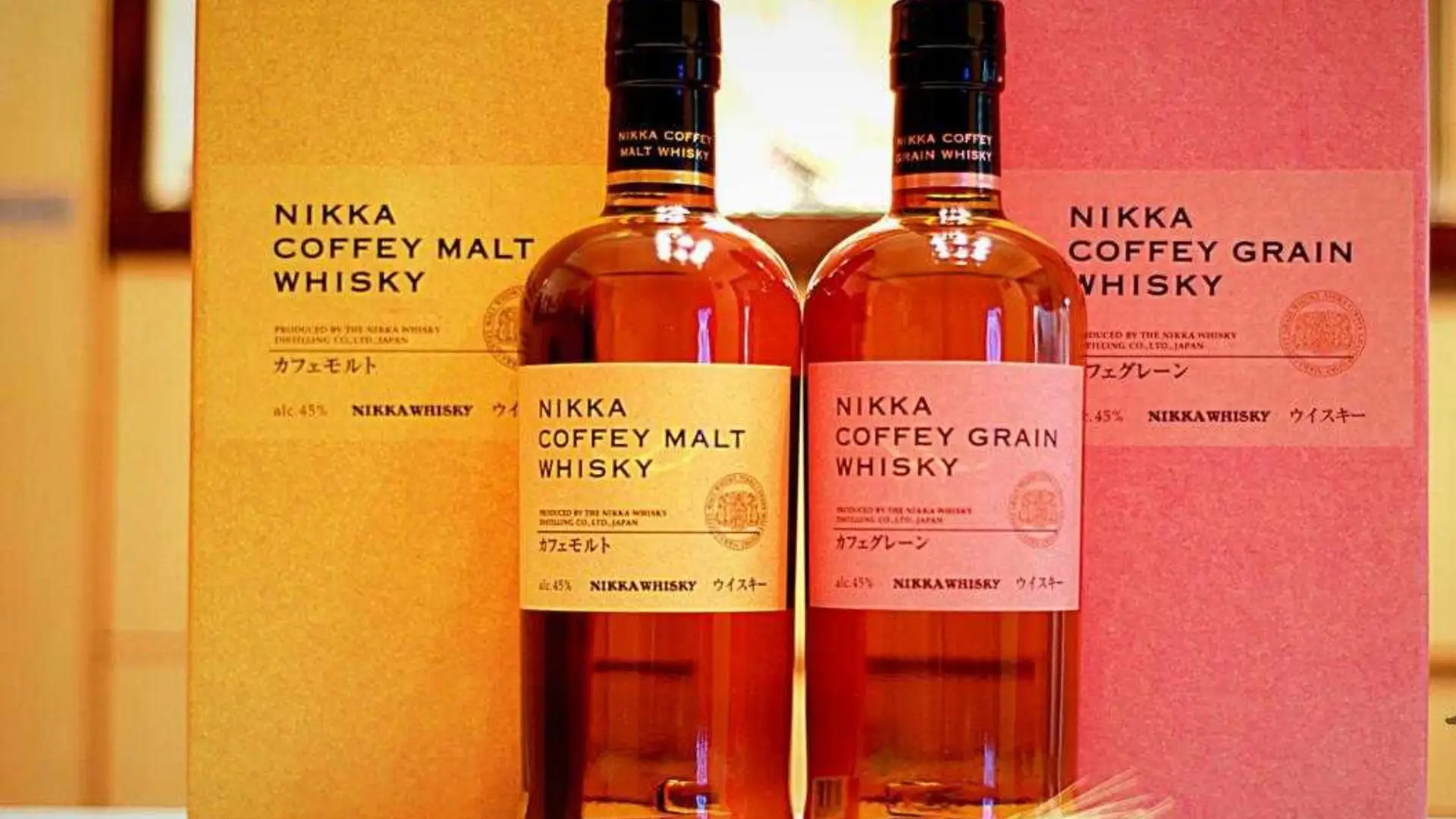
A bit of History About Nikka Coffey Malt
The journey of Nikka Coffey Malt is unlike that of any other Japanese whisky. When Masataka Taketsuru returned to Japan in 1920 after studying the craft in Scotland, he brought not only technical knowledge but also a vision: to make authentic whisky on Japanese soil. That dream became reality in 1934 with the founding of the Yoichi Distillery in Hokkaido. Decades later, Nikka once again surprised the whisky world by creating Coffey Malt Whisky—a spirit distilled in a grain still but made entirely from malted barley.
The story begins with the Coffey still, named after Aeneas Coffey, the Irish excise officer who patented his design in 1830. Unlike traditional pot stills, the Coffey still is a type of column still that allows continuous distillation, making it more efficient and widely used for producing grain whisky at scale. While this technology became central to blended whiskies, it was almost never associated with premium malt whisky. Nikka, however, saw in it an opportunity to innovate.
Nikka’s Experiment in Sendai
In 1963, Nikka imported two Coffey stills from Scotland and installed them at the Miyagikyo Distillery in Sendai, which officially opened in 1969. These stills, already rare in Scotland by then, gave Nikka a unique tool for experimentation. Instead of producing only grain whisky, Nikka’s distillers began running 100 percent malted barley through the Coffey still. The outcome was something unprecedented: a whisky with the depth of malt and the silky texture of grain spirit.
Breaking Convention
On paper, Nikka Coffey Malt defies categorization. Because it is distilled in a grain still, it does not qualify as a “single malt” under either Scotch or Japanese regulations. Yet in the glass, it delivers the robust malt character one expects, layered with creamy sweetness, exotic fruit, and a velvety mouthfeel. This hybrid identity immediately set it apart in a market where tradition usually dictates strict adherence to categories.
Recognition and Reception
First released in the 2010s, Coffey Malt quickly gained international recognition. Whisky enthusiasts appreciated its ability to push boundaries while maintaining quality, and critics praised it for showcasing Nikka’s bold, experimental philosophy. In 2017, it achieved strong ratings in major international spirits competitions, affirming its place among respected world whiskies. It is now presented alongside Nikka Coffey Grain, distilled in the same stills but made with corn, as part of Nikka’s distinctive Coffey series.
Philosophy and Legacy
For Nikka, the Coffey Malt is not a gimmick but a reflection of its founder’s vision. Taketsuru’s legacy was built on combining Scottish tradition with Japanese precision and innovation. By using an old-fashioned Coffey still in an entirely new way, Nikka bridges 19th-century invention with 21st-century taste. The whisky embodies Japan’s ability to reinterpret foreign techniques and transform them into something wholly its own.
Beyond its technical achievements, Nikka Coffey Malt has also played a role in elevating Japan’s global whisky reputation. As Japanese whisky gained international acclaim in the 21st century, Coffey Malt became a talking point for critics and enthusiasts alike, proof that Japan was not only capable of matching Scotland in traditional single malt production, but also of pioneering new categories that challenged convention.
Its success reflects how Japanese distillers, guided by Taketsuru’s legacy, continue to balance respect for heritage with fearless innovation. For many, a glass of Coffey Malt is more than a whisky; it is a story of cultural exchange, perseverance, and the creativity that ensures Japanese whisky holds a distinctive place on the world stage.
Today and Beyond
Today, Coffey Malt is bottled at the Miyagikyo Distillery and exported worldwide, where it appeals to both seasoned collectors and curious newcomers. For some, it serves as an accessible gateway to Japanese whisky, while for others it is proof that true innovation in whisky-making is not just about experimenting with cask finishes or limited editions, but about reimagining forgotten tools.
Nearly ninety years after Taketsuru founded Nikka, Coffey Malt stands as a symbol of the brand’s adventurous spirit. It is whisky that honors heritage while daring to be different. In every glass, it reminds us that great spirits are not bound solely by legal definitions but shaped by people, places, and the courage to distill differently.

Barlist
Welcome to Barlist, where every drop tells a story
At Barlist, we live and breathe the art of spirits. Every bottle, every glass, every drop carries a story waiting to be told. With Barlist, we bring those stories to life- a place where flavours meet histories, and where true craftsmanship shines through tens of thousands of spirits and distilleries worldwide. Whether you’re a seasoned […]
March 9, 2026
Distilleries & Producers
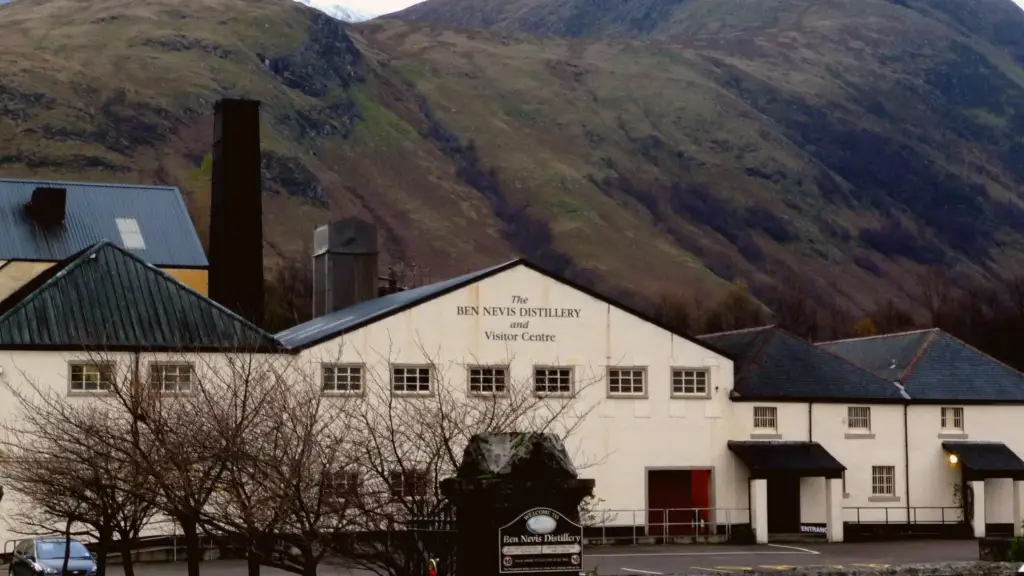
The Ben Nevis Distillery: From Long John MacDonald to Modern Ownership
At the foot of Britain’s highest mountain, Ben Nevis Distillery has lived a history defined less by continuity than by interruption. While many Highland distilleries trace a steady arc from founding to present day, Ben Nevis has moved in cycles of ambition, collapse, silence, and revival. Its story reveals how geography, capital, and global demand […]
February 24, 2026

Cocktails
History of the Mojito Cocktail and Its Cuban Cultural Legacy
The history of the mojito cocktail is inseparable from Havana’s streets, Cuba’s sugarcane fields, and the Atlantic trade routes that shaped daily life on the island. Unlike many classic cocktails that emerged from hotel bars or European salons, the Mojito was shaped by necessity, climate, and local ingredients. Its identity evolved gradually, reflecting Cuba’s agricultural […]
January 30, 2026